Windowsill Garden: How to Set One Up Step by Step
A step-by-step way to turn a free windowsill into a small garden: measure the windowsill, read its light, protect the surface, choose containers and plants that fit, arrange them, and watch for radiators, hot or cold glass and curtains.
At a glance
What you need
- Tape measure
- Long narrow tray or saucers
- Small stable containers with drainage holes
- Small or slow-growing plants
- General-purpose indoor potting mix
- Soft cloth for the windowsill and glass
A windowsill is the growing area most homes already have: it is bright, it is at a convenient height, and it costs nothing to use. A windowsill garden is simply that sill treated as one planned space instead of a place where pots end up.
The planning matters because a sill is narrow and sits in the most changeable spot in the room, right against the glass. The steps below take you from a bare sill to a planted one, then cover the conditions that are particular to windows.
Step 1: Measure the windowsill and check the window
Measure the depth of the windowsill from the glass to the front edge, and its usable length. Depth is the figure that limits everything else: a pot wider than the windowsill will overhang and tip. As a rough guide, a sill about 5 in (13 cm) deep takes small pots comfortably, while a shallower one needs narrow containers or one of the alternatives further down.
Then open and close the window. Note which way it swings or slides, whether a handle or latch needs space, and whether blinds or curtains come down across the windowsill. Anything you plant has to leave all of that working.
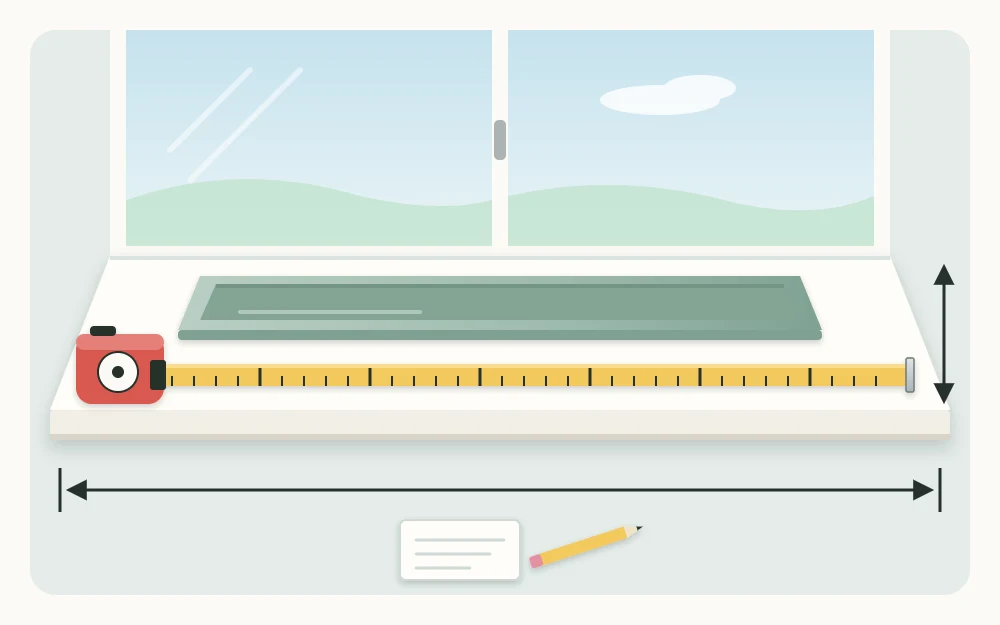
Step 2: Note the direction and the light
Stand at the windowsill at a few different times on a clear day and notice when direct sun lands on it, and for how much of the day. In the Northern Hemisphere a south-facing window generally gets the most direct sun and a north-facing one the least, with east and west in between, but trees, neighboring buildings, deep eaves and the season change the picture a great deal.
The guide to window direction for indoor plants explains what each aspect typically offers. What you observe on your own sill counts for more than the compass.
Step 3: Protect the surface and choose containers
Water and painted or wooden sills do not mix, so put something waterproof down before any pot arrives. A long narrow tray that runs the length of the windowsill is the neatest option: it catches drips between pots as well as under them and lets you lift the whole garden away to clean. Individual saucers work too.
Empty standing water from the tray or saucers after watering.
Then pick containers that sit fully on the windowsill with a little margin in front. A stable base matters more here than anywhere else in the home, because a sill pot gets brushed by curtains, sleeves and the window itself. Wide, low pots are steadier than tall, narrow ones.
Make sure water can drain from whatever you choose. For materials, sizes and how to match a pot to a plant, see the guide to choosing indoor plant containers.
Step 4: Choose plants for this window
Choose plants for the light this particular sill gets, not for the windowsill you wish you had. A sill with long spells of direct sun suits sun-tolerant plants; a bright sill with little direct sun suits the many foliage plants that prefer bright indirect light. Read the label or look the plant up, and be honest about what you observed in step 2.
Size matters as much as light. Favor plants that stay small or grow slowly, so they do not outgrow the depth of the windowsill or press into the glass within a season.
Step 5: Arrange the plants
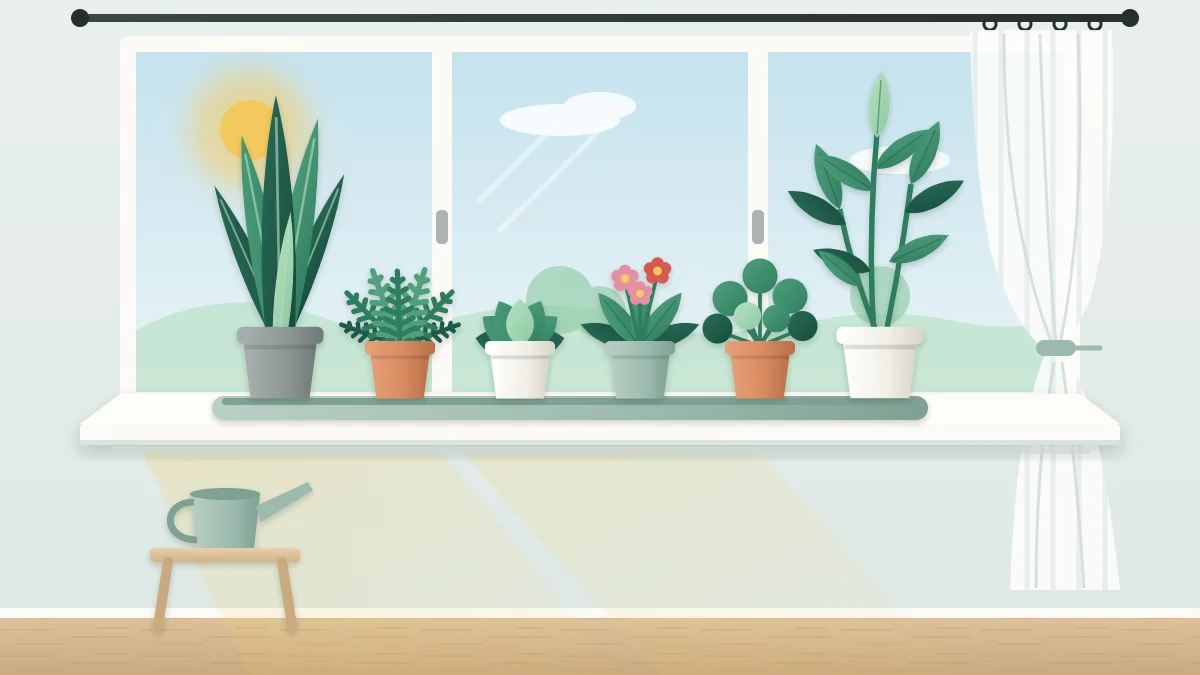
- Place the taller plants at the two ends of the windowsill, where they frame the window without shading the others.
- Put the lower plants in the middle, so light reaches all of them and into the room.
- Set each pot slightly back from the glass, so no leaves press against the pane.
- Leave a finger-width or more between pots for air to move and for your hand to reach in.
- Open and close the window once more to confirm nothing is in the way.
Conditions to watch on a sill
The space against a window is not the same as the rest of the room. Four things are worth checking through the year:
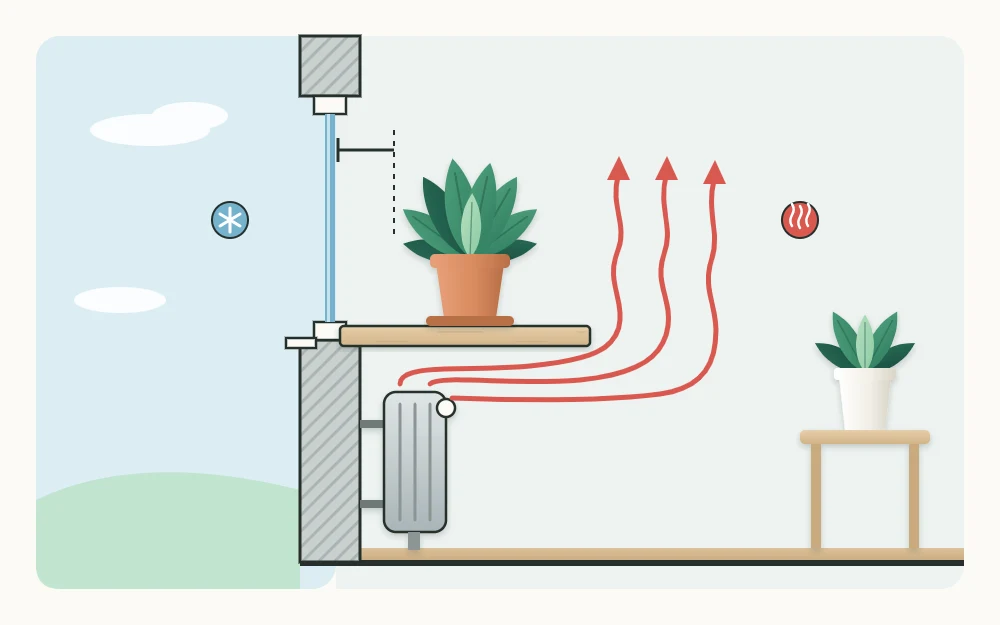
- A radiator or heating vent below. Warm, dry air rising past the windowsill dries potting mix quickly and can scorch foliage that hangs over the edge. Keep plants back from the front edge, check moisture more often while the heating is on, and move sensitive plants if they suffer.
- Hot glass in summer sun. Direct sun through glass can overheat leaves close to the pane. A sheer curtain or moving pots back a little softens it.
- Cold glass and drafts in winter. Leaves touching a cold pane can be damaged, and a leaky frame sends cold air across the pots. How much depends on your climate.
- Curtains and blinds at night. Drawn across the room side of the windowsill, they trap the plants in a pocket of cold air against the glass. Close them behind the plants where you can, or lift the plants into the room on the coldest nights.
If the windowsill is too narrow
A shallow sill does not rule the window out. Two alternatives keep the plants in the same light:
- A table or bench pushed up to the window. A narrow console table at sill height effectively extends the windowsill into the room and needs no fixing at all. This is often the simplest answer, and the guide to a small apartment indoor garden has more ways to borrow space near a window.
- A shelf extension on brackets. A board fixed on brackets below or level with the windowsill adds depth.
Good to know
Wet pots are heavy. If you add a bracketed shelf, use the load rating stated for the brackets and the shelf as your limit, and follow the fixing instructions for your wall type.
A short routine to keep it going
Light on a sill comes from one side, so plants lean toward the glass. Turning each pot a little whenever you check it keeps growth even; the article on rotating indoor plants explains how much and how often to turn.
Beyond that, the routine is brief. Check each pot’s moisture by feel and water when the mix has dried to the point that plant prefers. Lift the tray now and then and wipe the windowsill dry underneath. As the seasons change, look again at the four conditions above and shift pots if you need to.
Frequently asked questions
How deep does a windowsill need to be for plants?
Deep enough for each pot to sit fully on it with a little margin in front. Around 5 inches (13 cm) is a workable starting point for small pots, but the real test is your own containers. For shallower sills, use narrow trough-shaped pots or push a table up to the window.
Can I keep plants on a windowsill above a radiator?
Often yes, with some care. Warm, dry air rises past the front of the windowsill, so keep foliage from hanging over the edge and check the potting mix more often while the heating is on, because it dries faster. If a plant keeps struggling there, move it to another growing area for the heating season.
Should I move windowsill plants in winter?
It depends on your climate and your windows. Keep leaves off cold glass, watch for drafts from the frame, and avoid drawing curtains so that plants are shut in against the pane overnight. On the coldest nights, lifting the pots into the room is a simple precaution.