Small Apartment Indoor Garden: Where Plants Can Fit
A room-by-room look at where plants can go when floor space is scarce, from the window wall to furniture tops, with renter-friendly ways to support them.
A small apartment indoor garden rarely fails for lack of floor. It fails because the pots end up wherever there was a gap: one on the fridge, two on the desk, one behind the sofa where no light reaches. Scattered like that, a handful of plants takes up more room than it should and still does not look like a garden.
The better approach is to walk through the apartment looking for places that have light and are not already doing another job. Most small homes have more of them than you expect, and almost none of them are on the floor.
Start with the light, not the furniture
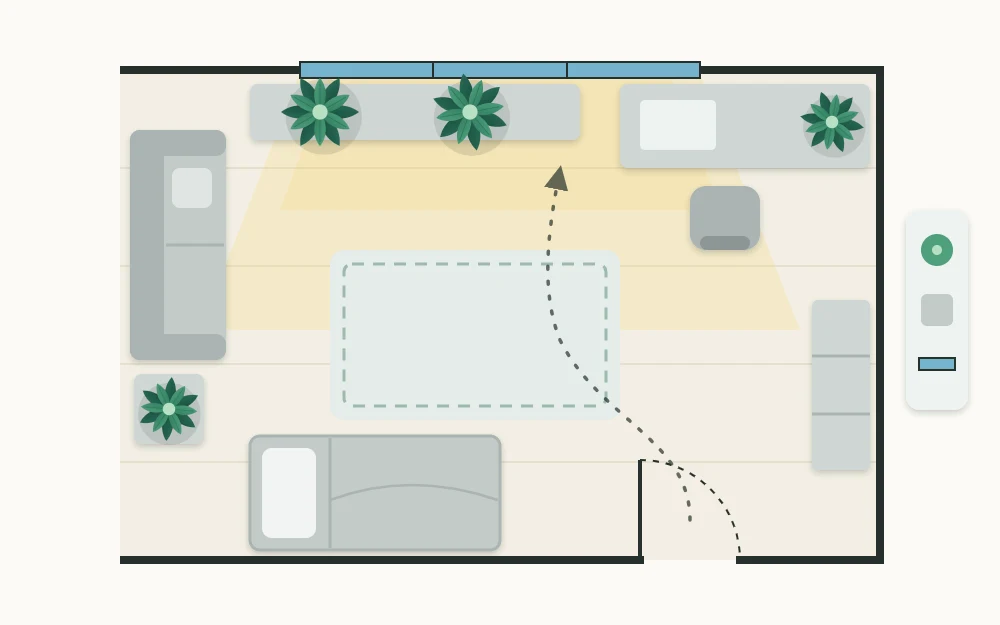
In most small apartments light is the real limit. There may be only one or two windows, often facing the same way, and the bright zone beside them is small. Light drops off quickly as you move into the room, so a spot that looks pleasant to your eyes can be far too dim for a plant.
Before deciding where anything goes, spend a clear day noticing where direct sun lands, where the room is bright without sun, and where it stays dull. The guide to planning an indoor garden around the space you have walks through that survey step by step. Everything below assumes you have done it: a clever spot with no light is only a shelf.
Where plants can fit, room by room
The window wall
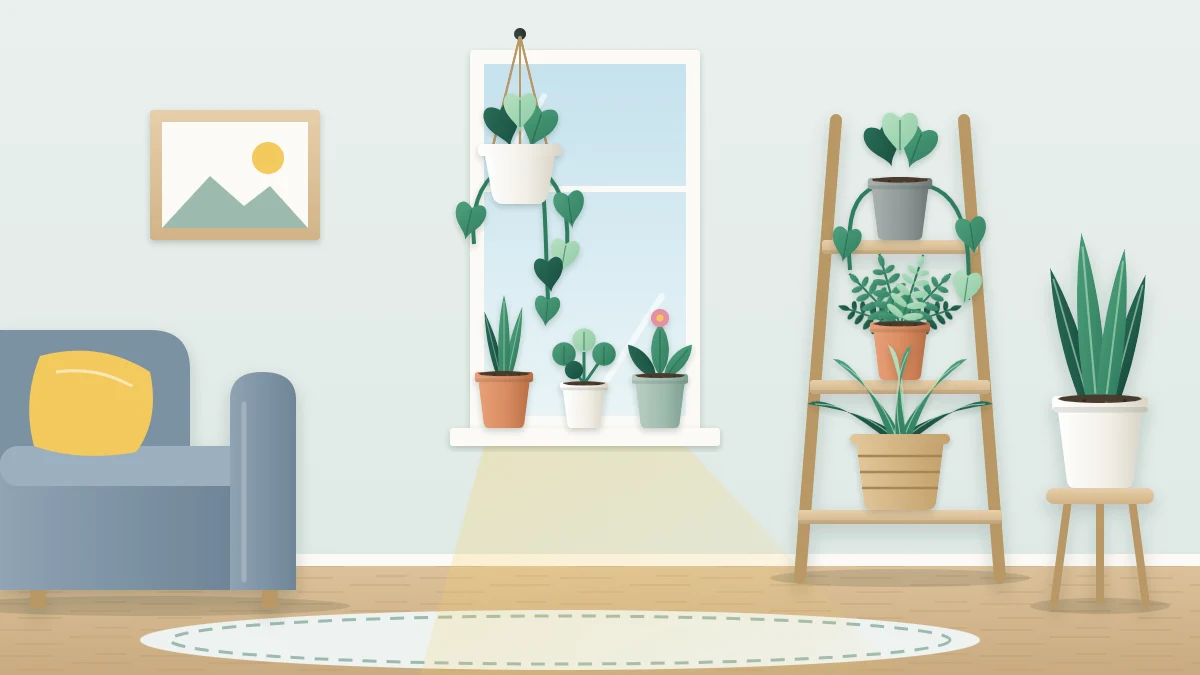
The windowsill is the obvious growing area, and a narrow one still holds a row of small pots on a tray. If yours is shallow, the article on setting up a windowsill garden covers depth, trays and what to do about a radiator underneath. The wall directly beside the window is the next best place: a slim ladder shelf or tiered stand there puts several plants in the bright zone on a footprint about the size of a dining chair.
A hanging spot near the glass uses space that nothing else in the apartment wants. One planter hung to the side of the window, high enough to clear your head and low enough to reach, adds a plant without touching a single surface.
Furniture tops
The top of a bookcase, wardrobe or kitchen cabinet works only if it gets light. Many do not: the top of a tall cupboard on the wall opposite the window is often the dimmest place in the room. A low bookcase near the window is a different matter and suits a trailing plant well. Make sure you can reach the pot comfortably, because a plant you need a chair to check tends not to get checked.
Narrow furniture and corners
A console table, a narrow bench or a bar cart placed under or beside a window gives you a growing area that is only 10 to 14 in (25 to 35 cm) deep. A cart has the advantage of wheels, so the whole group can move toward the light or out of the way. In a bright corner, a single stool or plant stand lifts one larger plant up to window height, where it gets more light than it would on the floor.
Kitchen and bathroom
Both rooms can hold plants if they have a window. A kitchen sill away from the stove and a bathroom ledge beside frosted glass are useful spots, and the bathroom is often a little more humid than the rest of the home. A windowless bathroom is not a growing area, however pleasant a plant would look there.
Use height before floor area
When floor space is scarce, the garden grows upward. Three plants stacked on a ladder shelf use the floor area of one. A rail with hanging pots uses none. Wall shelves, stands and hanging planters all work in small rooms, and each has a practical catch involving light, watering or fixing; the guide to building an indoor vertical garden goes through them one at a time.
One garden zone beats pots everywhere
A single concentrated zone, such as the windowsill plus a stand beside it plus one hanging planter, reads as a garden. The same plants spread around the apartment read as clutter. Grouping also makes care easier: you check and water in one place, with one tray to catch drips, and you notice sooner when something looks off.
Keep the garden in proportion to the room
A few plants chosen in scale with the room look better than many. In a studio, one medium plant on a stand, a row of small pots on the windowsill and a trailing plant up high is a complete garden. Large plants with wide leaves take over a small room quickly, and they grow.
Two practical checks help. First, walkways: you should be able to cross the room, open drawers and pull out a chair without brushing leaves. Second, the window itself: you still need to open it, clean it and work the blinds, so leave a clear path to the handle.
When the zone is full, it is full. The article on making room when your indoor garden has run out of space covers what to do at that point.
Renter-friendly ways to support plants
You can build a good garden without drilling a hole:
- Freestanding supports: ladder shelves, tiered stands, carts and stools need no fixing at all and move with you.
- Tension-mounted supports: a tension rod or floor-to-ceiling pole braces between two surfaces. Fit it as its instructions describe and stay within its stated load rating.
- Over-the-door and rail hooks: these hang from an existing door, rail or rod. Check that both the hook and whatever it hangs from are rated for the load.
Good to know
A pot that has just been watered is much heavier than it looks. For any hook, rod or shelf, go by the product’s stated load rating and its fixing instructions for your wall or ceiling type. Read your lease before drilling, and ask the landlord if it is unclear.
A simple order of work
Find the brightest window. Fill the windowsill first, then add height beside it, then one hanging spot if there is a secure place for it. Live with that for a few weeks and watch how the plants respond before adding more. A small garden that suits its light will look fuller in a season than a large one spread across spots that are too dim.
Frequently asked questions
How many plants can a small apartment hold?
There is no fixed number. It depends on how much bright space you have, not on floor area. Fill the windowsill and one stand beside the brightest window, then stop and watch. If the plants begin shading each other or you can no longer reach the window handle, the zone has reached its limit.
Can I hang plants in a rental without drilling?
Often, yes. Tension rods, floor-to-ceiling poles, over-the-door hooks and hooks on an existing rail all avoid drilling. Each has a stated load rating and fitting instructions, and a watered pot is heavy, so stay within them. If drilling turns out to be the only option, check your lease first.
Is the top of a bookcase a good place for plants?
Only if light reaches it. A low bookcase beside a window can be a useful growing area, while the top of a tall unit on the far wall is frequently one of the dimmest places in the room. Check the light there on a clear day, and make sure you can reach the pot easily.