Choosing Indoor Plant Containers: Size, Material and Style
How to pick pots for a whole indoor garden: the right size for the root ball, how each material behaves, the two-pot system, stable shapes and a simple color palette.
A pot is the whole world a plant’s roots live in, and indoors it is also a piece of furniture. Good indoor plant containers have to do both jobs: hold the right amount of potting mix for the plant, and sit comfortably on your shelf, sill or floor next to the other pots.
It helps to choose containers for the indoor garden as a whole instead of one pot at a time. Size, material, shape and weight all change how a pot behaves once it is planted and watered, and a little planning keeps the group looking deliberate.
Start with size
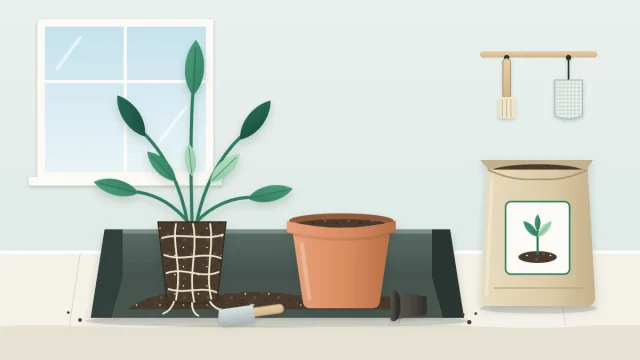
For most common indoor plants, a container a little larger than the root ball is the practical choice. As a starting point, many growers look for roughly 1 to 2 in (2.5 to 5 cm) of extra width, a figure that shifts with the size of the plant and how quickly it grows.
The reason is water. A large volume of potting mix with few roots in it stays wet for a long time, because nothing is drawing the moisture out. A pot that is far too small dries very quickly and can tip over as the plant gets top-heavy. Neither is a disaster, but both make the garden harder to look after.
Depth matters as well as width. Check the root ball before you shop: some plants have shallow, spreading roots and sit well in a low bowl, while others have deeper roots and need a pot with more height.
Compare the materials
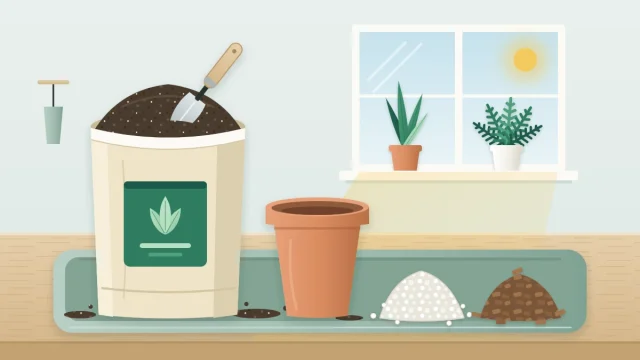
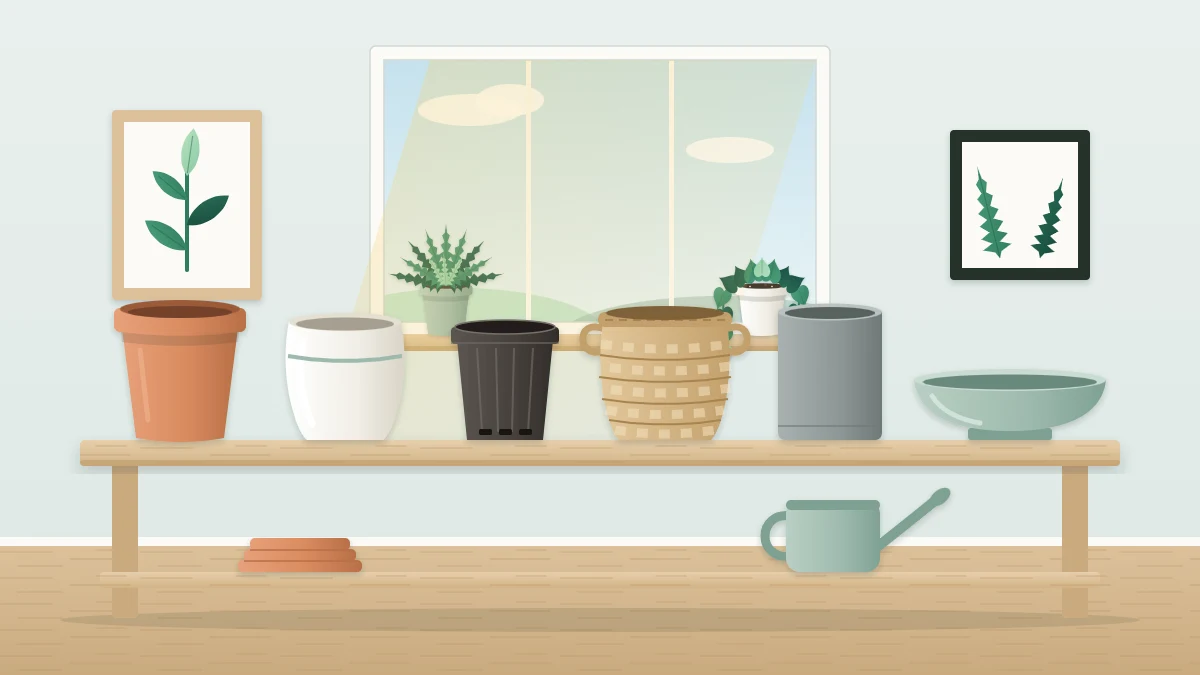
Material changes how fast the potting medium dries, how much the pot weighs and how it copes with knocks. None is best for every plant or every growing area, so match the material to the spot and to how you tend to water.
| Material | Weight | How the mix dries | Breakage and cost |
|---|---|---|---|
| Unglazed terracotta | Medium to heavy | Faster, because the walls are porous | Chips and cracks if dropped; usually low cost |
| Glazed ceramic | Heavy | Slower, because the glaze seals the walls | Breakable; mid to high cost |
| Plastic | Light | Slower, because the walls do not breathe | Rarely breaks, can turn brittle with age; low cost |
| Metal or woven outer covers | Light to medium | Depends on the inner pot | Sturdy, but need a waterproof liner; cost varies |
The drying speed also depends on the potting mix inside, so it is worth reading about potting media for indoor containers before you settle on a combination. For more on container materials, see Clemson Cooperative Extension’s factsheet on indoor plant containers and care.
Use the two-pot system
Many indoor gardeners never plant directly into a decorative pot. Instead, the plant stays in a nursery pot, the plain plastic pot it was sold in, and that pot is set inside a cachepot: a decorative outer pot without a hole.
This arrangement has real advantages. The nursery pot has drainage holes, so excess water can leave the potting mix. The cachepot hides the plastic and protects the surface underneath. You can lift the inner pot out to water at the sink, or water in place and tip out whatever collects in the outer pot afterward.
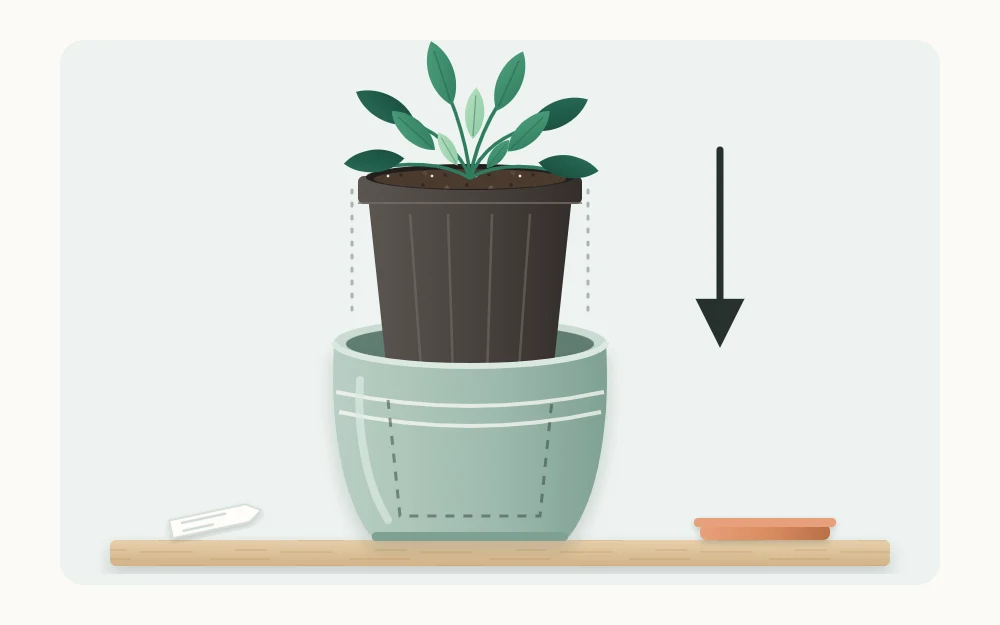
Choose a cachepot slightly wider and taller than the nursery pot so the inner pot drops in easily and its rim is hidden. Whichever setup you pick, make sure water can drain; the guide to drainage for indoor pots covers how to catch that water and keep surfaces dry.
Think about shape and stability
Shape decides how steady a pot is and how it fits the space.
- Tall and narrow pots take up little surface, which suits tight corners and floor spots. They have a small base, so they tip more easily when the plant is tall or leans toward the light.
- Wide and shallow pots and bowls are stable and suit low, spreading plants and mixed plantings. They need more shelf depth and their mix can dry quickly at the surface.
- Tapered pots, wider at the rim than the base, make it easier to slide a root ball out later. Pots that curve inward at the top can trap it.
Measure the depth of your windowsill or shelf before buying. A pot whose base overhangs the edge, or whose saucer does, is one nudge away from the floor.
Plan for the weight when wet
A pot feels very different once it holds damp potting mix and a watered plant. Heavy ceramic that is easy to carry empty can be awkward to lift to the sink when full, and a row of wet pots adds up quickly on a shelf.
For floor pots you expect to move, a plant caddy with wheels saves effort. For raised and hanging positions, lighter materials are easier to live with.
Good to know
Wet pots are heavy. Before loading a shelf, hook or hanging planter, check the product’s stated load rating and follow the fixing instructions for your wall or ceiling type.
Self-watering containers
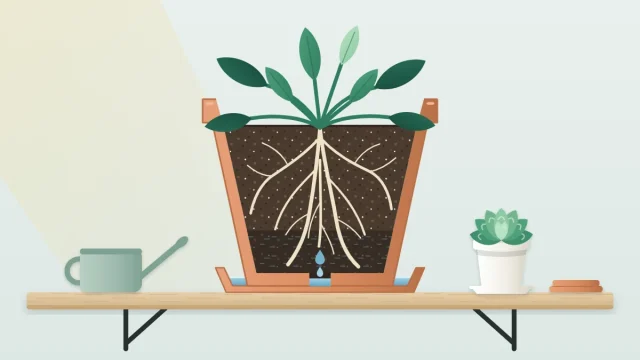
A self-watering container has a reservoir at the bottom and a wick or wicking column that draws water up into the potting mix. It can be useful for plants that prefer evenly moist conditions and for growing areas that are awkward to reach.
It does not suit every plant; those that prefer to dry out between waterings may stay too wet. Follow the maker’s guidance on filling and on when to let the reservoir run down, and keep watching the plant itself.
Choose a small palette
A collection of unrelated pots makes even healthy plants look cluttered. Limiting yourself to two or three colors and one or two materials ties a group together and lets the leaves stand out.
- Repeat one finish, such as terracotta or matte white, across most of the group.
- Add one accent color or texture in a single pot or a pair.
- Vary height and width instead of color to keep the group interesting.
Tip
With the two-pot system you can change the look of the garden without disturbing a single root: swap the cachepots and leave the plants in their nursery pots.
Once the containers are chosen, the next step is arranging them. For ways to stage pots at different heights, see these indoor plant display ideas.
Frequently asked questions
How much bigger should a new pot be than the root ball?
A little larger is usually enough. Many growers start by looking for a pot only slightly wider than the root ball, then adjust for the plant's size and growth rate. A much larger pot holds a lot of potting mix with no roots in it, and that mix stays wet for longer.
Is terracotta or plastic better for indoor plants?
Neither is better for everything. Unglazed terracotta is porous, so the potting mix tends to dry faster, and it is heavier and more stable. Plastic is light, holds moisture longer and rarely breaks. Pick based on the plant, the spot and whether you tend to water generously or sparingly.
What is a cachepot?
A cachepot is a decorative outer pot without a drainage hole. The plant stays in its plain nursery pot, which does have holes, and sits inside the cachepot. You lift the inner pot out to water, or tip out any water that collects in the outer pot afterward.