Window Direction for Indoor Plants: North, South, East and West
What north, south, east and west windows typically give plants in the Northern Hemisphere, how to find which way a window faces, and why direction is only the starting point.
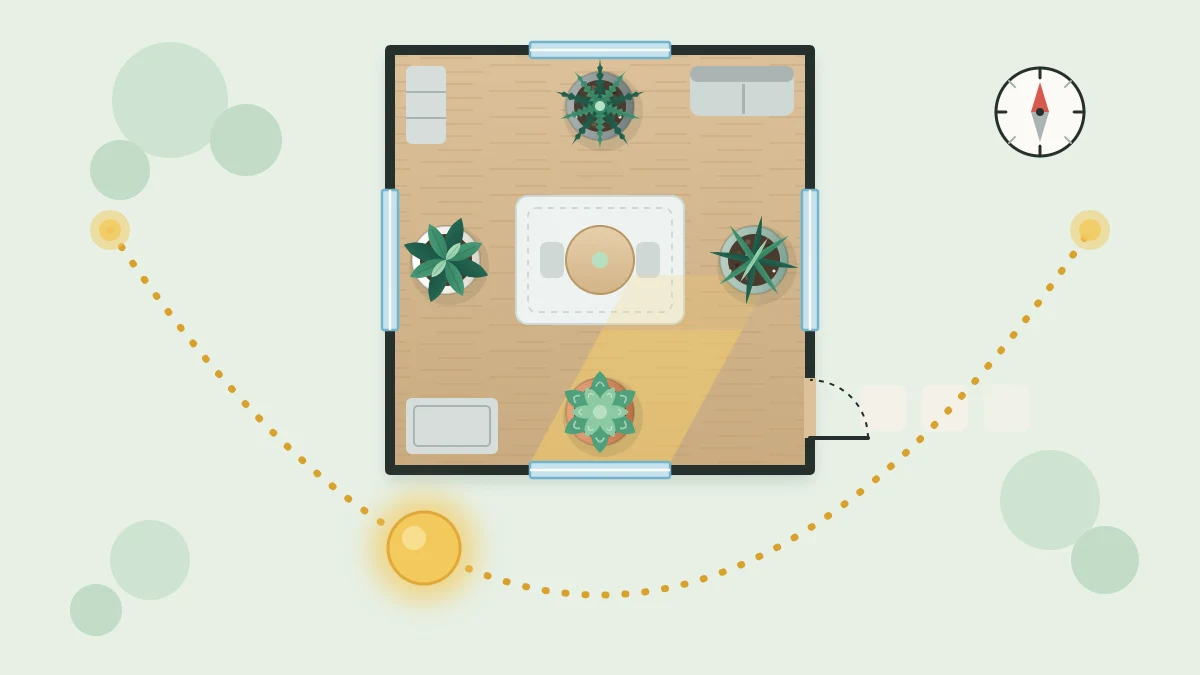
Plant labels often say things like “suits an east window” or “avoid a hot south window.” The advice only helps if you know which way your windows face and what each direction tends to deliver.
Window direction for indoor plants is a useful first sorting tool. It tells you when the sun is likely to shine in, how strong it will be and how warm the glass may get. Everything below is described for the Northern Hemisphere; in the Southern Hemisphere, north and south are reversed, while east and west stay the same.
What each direction typically gives
South-facing windows
A south window usually receives the most hours of direct sun, from late morning through the afternoon for much of the year. In winter the low sun sends its beams deep into the room; in summer the sun is higher and the beams stay closer to the glass. This is generally the brightest exposure in a home.
East-facing windows
An east window gets direct sun in the morning, when the air is cooler and the light is gentler, then bright light without sunbeams for the remainder of the day. Many common indoor plants are comfortable here.
West-facing windows
A west window is shaded in the morning and gets strong direct sun in the afternoon and evening. Because the room and the glass have already warmed up by then, west light comes with more heat than east light, especially in summer.
North-facing windows
A north window gives even, steady light with little or no direct sun. It is the dimmest of the four, but the light is consistent and never harsh.
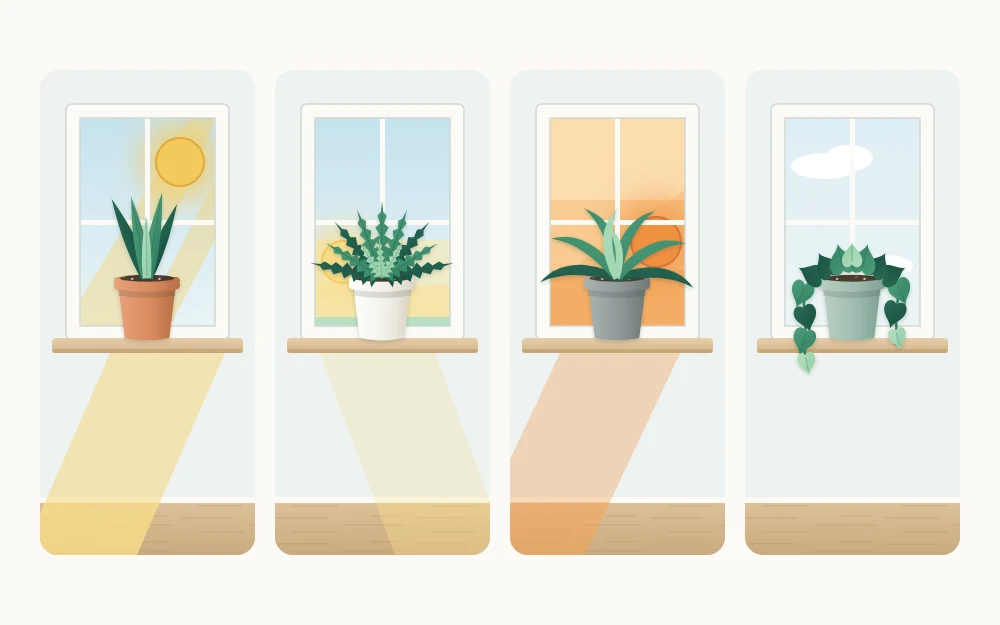
Window directions at a glance
The last column describes the kind of indoor garden that often suits each exposure. Treat it as a starting point, not a rule.
| Direction | Typical light | Indoor garden that often suits it |
|---|---|---|
| South | The most direct sun; brightest overall | Sun-loving plants at the glass, with bright indirect light plants set back or to one side |
| East | Gentle morning sun, then bright indirect light | A mixed foliage garden on or near the windowsill |
| West | Strong afternoon sun and more heat | Plants that enjoy direct sun, or a foliage group behind a sheer curtain |
| North | Even light, little or no direct sun | Plants that tolerate low to medium light, kept close to the glass |
How to find which way a window faces
You do not need to guess. Any of these will tell you:
- A phone compass. Stand with your back to the window, looking into the room, then turn round and read the direction you face when looking out.
- The sun. The sun rises roughly in the east and sets roughly in the west. A window that fills with sunlight at breakfast faces east or close to it; one that glows in the evening faces west.
- A map. Find your building on a map app with north at the top and see which side the window is on.
Why direction is only the starting point
Two south windows can perform very differently. Direction tells you what the sky could deliver; these factors decide what actually arrives:
- Trees. A tree in leaf can turn a sunny window into a shaded one, and deciduous trees change the result twice a year.
- Neighboring buildings. A wall across a narrow street or courtyard can block the sun for most of the day.
- Overhangs. Balconies, eaves, porches and awnings cut off high summer sun in particular.
- Window size. A large, tall window lets in far more light than a small one facing the same way.
- Latitude and season. The sun’s height and the length of the day vary with where you live and the time of year.
- Curtains, blinds and screens. Anything across the glass reduces what comes through.
The result is that a clear, generous north window can be a better growing area than a small south window facing a wall. So confirm the direction with your own eyes: the guide on how to assess natural light in your home walks through a simple survey of each spot.
The picture also shifts through the year. A windowsill that is gentle in winter can be fierce in midsummer, which is the subject of the guide to seasonal light changes indoors. For background on how plants respond to light, see the University of Maryland Extension’s page on lighting for indoor plants.
Adjusting the light a window gives
You cannot turn the building, but you can tune what a window delivers.
- Hang a sheer curtain. Thin fabric softens direct sun into bright, diffused light. It is the simplest fix for a south or west window that is too strong for the plants you want to grow there.
- Move the garden back from the glass. A table or stand a few feet into the room takes plants out of the direct beam while keeping them in bright light. Remember that light drops quickly with distance, so make the move in small steps and watch how the plants respond.
- Use the side wall of the window. A shelf or stand just to one side of a sunny window catches plenty of brightness with only a brief pass of direct sun.
- Move closer at a dim window. At a north window, or any shaded one, keep plants as near to the glass as you can without the leaves touching it.
Tip
When you move a plant into stronger light, do it gradually over a couple of weeks. Leaves grown in dimmer conditions can scorch if they are shifted straight into direct sun.
Glass itself matters too. A pane in full summer sun can become hot, and the same pane can be very cold on a winter night, so keep leaves from pressing against it in any season. Practical setup on the ledge itself is covered in the step-by-step guide to a windowsill garden.
Choosing between your windows
If you have a choice, start with the kind of garden you want. For sun-loving plants, look first at south and west windows. For a mixed group of foliage plants, an east window is often the easiest place to begin, with a lightly screened south or west window as an alternative. A north window can hold a calm, green garden of plants that tolerate lower light.
If you have only one window, the logic runs the other way: learn what that window gives across a full day, then choose plants to match it.
Frequently asked questions
Which window direction is best for indoor plants?
It depends on the plants. In the Northern Hemisphere, south and west windows usually suit plants that enjoy direct sun, east windows suit many foliage plants, and north windows suit plants that tolerate lower light. Trees, buildings and window size can change the result, so check the actual light at each window.
Can plants grow in a north-facing window?
Yes, provided you choose plants that tolerate low to medium light and keep them close to the glass. A large, unobstructed north window gives steady, even light. A small or shaded one may be too dim for most plants, in which case a grow light used per its manufacturer's instructions can supplement it.
How do I tell which direction my window faces?
Open the compass on your phone, stand at the window and read the direction you face when looking out. You can also watch the sun: a window lit at breakfast faces roughly east, and one lit in the evening faces roughly west. A map app with north at the top confirms it.