Rotating Indoor Plants for Even Growth
Why plants lean toward the window, how a quarter turn and an occasional swap of positions even out growth, which plants to leave alone, and what rotation cannot fix.
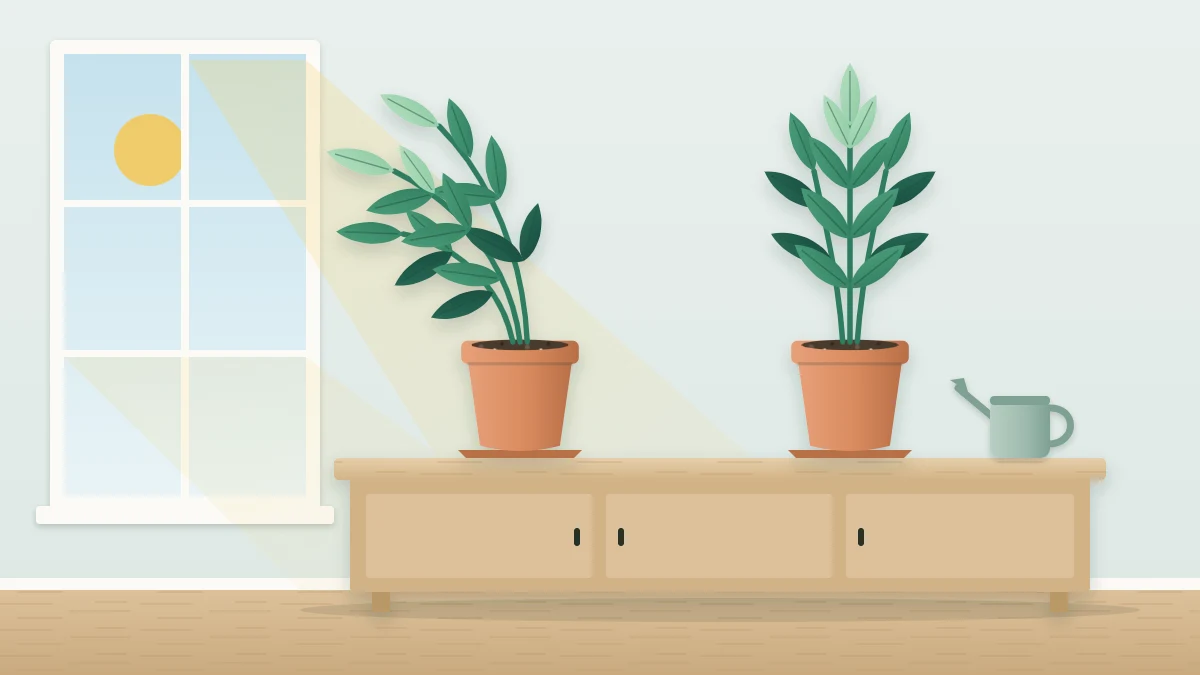
A plant that started out upright and now reaches for the glass like a sunbather is not unhealthy. It is doing what plants do: growing toward the brightest light it can find. Outdoors that light comes from most of the sky. Indoors it usually comes from one window, on one side, so growth piles up on that side and the whole plant slowly tips.
Rotating indoor plants is the simple answer, and it costs nothing but a few seconds per pot. This guide covers the two kinds of rotation, which plants show the benefit most, which ones are better left where they are, and what turning a pot cannot fix.
Why indoor plants lean
Stems bend toward their main light source because the shaded side of a stem grows a little longer than the lit side. The effect is gradual, which is why it tends to go unnoticed until a pot looks lopsided or starts to tip.
Leaves do the same thing in their own way. They angle their flat faces toward the window, so the room side of the plant ends up showing mostly leaf backs and bare stems.
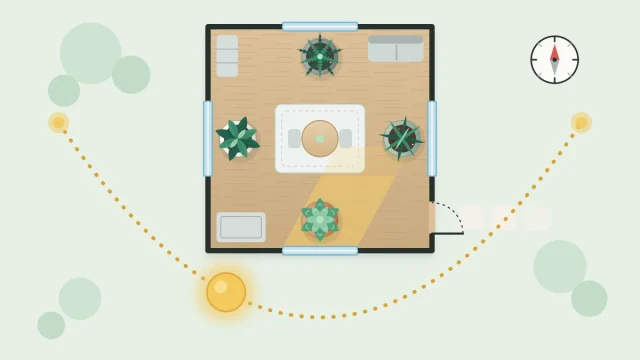
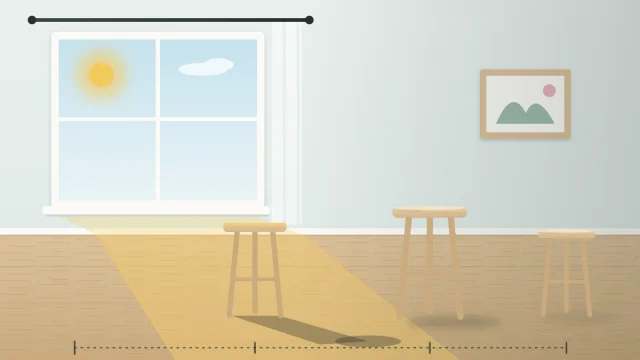
How strongly this shows depends on the window and its direction, the season, anything outside that blocks the sky, and how far the pot stands from the glass. The guide to how window direction changes the light indoors explains why the same plant leans hard in one room and barely at all in another.
Two kinds of rotation
Turning a pot on the spot
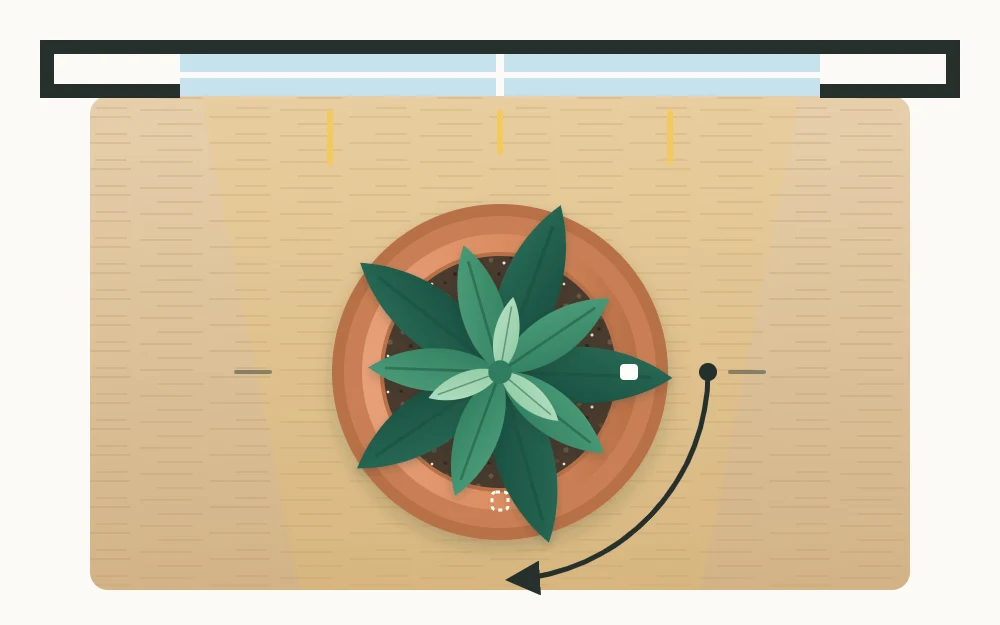
This is the everyday version. Each time you check or water a pot, give it a quarter turn in the same direction. Over four visits every side of the plant has faced the window once, and new growth is spread around the stem instead of stacked on one side.
The size of the turn matters less than doing it consistently. A quarter turn is easy to judge by eye and keeps the change gentle.
Rotating positions within the garden
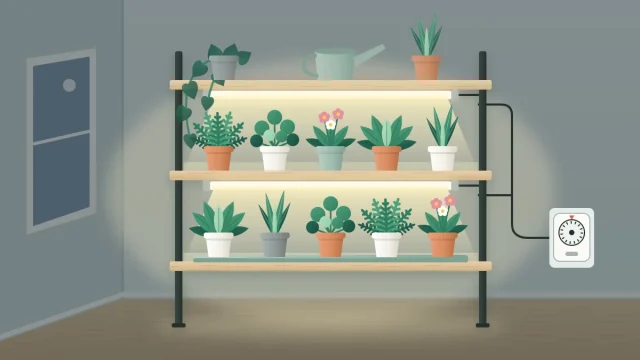
The second kind moves plants between places. In any group, the front row by the window gets far more light than the row behind it, and the plant at the far end of a shelf gets the least of all. Swapping front and back rows now and then shares the good positions around.
You can also give a plant from a dimmer spot a spell in the bright zone and then return it. Make these moves in modest steps. A plant that has adjusted to low light can scorch if it is set straight into direct sun, so shift it toward brighter light over a couple of weeks and watch how the leaves respond. On a narrow ledge this takes a little planning; the article on setting up a windowsill garden covers how to arrange rows so pots can be swapped without lifting everything.
Which plants show it most
Leaning is most obvious on plants that grow quickly and on plants with a single main stem. A fast grower adds a lot of new tissue between your checks, and all of it heads the same way. A single-stemmed plant has nothing to disguise the lean, so a small bend at the base becomes a large tilt at the top.
Bushy, slow-growing and low, rosette-shaped plants show it less. They still grow fuller on the window side, but the effect is a slightly uneven outline, not a tilt.
Plants you might leave alone
Rotation is a habit, not a rule for every pot. Two groups are often better left as they are:
- Flowering plants in bud. Some flowering plants react to a change in orientation while buds are forming and may drop them. If a plant is setting buds, many growers leave it facing the same way until the flowers have opened, then resume turning.
- Trained climbers. A plant tied to a pole, trellis or wall wires has been arranged to face one way. Turning it puts the leaf backs toward the light and the support in front. Leave it in place and adjust the ties instead.
Small aids that make it easier
- A mark on the pot. A small dot of paint, a sticker or a plant label pushed in at one edge shows where you are in the cycle.
- A plant caddy. A wheeled base lets you spin a heavy floor pot or roll it out of a corner. Check the caddy’s stated load rating before you use it, because a large pot of wet potting mix is heavy.
- A turntable. A flat rotating stand under a saucer suits mid-sized pots on a table or bench, where lifting would disturb the plants around them.
- A fixed moment. Tie the turn to something you already do. Building it into your regular indoor garden maintenance walk-round means it happens without a separate reminder.
Tip
Always turn in the same direction. Clockwise or counterclockwise does not matter, but switching between them returns the plant to a side it has just left.
What rotation cannot fix
Turning evens out growth. It does not add light. If a spot is simply too dim for the plant, rotation gives you a plant that is weak and stretched on all sides instead of one. Long gaps between leaves, small pale new growth and a plant that leans again within days of each turn all suggest the position, not the orientation, is the problem.
In that case, look at the light the growing area actually receives and either move the plant closer to the window, choose a brighter spot, or give the space to a plant that copes with less.
Good to know
How fast a plant leans, and how often turning is worth the effort, varies by plant and home. Use the quarter turn as a starting point and let the plant’s shape tell you whether to do more or less.
Straightening a plant that already leans
A stem that has grown at an angle will not snap back. Older, firm growth keeps its shape; only the new growth at the tip responds. Turn the leaning side away from the window and the top will gradually curve back toward the light, which takes weeks, not days, and longer in winter when growth is slow.
While that happens, a short stake and a soft tie can hold a top-heavy stem steady so the pot does not tip. Loosen the tie as the stem thickens.
Frequently asked questions
How often should I turn my indoor plants?
There is no fixed interval that suits every home. A practical habit is a quarter turn each time you check or water a pot, always in the same direction. Fast-growing plants close to a bright window may need it more often than slow growers, so let the shape of the plant guide you.
Will a leaning plant straighten up again?
The new growth at the tip will curve back toward the light once you turn the leaning side away from the window, but older firm stems keep their bend. Expect the change to take weeks, and longer in winter. A stake and a soft tie can steady a top-heavy stem in the meantime.
Does rotating help a plant in a dark corner?
Not much. Turning spreads the available light around the plant, but it does not increase it. If growth is stretched, pale and sparse on every side, the spot is too dim for that plant. Move it closer to a window or choose a plant better suited to low light.