Dish Gardens and Terrariums: Decorative Indoor Gardens in a Bowl
How a dish garden differs from a terrarium, which plants belong in each, and ordered steps for planting an open bowl that stays healthy.
At a glance
What you need
- Shallow bowl, ideally with a drainage hole
- Saucer
- Potting mix suited to the plants
- Three to five small plants with matching needs
- Gravel or pebbles
- Small scoop or spoon
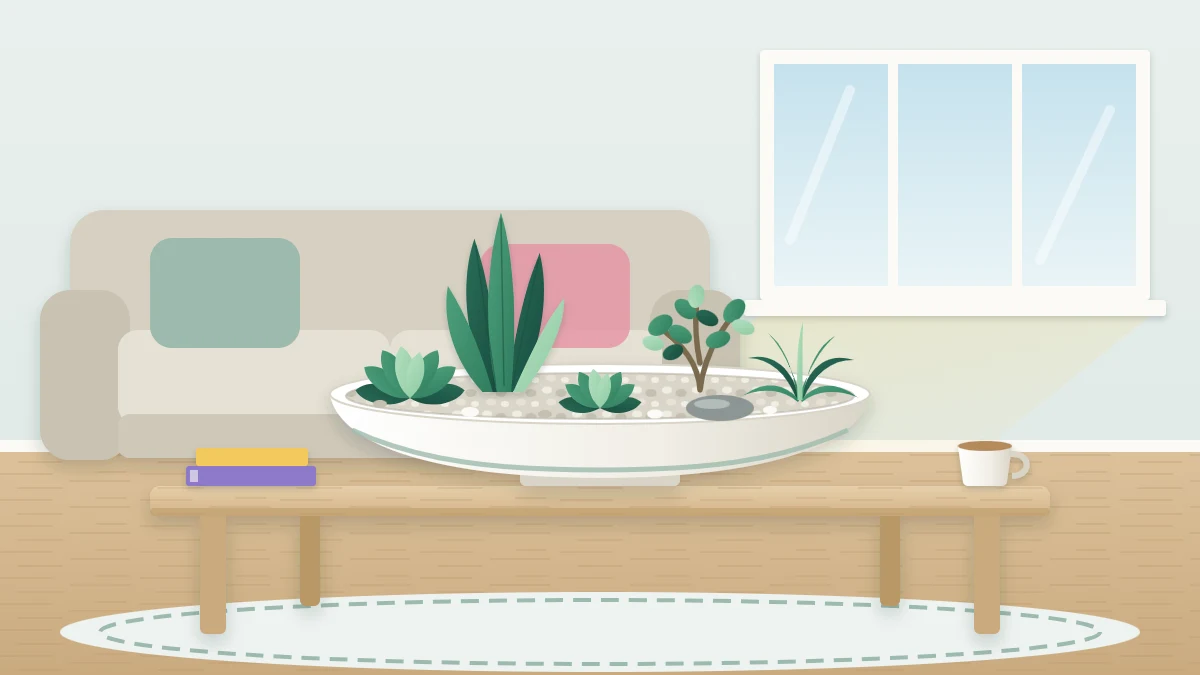
A dish garden is several small plants growing together in one open, shallow container, arranged like a miniature landscape. It gives you a complete indoor garden on a coffee table or a desk, in a space no bigger than a dinner plate.
A terrarium looks similar at first glance and works very differently. Knowing which is which, and which plants belong in each, is most of what it takes to keep either one looking good for more than a few weeks.
How the two formats differ
A dish garden is open to the room. Air moves freely over the plants, the surface of the potting mix dries between waterings, and the plants live in the same conditions as everything else in your home.
A terrarium is a clear glass container, either open at the top or closed with a lid, that holds small plants in a sheltered, humid space. In a closed one, moisture evaporates, condenses on the glass and runs back down, so the air inside stays damp and very little water is ever added.
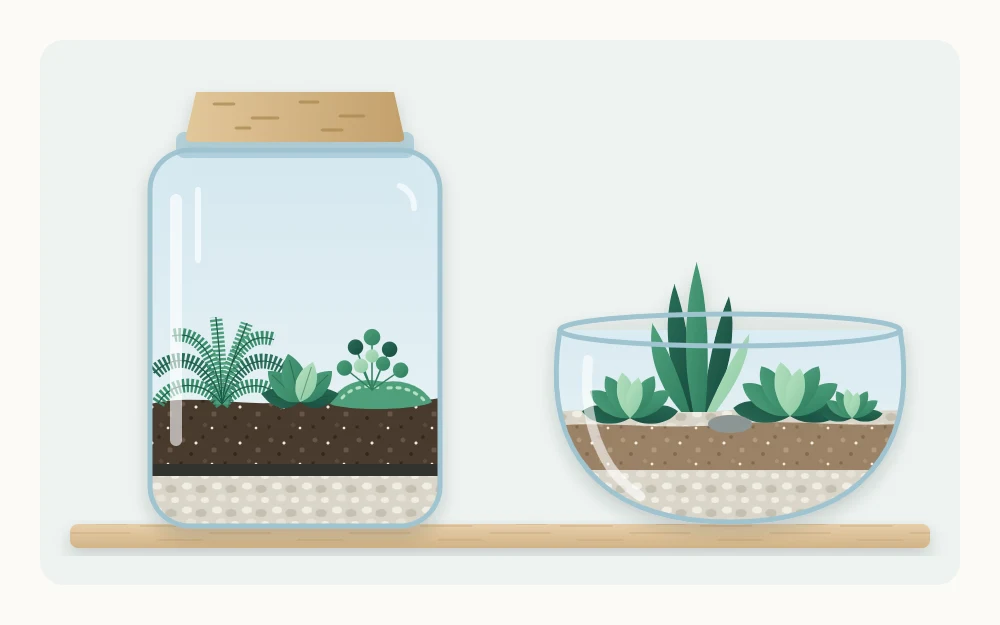
| Feature | Dish garden | Closed terrarium |
|---|---|---|
| Container | Open shallow bowl or tray | Clear glass with a lid |
| Air around plants | Room air, often dry | Humid and still |
| Light | Matched to the plants chosen | Bright, out of direct sun |
| Watering | Light, when the mix has dried | Rarely, in very small amounts |
The rule for both: plants with matching needs
Every plant in a shared container gets the same light and the same water. Combine only plants that want the same conditions. A mixed bowl in which one plant likes to stay moist and its neighbor likes to dry right out will always be wrong for one of them.
- Open dishes suit small plants that are comfortable in drier air and, often, brighter light, since the bowl can sit near a window.
- Closed glass suits small humidity-loving plants, such as mosses and miniature ferns, that stay compact.
Never mix the two groups. Plants adapted to dry air tend to rot in a sealed jar, and plants that need constant humidity crisp up in an open bowl. The guide to choosing foliage plants for an indoor garden can help you find small plants with similar needs, and the plant’s label or the seller can usually tell you what it prefers.
How to make an open dish garden
- Choose the container. A bowl 3 to 4 in (8 to 10 cm) deep is a workable starting point, though the right depth depends on the root balls of the plants you pick. A container with a drainage hole, set on a saucer, is much easier to manage. Without a hole there is nowhere for surplus water to go, so you will have to water very sparingly.
- Add the mix. Fill the bowl most of the way with a potting mix that suits the plants you chose; the guide to potting media for indoor gardens explains the options. Leave a little space below the rim so water does not run off.
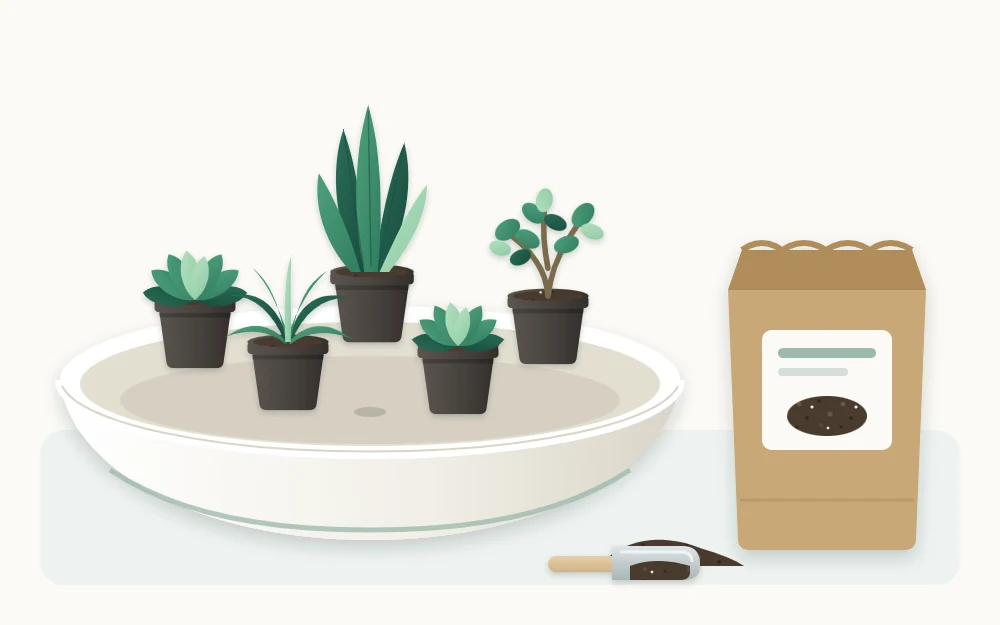
- Arrange the plants in their pots. Set the nursery pots in the empty or part-filled bowl and move them around until the group looks right from the side you will see most.
- Plant, tallest off-center. Take each plant out of its pot, loosen the root ball gently and plant it at the same depth it grew before. Place the tallest plant to one side of the middle, not dead center, and work outward and downward from it. Leave some space between plants for growth.
- Add a top layer. A thin layer of gravel or pebbles over the surface gives a finished look and keeps mix from splashing. It is decorative; it does not replace drainage.
- Water lightly. Give just enough to settle the mix around the roots. If the bowl has a hole, let it drain and empty the saucer.
Looking after a dish garden
Place the bowl where the light suits the plants in it, and turn it now and then so growth stays even. Water when the mix has dried to the extent those plants prefer, checking with a finger at the edge of the bowl. Shallow containers hold little mix and can dry quickly near a sunny window, while a bowl with no hole stays wet at the bottom long after the surface looks dry.
Tip
In a bowl without a drainage hole, add water a little at a time close to each plant, then stop. It is far easier to add more a few days later than to remove water that has pooled at the bottom.
Terrarium basics
A terrarium is planted in much the same way, usually with long tools through a narrow opening, and then mostly left alone. Four habits keep it going:
- Bright light, no direct sun. Glass traps heat, and sun through the side of a jar can quickly warm the air inside more than small plants tolerate. Choose a bright spot the sun does not reach.
- Very little water. A closed terrarium recycles its moisture. Add a small amount only when the mix looks dry and the glass stays clear all day.
- Vent when it fogs. Light misting on the glass in the morning is normal. If the glass stays heavily fogged, take the lid off for a while to let moisture escape.
- Trim what touches the glass. Leaves pressed against wet glass tend to deteriorate, so cut growth back before it reaches the sides.
An open terrarium, a glass bowl with no lid, behaves more like a dish garden with slightly sheltered air. For more on moisture in the air around plants generally, see the guide to humidity for indoor gardens.
When to replant
Both formats are slow, small-scale gardens. With suitable light the plants will gradually grow into each other, and at some point the bowl or jar will look crowded, one plant will overtake the rest, or water will run straight off a surface packed with roots.
That is the signal to take the arrangement apart. Lift the plants, divide or trim any that have outgrown the group, move the largest into its own pot, and replant the rest in fresh mix. How long that takes varies widely with the plants, the light and the size of the container, so let the look of the garden decide.
Frequently asked questions
Can a dish garden go in a bowl without a drainage hole?
It can, but it is harder to manage. Surplus water has nowhere to go, so it collects at the bottom where roots sit. Water in small amounts near each plant and wait before adding more. A layer of pebbles under the mix does not solve this; a container with a hole and a saucer does.
Can I put dry-air plants in a closed terrarium?
It is not a good match. A closed terrarium keeps the air humid and the mix damp, which suits small moisture-loving plants. Plants adapted to dry air and bright light usually decline in those conditions. Use an open dish for them and keep the lidded glass for plants that want humidity.
Why is my terrarium glass always fogged?
Some condensation that clears during the day is normal. Glass that stays heavily fogged usually means there is more moisture inside than the container needs. Take the lid off for a while to let it escape, hold off adding water, and check that the terrarium is not standing in direct sun.