Indoor Foliage Plants: Using Leaf Shape, Size and Color
How to choose and combine leafy plants for a green indoor garden: growth habits and the role each plays, the leaf qualities worth contrasting, and what to check before buying.
Flowers come and go, but leaves are there every day of the year. That is why indoor foliage plants form the backbone of most gardens inside the home: they give the space its shape in every season.
A green garden does not have to be a flat one. Leaves differ in size, outline, surface and color, and plants differ in the way they grow. Choosing with those differences in mind is what turns a row of similar pots into a composed group.
Start with growth habit
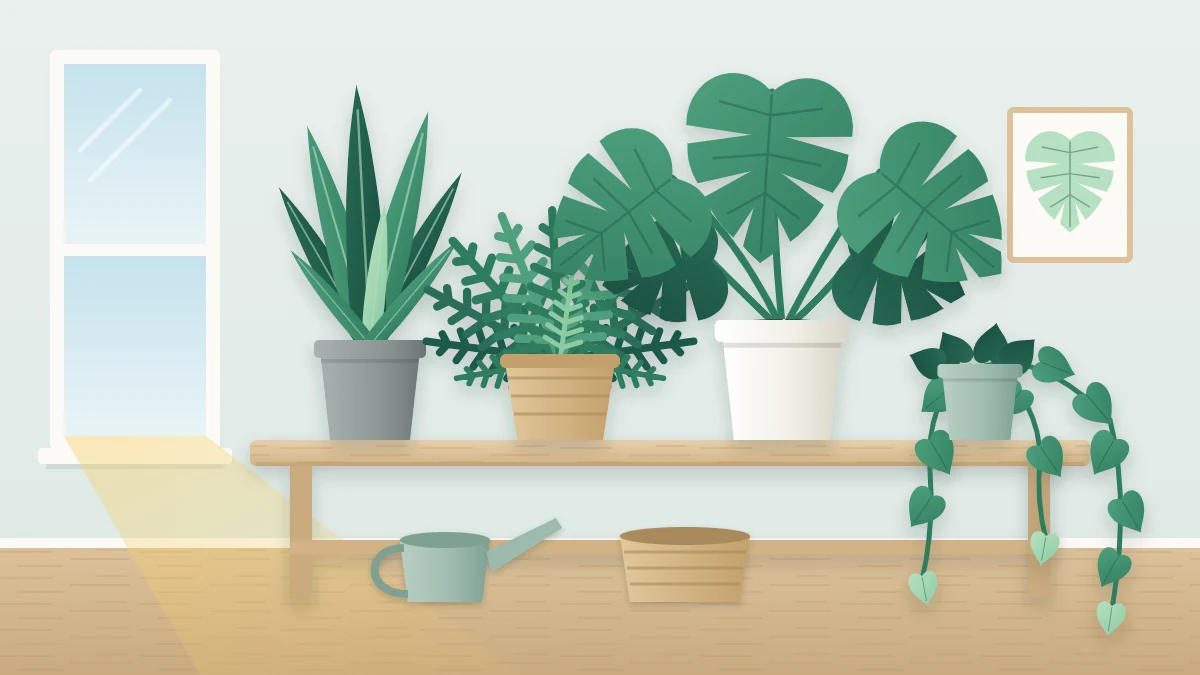
Growth habit is the overall form a plant takes: up, out, down or in a tight circle. It decides where a plant can go and what part it plays, so it is a more useful way to organize a garden than plant families or names.
The plants named below are widely sold examples only. Each has its own needs, so check any plant before buying it.
| Habit | Role in the garden | Examples often sold |
|---|---|---|
| Upright and architectural | Height and a strong outline at the back or as a floor plant | Snake plant, ZZ plant, rubber plant |
| Bushy fillers | Mass in the middle of a group; hides pots and gaps | Many ferns, peperomias, Chinese evergreen |
| Trailing and climbing | Softens shelf edges, or grows up a support | Pothos, heartleaf philodendron |
| Rosette and fountain | A focal point with leaves arching from the center | Bird’s nest fern, spider plant, some dracaenas |
A fifth group is useful at small scale: small-leaved, low-growing plants, such as nerve plant or baby’s tears, which cover the surface in dish gardens and other shared containers.
How each habit is used
Upright plants set the height of a group. One tall form is usually enough for a shelf or bench; several of similar height compete with each other.
Fillers do the quiet work. Their rounded mass connects the tall plant to the low ones and makes a group look settled.
Trailers and climbers use space the other plants cannot. Set them at the edge of a shelf or on a high spot where stems can hang, or give climbers a pole or trellis.
Rosettes and fountains draw the eye because of their symmetry. They look best with room around them, so the outline stays visible.
A simple recipe for one growing area is one upright plant, two or three fillers and one trailer. For ways to stage them at different heights, see these indoor plant display ideas.
Leaf qualities to combine
Once the habits are settled, look at the leaves themselves. Contrast between neighbors is what makes each one noticeable.
- Size. One plant with large leaves beside several with small ones gives a group scale. All large looks heavy; all small looks busy.
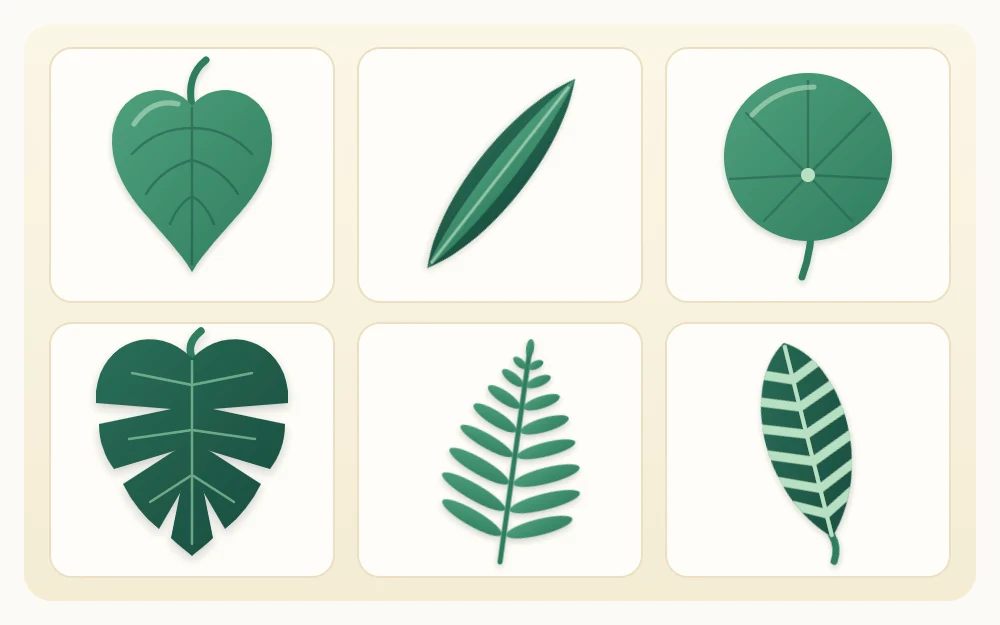
- Shape. Heart-shaped, strap-like, round, deeply split and feathery leaves read very differently. Put unlike shapes side by side.
- Gloss. Shiny leaves reflect light and stand forward; matte leaves recede. A mix of both adds depth.
- Texture. Smooth, quilted, velvety or finely divided surfaces are best appreciated up close, so keep textured plants near eye level.
- Color. Green alone ranges from pale lime to nearly black. Variegated leaves, marked with white, cream, yellow, silver or pink, add brightness.
Plain green, variegated and colored leaves
Variegated and colored foliage is tempting, and a little of it lifts a group. Use it as an accent: one or two patterned plants among plain green ones look deliberate, while a whole shelf of patterns can blur together.
There is a practical point too. The pale parts of a variegated leaf contain less green pigment, so these plants often need brighter light than their plain green relatives to grow well and keep their pattern. In dim spots, new leaves on some plants come in greener. That response varies by plant, so check each one and learn how to assess the natural light in the spot before you choose.
Tip
For a calm, cohesive garden, repeat one leaf color or shape two or three times across the group, then add a single contrast.
Check a plant’s needs before buying
Looks narrow the choice; needs make the decision. Before a plant goes in the basket, do three things.
- Read the label. Note the light it asks for and the size it can reach. Labels are short and sometimes generic, so treat them as a first clue.
- Find the botanical name. Common names are shared between unrelated plants. The botanical name, usually in italics on the label, identifies the plant exactly.
- Look it up in a reliable source. A university extension service or a horticultural society is a good place to start. For general guidance on choosing, see University of Maryland Extension’s page on selecting indoor plants.
Then compare what you found with the growing area you have in mind. A plant that suits your light will look better over time than a more striking one that does not.
Check the plant itself too. Choose one with firm, evenly colored leaves, look under a few of them, and keep the new arrival apart from your other plants for a couple of weeks.
If pets or small children share the home
Some widely sold foliage plants can be harmful if chewed or swallowed, and appearance tells you nothing about which ones.
Good to know
Before buying, look each plant up by its botanical name in the ASPCA’s database of toxic and non-toxic plants. Do this for every plant, since common names can be misleading.
Placement is not a substitute for checking. Trailing stems grow down within reach, leaves fall to the floor, and pets climb. Decide with the database entry in front of you.
Combine by needs as well as looks
The most attractive pairing fails if one plant wants direct sun and its neighbor wants shade. Plants that sit together should want similar light and dry at a similar pace, which the guide to grouping indoor plants explains.
In practice, work in this order: assess the light in the growing area, list plants that suit it, then choose among them for habit and leaf contrast. Add plants a few at a time and let the group fill out before buying more.
Frequently asked questions
What are foliage plants?
Foliage plants are grown mainly for their leaves instead of their flowers. Indoors they provide structure all year, because the leaves stay when blooms on other plants have faded. They range from tall upright forms to low fillers and trailing vines, in many shapes, textures and shades.
Do variegated plants need more light than plain green ones?
Often, yes. The pale areas of a variegated leaf hold less green pigment, so many of these plants need brighter light to grow well and keep their pattern. It varies by plant, so check the one you have in mind and watch whether new leaves come in greener.
How do I know if a foliage plant is suitable for a home with pets?
Find the botanical name on the label and look it up in the ASPCA plant database before buying. Common names are shared between unrelated plants, so the botanical name is the reliable way to search. Check every plant individually; appearance gives no indication.