Indoor Flowering Plants: What It Takes to Get Blooms Inside
Why flowering plants often stop blooming indoors and what helps: more light than foliage needs, knowing whether a plant is a long-term bloomer or seasonal color, looking up each plant's rebloom cues, and using flowers as accents among foliage.
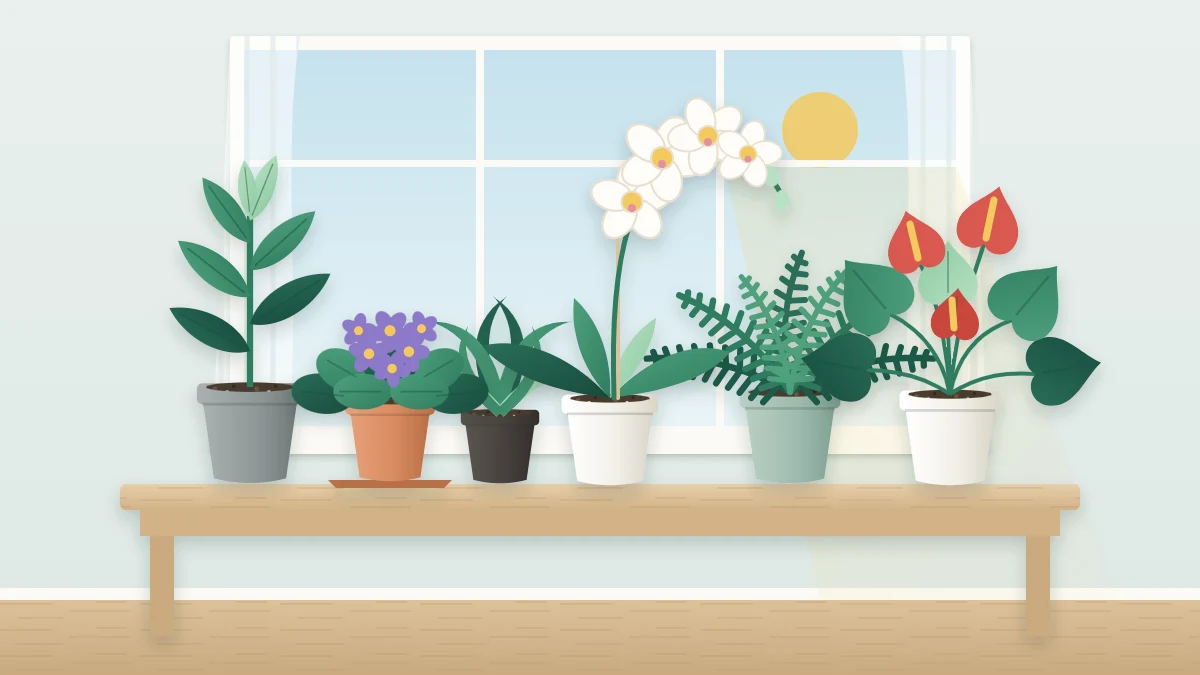
Foliage gives an indoor garden its structure, and flowers give it moments of color. Indoor flowering plants are best thought of that way: as accents placed among the greenery, not as the bulk of the planting. Used like this, one or two plants in bloom can lift a whole growing area.
They are also the plants most likely to disappoint. A plant bought in full flower finishes blooming, stays green and never flowers again, and it is not obvious why. The reasons are usually straightforward, and most of them come down to light and to what kind of flowering plant you bought.
Why flowering is harder indoors
Making flowers costs a plant more energy than making leaves, and that energy comes from light. As a general rule, flowering takes more light than leaf growth. A position that keeps a plant green and healthy may still be too dim for it to bloom, which is why a plant can look perfectly well and produce nothing but foliage.
The second reason is where the plant came from. Flowering plants are raised by growers in bright, closely controlled greenhouses and timed to be in bloom on the day they are sold. An ordinary room offers much less light and no such timing, so the plant has to adjust before it can flower again, if the room allows it at all.
Light is the first requirement
Put a flowering plant near the brightest window that suits it. Which window that is depends on the plant: some want direct sun for part of the day, while many popular indoor bloomers prefer bright indirect light and scorch in strong midday sun. The guide to window direction for indoor plants explains what each aspect typically offers; it describes directions for the Northern Hemisphere.
Distance from the glass matters as much as direction. Light falls away quickly as you move into a room, so a flowering plant on a table in the middle of the room is in far dimmer conditions than one beside the window.
Where no window is bright enough, a grow light can make up the difference. Set it up by the fixture manufacturer’s instructions and adjust by watching the plant; the guide to grow light basics covers the forms and placement.
Two kinds of flowering plant
It helps to decide which of two groups a plant belongs to before you buy it, because your expectations should differ.
Long-lasting bloomers kept for years
Some plants can live indoors for many years and flower repeatedly when their conditions suit them. Commonly grown examples include African violet, moth orchid, peace lily, anthurium and holiday cactus. Each has its own preferences, and none of them blooms continuously in every home, but all are widely kept as permanent members of an indoor garden.
Seasonal color plants
Others are sold as living bouquets: potted bulbs, florist’s chrysanthemums, and many of the gift plants that appear around holidays. They are grown to bloom once for sale. Some can be brought to flower again with the right conditions and a rest period, and some are very difficult to rebloom in a home. It is reasonable to enjoy these for the weeks they last and not count on a repeat.
| Long-lasting bloomers | Seasonal color plants | |
|---|---|---|
| Role | Permanent accent | Temporary color |
| After flowering | Kept and grown on | Often enjoyed once |
| Reblooming | Possible in suitable conditions | Varies; often hard indoors |
What brings a plant back into bloom
There is no single trigger, and this is where general advice fails. What prompts or supports reblooming differs from plant to plant. Common factors include:
- Light level. For many plants, simply moving to a brighter position is the whole answer.
- Day length. Some plants set buds in response to the length of the night, so stray evening light from lamps can interfere.
- A cooler period. Certain plants need a spell of lower temperatures before buds form.
- A drier rest. Others flower after a period in which they are kept on the dry side and not fertilized.
Because these needs can be opposite for two plants on the same sill, look up each plant by name and follow guidance for that plant. The natural shifts in day length and indoor light through the year, described in the guide to seasonal light changes indoors, are often part of the cue. Fertilize only during active growth and according to the product label.
Good to know
A plant that has just finished flowering is not failing. Many rest for weeks or months between flushes. Keep up ordinary care, check what that plant needs in order to bloom again, and give it time before you decide it will not.
Before you buy: homes with pets or small children
If pets or small children share your home, look each plant up by its botanical name in the ASPCA plant database before buying it. Use the botanical name on the label, because common names are shared between unrelated plants. Flowering gift plants deserve the same check as anything else, since they often arrive without your having chosen them.
Displaying plants in bloom
A few habits keep flowers looking good for longer:
- Remove spent flowers. Pinch or snip faded blooms and their stalks as the plant’s own guidance suggests. The display stays tidy, and some plants respond with more buds.
- Keep blooms out of hot direct sun. Petals are more delicate than leaves and fade or scorch quickly behind sunlit glass.
- Keep them away from heat sources. Radiators, heating vents and warm appliances shorten the life of flowers. Cooler positions within the plant’s comfortable range generally make blooms last.
- Water with care. A plant in flower often uses more water, so check the potting mix more frequently and keep water off the petals where you can.
Flowers against a foliage background
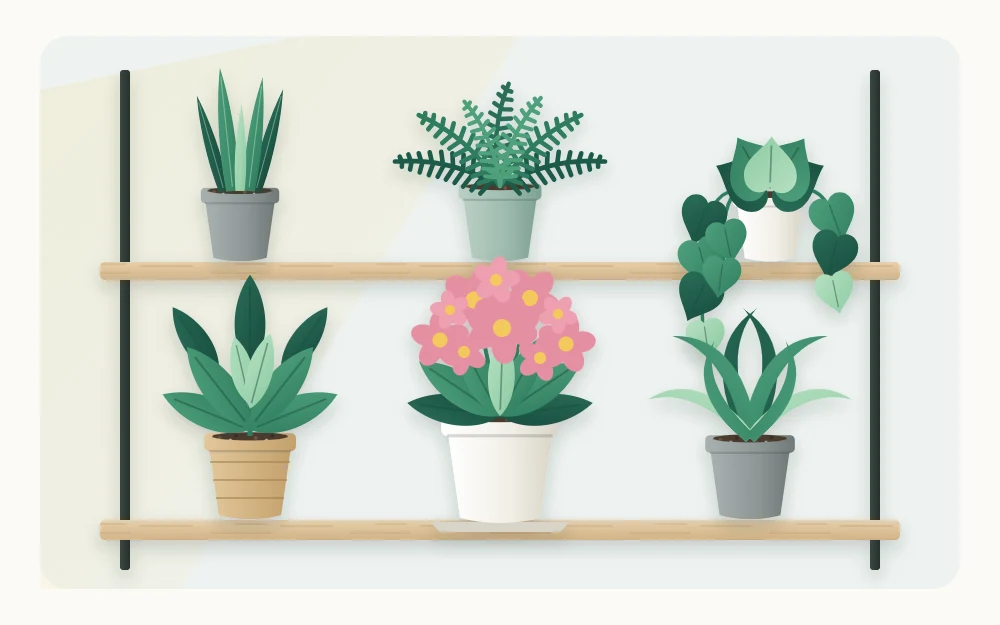
Color shows best against green. One or two flowering plants set in front of a group of foliage plants look more striking than a row of bloomers competing with each other, and the display still looks complete when the flowers finish. The guide to indoor foliage plants covers choosing that green background.
Place the flowering plant at the front of the group, at or just below eye level, and choose foliage neighbors that share its light needs so the whole group can stay in one spot. If you keep seasonal color plants, treat that front position as a stage: when one finishes, another takes its place, and the permanent planting behind it does not change.
Frequently asked questions
Why did my flowering plant stop blooming after I bought it?
Most flowering plants are raised in bright greenhouses and timed to bloom for sale. In a typical room the light is far lower, so the plant may stay healthy and green without flowering. Move it to the brightest position that suits it, and look up what that particular plant needs to bloom again.
Which indoor flowering plants can bloom again year after year?
African violet, moth orchid, peace lily, anthurium and holiday cactus are commonly kept for years and can flower repeatedly when their conditions suit them. Results vary between homes, mainly with light. Each has different rebloom cues, so check guidance for the specific plant instead of applying one approach to all.
Do flowering plants need a grow light indoors?
Not if a window gives them enough light. If a healthy plant refuses to bloom and no brighter window position is available, supplemental light may help. Set the fixture up as its manufacturer instructs, and judge the result by the plant's growth and budding over the following months.