Starting Indoor Plants: Young Plants, Cuttings or Seeds?
Three ways to stock an indoor garden compared: buying young plants, rooting cuttings and sowing seed, with what each costs in time and effort and which goal it suits.
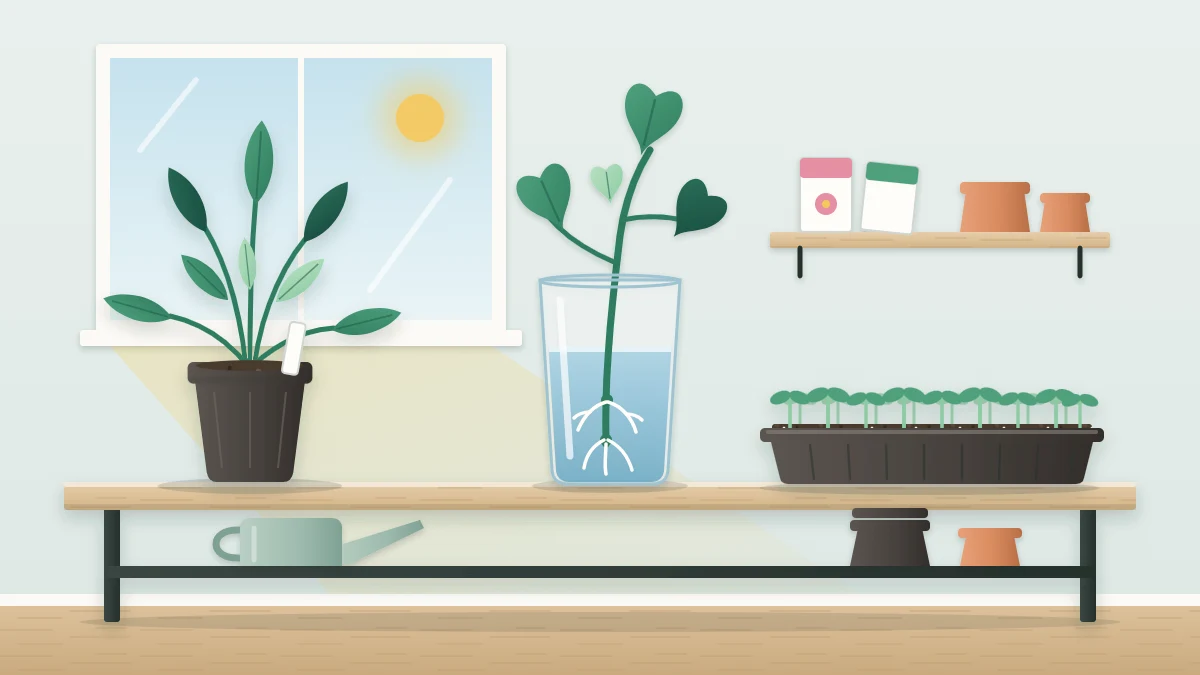
Once you have a growing area planned, something has to go in it. There are three ways to get there: buy young plants, root cuttings from plants that already exist, or sow seeds. Each fills a shelf at a different speed, with a different amount of effort and a different chance of disappointment.
Starting indoor plants is less about finding the single best method and more about matching the route to what you want from the garden. This comparison looks at what each one asks of you and your space, so you can choose, or mix all three.
The three routes side by side
| Compare | Young plants | Cuttings | Seeds |
|---|---|---|---|
| Cost level | Highest per plant | Lowest, often free | Low per plant, plus mix and trays |
| Time to a display-size plant | Immediate to a few months | Several months to a year or more | Varies widely; quick for annuals, slow for most foliage plants |
| Difficulty | Easy | Easy to moderate, depending on the plant | Moderate; needs steady attention |
| What it suits | Filling a new garden, feature plants | Multiplying foliage plants you already like | Flowering annuals and edible seedlings |
The times are rough and depend heavily on the plant, the light and the season.
Buying young plants
This is the fastest and simplest route, and the one that suits most people setting up a first indoor garden. Someone else has done the slow, fiddly early stage under good conditions, and you see exactly what you are getting.
What to look for in the shop
- Firm growth. Stems and leaves should hold themselves up. Pass over plants that are limp, stretched or sparse.
- No obvious damage. A torn leaf is cosmetic, but widespread marks, broken stems or a sour smell from the pot are reasons to choose another. Look under a few leaves while you are there.
- Roots not bursting from the pot. A few roots at the drainage holes are normal. A thick mat growing out of the base means the plant has been in that pot too long.
- A size that fits. Smaller plants cost less and often adjust to a new home more readily than large specimens.
The first few weeks at home
Keep a new plant apart from the others for a couple of weeks, in light similar to where it will end up. Check it the way you check the rest of the garden, including under the leaves.
Leave it in its nursery pot while it settles. A move to a new home is already a change in light, temperature and humidity, and repotting on top of that adds another. If you want it to look finished, slip the nursery pot into a cachepot, a decorative outer pot without a drainage hole, and lift it out to water. When it does need more room, the guide to repotting indoors without the mess covers the job.
Starting from cuttings
Many common trailing and soft-stemmed foliage plants root readily from stem cuttings. The general idea is simple: a healthy piece of stem with at least one leaf joint is cut from the parent, its lowest leaves are removed, and the joint is kept in water or in moist potting mix in bright indirect light until roots form. Once the roots are established, the cutting is potted up as a small plant.
How well this works varies a great deal by plant. Some root in water within weeks; some need a different approach, such as division or leaf cuttings; and some are slow or unreliable at home. Look up the method for the specific plant before you cut.
Cuttings make sense when you already have, or can be given, a plant you like and want more of it. They are also the cheapest way to fill a long shelf with a matching row. The trade-off is time: a rooted cutting is a very small plant, and it may be a year or more before it has real presence in the garden.
Tip
Take cuttings during active growth, when plants generally root more readily, and start a few more than you need. Not every one will take.
Starting from seed
Seed is mostly the route for flowering annuals and edible seedlings. Most foliage plants grown indoors are slow from seed or are not commonly sold that way, so sowing is rarely the practical way to stock a foliage garden.
It is also the most demanding of the three. Seedlings generally need:
- A fine seed-starting mix. It is lighter and finer than ordinary potting mix; the guide to potting media for indoor gardens explains the differences.
- Steady moisture. The mix should stay evenly moist, never soaked and never dry. A clear cover helps until the seeds sprout.
- Warmth. Many seeds germinate best in a warm room, away from cold glass.
- Strong light soon after sprouting. This is where indoor sowing most often goes wrong. A bright window may not be enough, and seedlings short of light grow tall, thin and weak.
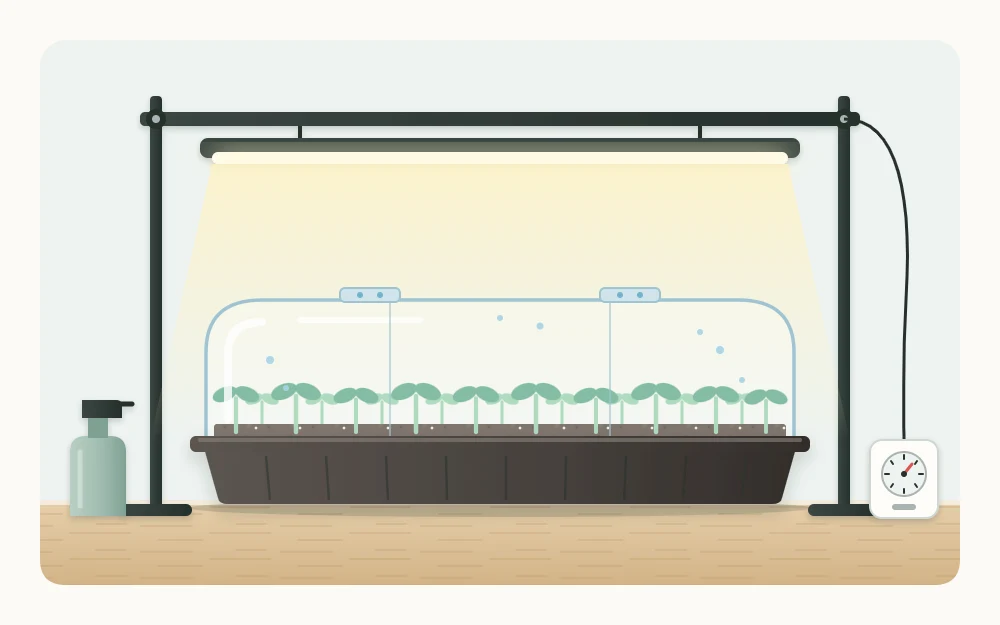
If window light falls short, a grow light is the usual answer. How close it sits and how long it runs depend on the fixture and the plants, so follow the fixture manufacturer’s instructions and watch how the seedlings respond; the guide to grow light basics covers what to consider.
For the sowing method itself, see University of Maryland Extension’s guide to starting vegetable seeds indoors and the University of New Hampshire Extension fact sheet on starting plants from seed. If seasonal color is what draws you to seed, the article on indoor flowering plants looks at where they fit in a garden.
Which route suits which goal
- You want a garden that looks established soon. Buy young plants.
- You want to fill a large space on a small budget and can wait. Buy a few plants and multiply them by cuttings.
- You want seasonal flowers or seedlings to move outdoors later. Sow seed, and plan the light before you sow.
- You enjoy the process as much as the result. Cuttings and seed both give you something to watch every day.
Start small, whichever route you choose
A handful of plants teaches you how your space behaves: how fast pots dry, where the light really falls, how much room you have to work. Add more once those few are growing steadily. The same goes for cuttings and seed. One jar of cuttings or one small tray is easier to keep an eye on than a windowsill full of them, and whatever succeeds will need space, pots and light of its own.
Frequently asked questions
Is it better to buy plants or grow them from cuttings?
Buying gives you a finished-looking plant straight away and is the simplest choice for a new indoor garden. Cuttings cost little or nothing but take many months to reach a useful size, and not every plant roots readily. Many people buy a few plants first and multiply the ones they like.
Can I start seeds on a windowsill?
Sometimes, but it depends on the window, the season and the plant. Seedlings need strong light soon after sprouting, and a bright window may not provide enough, which leads to tall, weak growth. If that happens, a grow light used according to the fixture manufacturer's instructions is the usual solution.
Should I repot a plant as soon as I bring it home?
Usually not. A new plant is already adjusting to different light, temperature and humidity, so it is generally kinder to leave it in its nursery pot for a few weeks. Repot sooner only if it is clearly struggling for room, such as roots matted out of the base.