Seasonal Light Changes: Adjusting an Indoor Garden Through the Year
How indoor light shifts between winter and summer, and how to move, screen and re-survey an indoor garden so the same plants cope in both seasons.
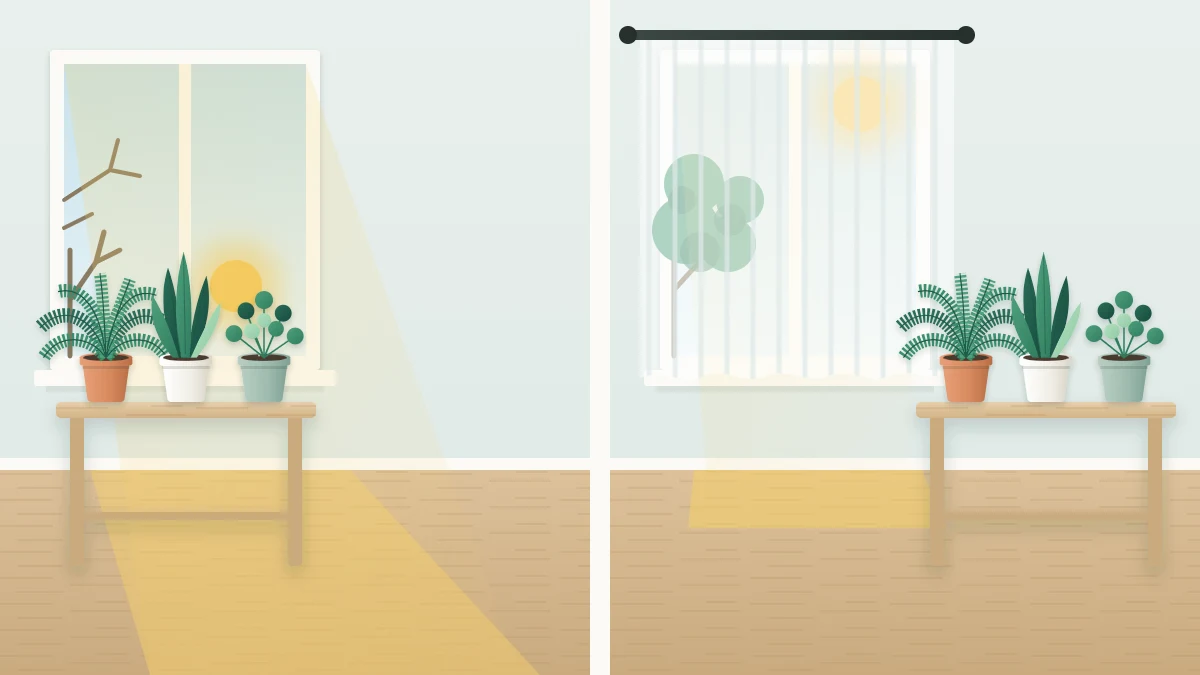
A plant that grew well beside a window all summer can stall in the same spot by midwinter, and one that sat comfortably through winter can scorch there in July. Nothing about the plant or your care has changed. The light has.
Understanding seasonal light changes for indoor plants lets you treat the garden layout as something that moves a little through the year. This article describes the pattern for temperate latitudes in the Northern Hemisphere; how strong the effect is depends on your latitude, climate, home and plants.
What changes between winter and summer
Three things shift together as the year turns: the height of the sun, the length of the day and the strength of the light.
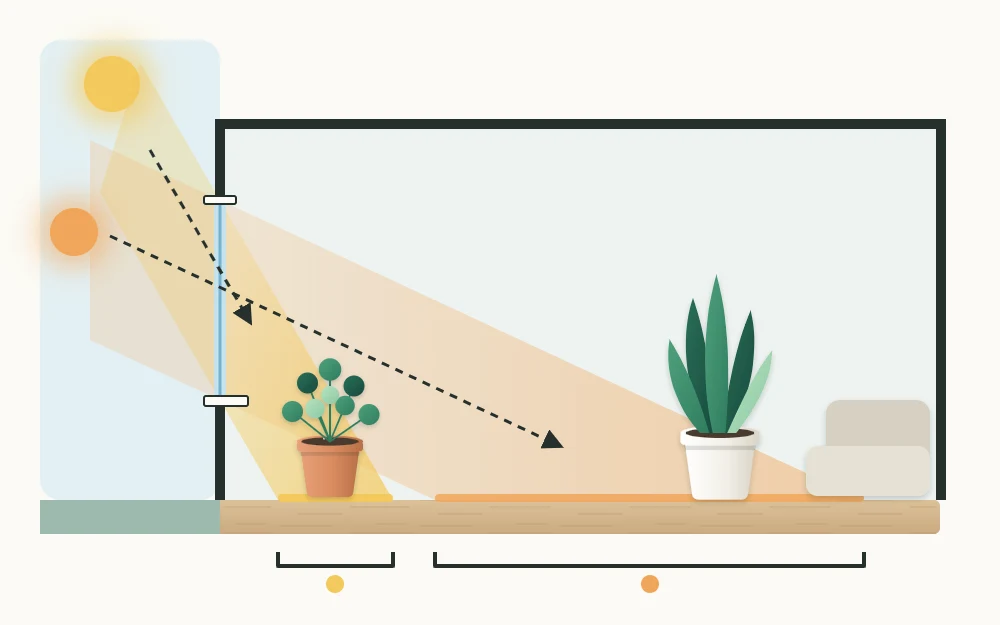
In winter the sun travels low across the southern sky. Its beams come through sun-facing windows at a shallow angle and reach deep into the room, sometimes right across the floor. At the same time the days are short and the light is weaker overall, with more overcast weather in many climates. A room can have a sunbeam on the far wall and still deliver much less light in total than it did in summer.
In summer the sun is high. Beams enter steeply and land close to the window, so the patch of direct sun on the floor is short. Days are long and the light is strong. Glass facing south and west can get hot in the afternoon, and plants touching it or sitting just behind it take the worst of that.
How much each window gains or loses depends on which way it faces. The guide to window direction for indoor plants covers the differences between exposures.
What is outside the window matters too
Deciduous trees change the picture twice a year. A window shaded by a leafy tree all summer can become one of the brightest in the home once the leaves fall, and then dim again in spring just as you expect the light to improve.
The further you live from the equator, the bigger the swing between seasons. In some homes the change is modest and a few plants shuffled along a sill is all it takes. In others the winter garden and the summer garden need noticeably different positions.
A winter position and a summer position
The practical response is to give the garden two layouts.
Winter: closer to the brightest glass
As the days shorten, move plants toward your brightest windows. Plants that spent summer a few feet back can often come right up to the windowsill, and plants on a dim side of the home may do better moved to a sunnier exposure for the season. Winter sun is weak enough that many plants kept in bright indirect light all summer tolerate some of it, though that depends on the plant, so watch for pale or crisp patches after a move.
Keep leaves from touching the glass, which gets cold at night, and keep pots clear of drafts from frames that do not seal well.
Summer: pulled back or screened
As the sun strengthens, do the reverse. Move plants that prefer bright indirect light back from south and west windows by 1 to 3 ft (30 to 90 cm) as a starting point, or leave them in place and hang a sheer curtain to soften the direct sun. The right distance depends on the window, the plant and what stands outside, so let the leaves tell you: faded, bleached or brown-edged patches on the side facing the glass suggest too much.
Tip
Make moves gradually over a week or two where you can. A plant shifted in one step from a dim winter corner to a sunny summer sill is more likely to scorch than one moved in stages.
Three small jobs each season
- Clean the glass before the dark season. A film of dust and grime on a window cuts the light coming through. Washing the panes inside and out in fall, and wiping dust from leaves, costs nothing and helps when light is scarcest.
- Keep rotating. Low winter light arrives from one side, and plants lean toward it. The guide to rotating indoor plants explains how and when to turn them.
- Re-survey the light. Do not rely on a memory of June. On a clear day each season, note where direct sun lands in the morning, at midday and in the afternoon, and which spots have gone dull. The map you made when you set up the garden describes only one time of year.
Knock-on effects for the rest of your care
Light drives how fast a plant uses water. In the low light of winter, growth often slows and pots dry more slowly, so a watering habit formed in summer will overdo it. Checks have to replace habit: feel the potting mix or lift the pot each time before you water, as set out in the guide to watering an indoor garden. In summer the same pot in strong light and warm air may dry far faster than you expect.
Heating and cooling add a second seasonal change. Heated winter air is frequently dry, and a plant moved toward a window may now sit above a radiator or vent. Air conditioning in summer can chill a plant in the path of the airflow. When you move the garden for light, check what else the new position brings.
Supplemental light as the winter option
Where winter is long and dark, or the brightest window is already full, a grow light can make up some of the shortfall.
Use the fixture as supplied and follow the manufacturer’s instructions for mounting, distance from the plants and running time, then adjust within that guidance according to how the plants respond. Keep fixtures and connections away from water. The guide to grow light basics explains the types and how to choose one.
Read the plants, not the calendar
The dates on which to move things differ from home to home and year to year. A mild, bright fall delays the shift; a tree leafing out early brings it forward. Leaning stems, stretched new growth and slow drying say the garden wants more light. Bleached or crisped leaves on the window side say it wants less. Adjust when you see the signs, and the layout will follow the seasons without a schedule.
Frequently asked questions
Should I move my plants closer to the window in winter?
Often, yes. Winter light is weaker and days are shorter, so many plants benefit from a position nearer the brightest glass. Keep leaves from touching cold panes and away from drafts and heat sources. How much to move depends on your latitude, the window and the plant, so watch how each one responds.
Why does winter sun reach further into my room?
In winter the sun sits lower in the sky, so its beams enter sun-facing windows at a shallow angle and travel deeper across the floor. In summer the sun is high and the beam lands close to the window. Despite the longer reach, winter light is weaker overall and lasts fewer hours.
Do I need a grow light in winter?
Not necessarily. Many indoor gardens get through winter with plants moved closer to clean, bright windows. A grow light is an option where winters are dark or window space is full. If you add one, use it as supplied and follow the manufacturer's instructions for mounting, distance and running time.