Indoor Garden Maintenance: A Simple Checklist
A three-layer upkeep routine for a whole indoor garden: a short regular walk-round, a longer monthly look and a seasonal review, built on checking each pot instead of fixed treatments.
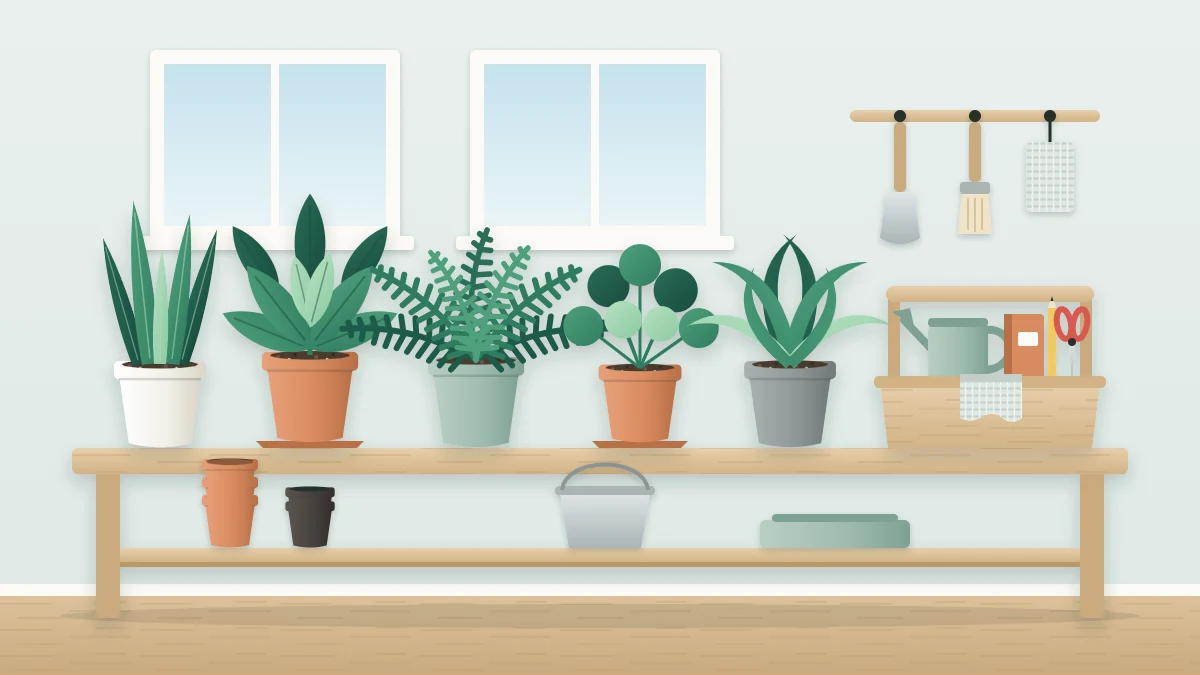
An indoor garden rarely fails because of one dramatic mistake. It drifts: a saucer left full, a pot that dried out behind a bigger one, dust building up on leaves, a plant that outgrew its container a season ago. Good indoor garden maintenance is mostly a matter of noticing those things while they are still small.
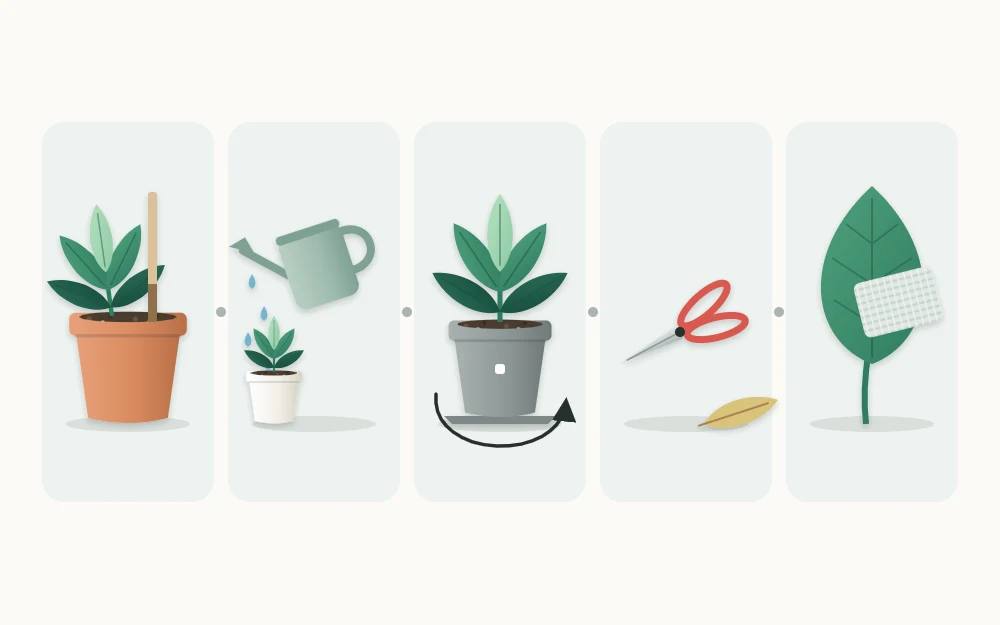
The routine below is built on checking, not on fixed treatments. You look at every pot on a regular day, and you act only where a plant or a surface actually needs it. It is organized in three layers: a short walk-round, a longer look about once a month, and a review when the season changes.
Why a checking routine beats a treatment calendar
Conditions differ from one home to the next and from one shelf to the next: window size and direction, the season, room temperature, heating and cooling, pot size, potting mix and the plant itself. Two pots standing side by side can dry at very different rates. A calendar that tells you to do the same thing to every pot on the same day ignores all of that.
A calendar that tells you when to look works much better. The day is fixed; what you do on that day is decided by what you find.
The checklist at a glance
| How often | Task | Why |
|---|---|---|
| Short walk-round | Feel the mix in each pot and lift small pots | Finds the pots that are due and the ones that are not |
| Short walk-round | Empty saucers and trays | Roots left standing in runoff stay too wet |
| Short walk-round | Turn pots, remove dead leaves and spent flowers, glance under leaves | Even growth, a tidy group and early notice of problems |
| About once a month | Dust leaves, wipe trays and sills | Clean leaves and surfaces make better use of the light |
| About once a month | Look for roots at drainage holes, check supports and ties | Shows which plants are outgrowing their pots or stakes |
| About once a month | Notice whether the light has shifted | Sun angle and day length change through the year |
| Each season | Reposition, repot, thin out, wash empty pots | Keeps the garden matched to the space and the light |
The short walk-round
Once a week suits many homes as a rhythm for the walk-round; a warm, bright room full of small pots may call for a look more often, and a cool room in winter for less. Take a watering can, snips and a small bag for waste, and visit every pot in the same order so none is missed.
- Check moisture. Push a finger into the potting mix, or lift the pot to judge its weight. Give a drink only to the pots that are due. The guide to watering an indoor garden as a group explains how to judge that for different pots and plants.
- Empty saucers. Tip out anything still standing in saucers and trays a little while after watering.
- Turn pots. A quarter turn keeps growth from piling up on the window side; see the article on rotating plants for even growth for the exceptions.
- Tidy. Remove dead leaves and spent flowers, and pick fallen ones off the surface of the mix.
- Look closely. Glance under a few leaves and along the stems of each plant. You are not diagnosing anything, only noticing what has changed since last time.
Tip
Keep a new plant apart from the others for a couple of weeks and include it in your walk-round there before it joins the group.
The longer monthly look
About once a month, add a slower pass.
- Dust the leaves. Wipe broad leaves with a soft damp cloth, supporting each one from below.
- Wipe trays and sills. Lift the pots, wipe underneath and let the surface dry before putting them back. A full session is described in the guide to cleaning the growing area itself.
- Check the drainage holes. Roots coming through, or water that runs straight out, suggest a plant is running out of room.
- Check supports and ties. Loosen ties that have become tight and add height to stakes that have been outgrown. For shelves and hanging planters, look at the fixings too, since wet pots are heavy; the product’s stated load rating and fixing instructions are the reference.
- Look at the light. Notice where the sun falls now compared with a month ago. A spot that was bright in one season can be dim, or harshly sunny, in another.
The seasonal review
A few times a year, step back and look at the indoor garden as a whole instead of pot by pot. The timing depends on your climate, latitude and conditions indoors, so go by what you see, not by a date.
- Reposition for the season. Move plants toward or away from the glass as the light changes, and away from heating or cooling vents and cold drafts.
- Repot what has outgrown its pot. Active growth is generally the easier time. The method for doing it indoors is in the guide to repotting without the mess.
- Thin out. A crowded growing area shades itself and is harder to check. Pass on plants that no longer fit, or split the group between two spots.
- Wash empty pots. Scrub off old mix with warm water and a brush and let the pots dry before storing them.
Where fertilizer fits
Fertilizer is part of maintenance, but it does not belong on a fixed schedule. Apply it during active growth, according to the product label, and hold off when a plant is resting or struggling. For more detail on feeding and cleaning, see Clemson Cooperative Extension’s factsheet on cleaning, fertilizing, containers and light for indoor plants.
Keep a simple log
Memory is unreliable across a dozen pots. A notebook kept with your tools, or a note on your phone, is enough. Write the date and a few words: which pots you watered, what you repotted, what you moved and anything that looked different.
After a few months the log shows which pots dry fastest and how the pattern changes between summer and winter.
When the routine slips
Missed walk-rounds happen. When you come back to the garden, do not make up for lost time by soaking everything. Run the normal check, pot by pot, and respond to what each one needs.
Good to know
The intervals here are starting points for looking, not for treating. Adjust them to your own home, and let each plant’s condition decide what you actually do.
Frequently asked questions
How much time does an indoor garden take to maintain?
It depends on the number and size of the pots, but a regular walk-round of a modest collection is usually a matter of minutes once the kit is close at hand. The monthly look and seasonal review take longer and can be spread over several short sessions instead of one long one.
Should I water all my plants on the same day?
Check them all on the same day, but water only the ones that need it. Pots dry at different rates depending on their size, the potting mix, the plant and where they stand. Feel the mix or lift the pot, and leave any that are still moist until your next check.
What should I write in a plant log?
Keep it short: the date, which pots were watered, anything repotted or moved, when fertilizer was applied and anything that looked different. Over a few months the notes show which pots dry fastest and how your garden changes with the seasons, which makes later decisions easier.