Grow Light Basics for an Indoor Garden
A plain-language guide to grow lights: when supplemental light helps, which fixture shape suits a table, shelf or bench, why placement matters most, and how to set distance and running time from the manufacturer's guidance and your plants' response.
A grow light does one job: it adds light to a growing area that does not get enough from a window. Most grow light basics come down to three plain questions: whether you need one at all, which form fits the spot, and how to position and run it. None of them requires technical vocabulary.
What you will not find here is a universal distance or a universal running time. Both depend on the fixture and on the plants underneath it, so the fixture manufacturer’s guidance and the way your plants respond are what decide.
When a grow light actually helps
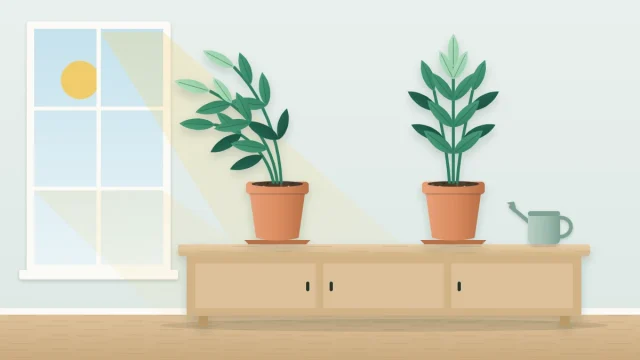
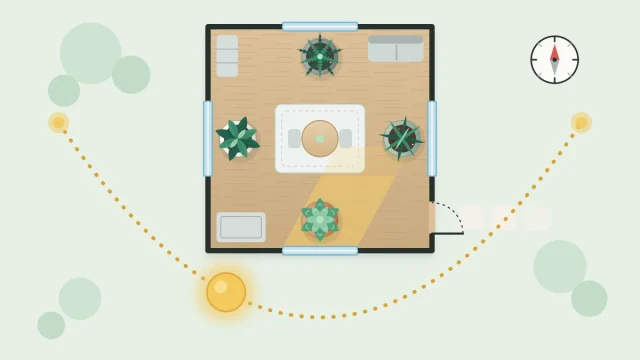
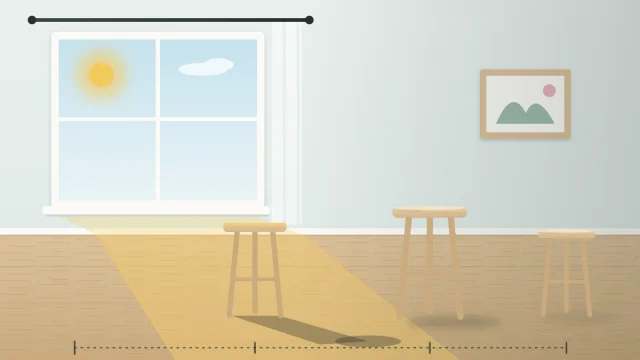
Start with the light you already have. If you have not yet looked closely at your rooms, assess the natural light in each spot before buying anything, because a bright sill may need no help at all.
Supplemental light tends to earn its place in three situations:
- Rooms with weak natural light. Small windows, windows shaded by a building or a tree, and rooms lit only from one narrow side.
- Growing areas away from a window. Light indoors falls off quickly as you move into the room, so a shelf on the far wall is often much dimmer than it looks to your eyes.
- Short, dull winter days. A spot that grows plants well in summer can become marginal in winter. How much the light in a room shifts through the year depends on your latitude, your climate and what stands outside the window.
Stretched growth, smaller new leaves and stems that lean hard toward the window are the usual prompts to look at the light.
The common forms of grow light
For a household indoor garden, full-spectrum white LED fixtures are the usual choice. Their white light shows the plants in their normal colors. The practical decision is less about the label and more about the shape of the fixture, because the shape decides what area it can cover.
| Form | Typical use | Worth knowing |
|---|---|---|
| Grow bulb for an ordinary lamp | One or two plants on a table or the floor | Covers a small area directly below; the lamp must be suited to the bulb, as its instructions state |
| Light bar or strip | A row of pots on a shelf | Spreads light along the length of the shelf; usually mounted under the level above |
| Panel | A wider bench or a group of plants | Covers a broader area; needs a secure way to hang or stand above the plants |
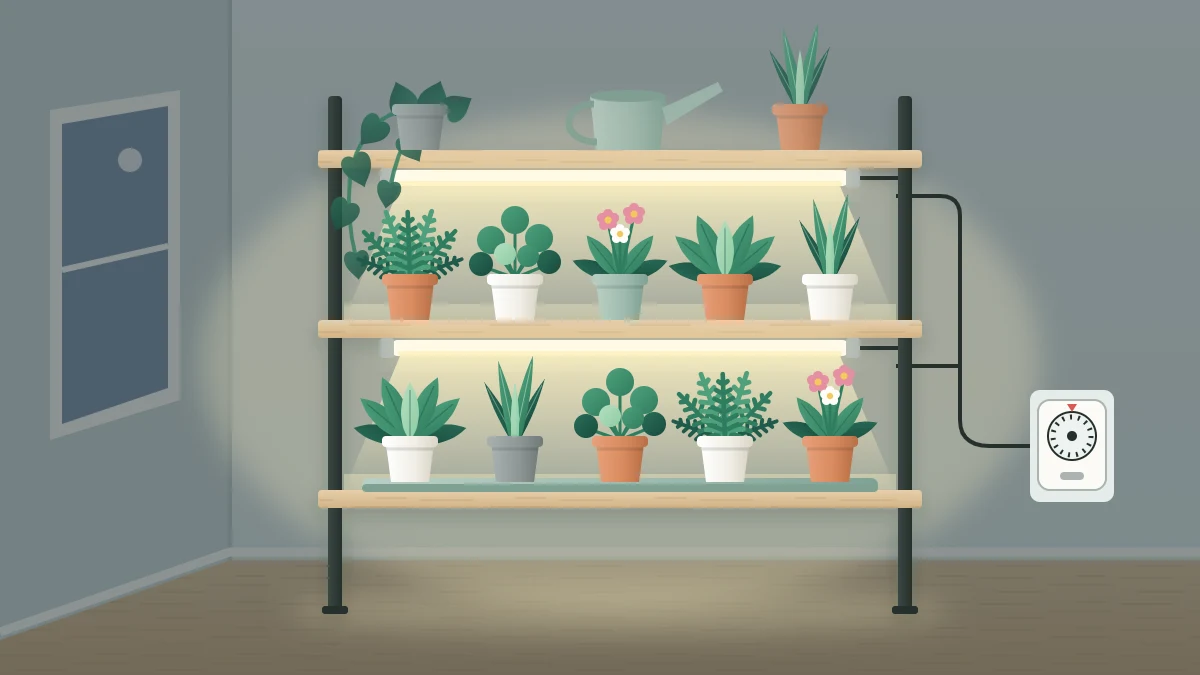
If you are lighting several levels, a bar per level is the common arrangement. The guide to setting up a plant shelf covers how to plan the unit so each level has room for both the fixture and the plants.
Why placement matters more than the fixture name
The light that reaches a leaf drops quickly as the distance from the fixture grows. A plant directly under a bar receives far more than a plant a little way off to one side, and a pot on the level below receives very little. Where you put the fixture changes the result more than the wording on the box.
Three placement habits follow from it:
- Put the fixture above the plants, not beside them, so growth stays upright and even.
- Center the plants that want the most light under the fixture and place the less demanding ones toward the edges.
- Keep plants of similar height together, so a tall plant does not leave a short neighbor far below the light.
Distance and daily running time
There is no single correct distance and no single correct running time. Fixtures differ a great deal in output, and a flowering plant, a leafy tropical plant and a low-light foliage plant all want different amounts. The fixture manufacturer’s instructions are the starting point: they usually give a suggested mounting distance and running time for broad plant types.
From there, adjust by watching the plants over several weeks:
- Stretched, pale or leaning growth often means the plants want more. Move them closer to the center, or bring the fixture nearer within the range the instructions allow.
- Bleached, faded or crisp patches on the leaves nearest the fixture can mean too much. Increase the distance or shorten the running time.
- Compact, evenly colored new growth suggests the setup suits those plants. Leave it alone.
Change one thing at a time and give plants time to respond; new growth tells you more than old leaves do. For more background on how plants use light indoors, see University of Maryland Extension’s page on lighting for indoor plants.
Using a plug-in timer
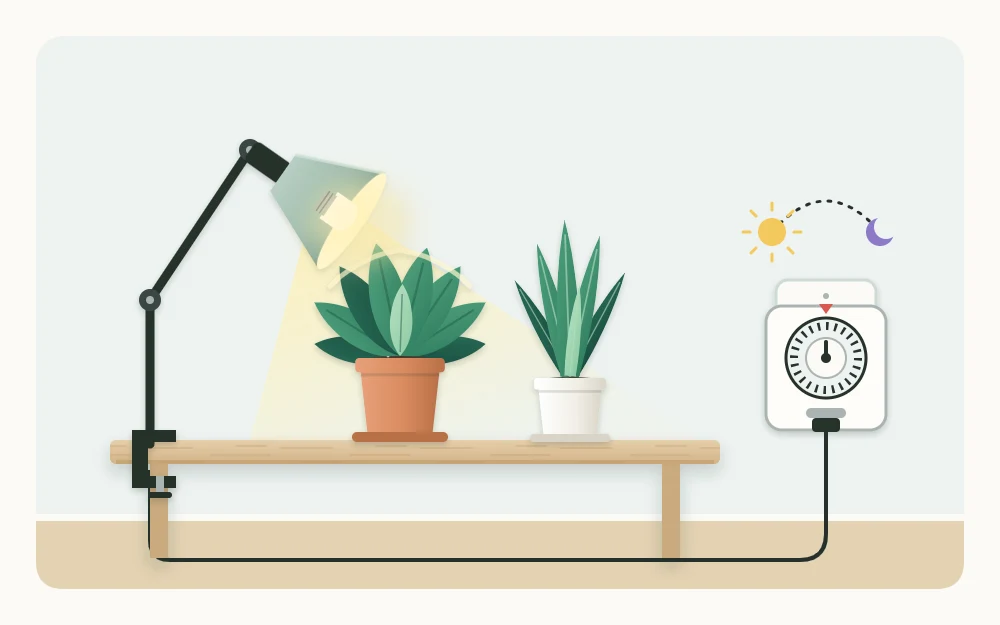
Plants do best with a consistent day and a dark period at night, and a plug-in timer provides both without relying on your memory. Set it to the running time the fixture’s instructions suggest for your plants, timed so the light is on during the day and off overnight.
Choose a timer intended for the kind of fixture you are plugging into it, and follow the timer’s own instructions.
Using grow lights with care
A grow light is an electrical product sitting next to pots that get watered, so a few plain habits matter.
- Use the fixture as supplied and as the manufacturer instructs, including how it is mounted and what it may be plugged into.
- Do not modify fixtures, cords or plugs in any way.
- Keep fixtures, plugs and connections away from water and drips. Water the plants so that nothing runs onto a fixture on the level below, and route cords clear of trays and saucers.
- Do not let leaves press against a fixture. Raise the fixture or move the plant as it grows.
- Mount or clamp fixtures securely so they cannot fall onto the plants.
Good to know
For anything that involves household wiring, such as adding a socket near a shelf or questions about what a circuit can supply, ask a qualified electrician. The fixture manufacturer’s instructions cover the fixture itself and nothing beyond it.
What a grow light does not change
More light usually means more growth, and more growth means the potting mix dries faster. Keep checking each pot before you water instead of assuming the old rhythm still applies.
A grow light supplements a growing area; it does not turn every corner into a good one. A spot that is also cold, drafty or awkward to reach for watering will stay difficult. Solve the placement first, then add light where the plants show they need it.
Frequently asked questions
Do I need a grow light if my plants sit near a window?
Often not. A growing area close to a bright, unobstructed window may get all the light its plants want. Watch the plants instead of guessing: stretched stems, smaller new leaves and strong leaning toward the glass suggest the spot is too dim, especially in winter, and supplemental light may help.
How far should a grow light be from the plants?
It depends on the fixture and the plants, so there is no single distance that suits every setup. Start with the mounting distance in the fixture manufacturer's instructions, then adjust within that range. Stretched or pale growth suggests the plants want more light; bleached or crisp patches near the fixture suggest less.
Can I use an ordinary lamp as a grow light?
A grow bulb made for standard lamp fittings is a common way to light one or two plants. Check the lamp's instructions to confirm it is suited to that bulb, aim it down at the plants from above, and keep the lamp, its cord and its plug well away from water and drips.