Indoor Vertical Garden Ideas: Walls, Rails and Hanging Planters
Six ways to grow plants upward indoors, from ladder stands to wall planters, with the practical catch of each and the light, water and load checks that decide success.
When every sill and table is taken, the remaining space is above them. An indoor vertical garden stacks plants up a wall, a stand or a line from the ceiling, so several pots share the floor area of one.
The idea is simple, but each way of doing it has a catch. The options below run from the simplest to the most involved, followed by the three questions that decide whether any of them will work in your home: light, water and load.
Six ways to grow upward
Ladder and tiered stands
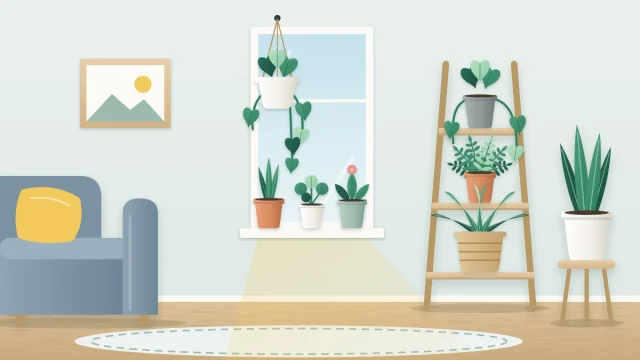
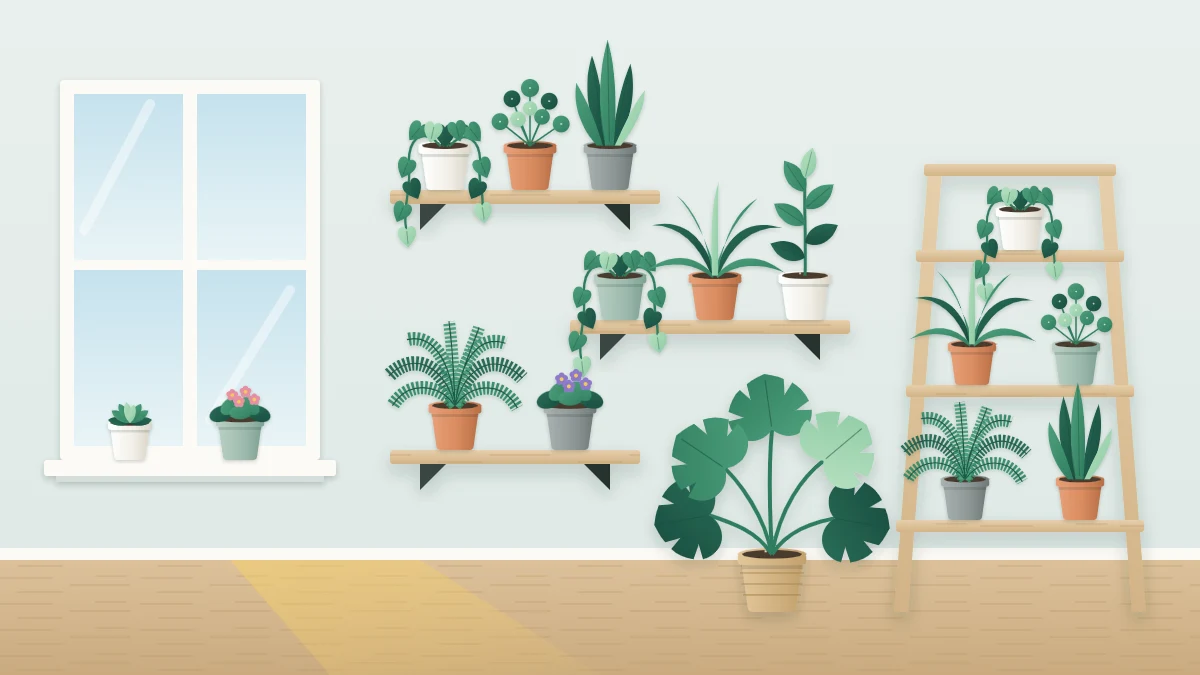
A freestanding ladder shelf or tiered plant stand is the easiest start. It needs no fixing, moves when you rearrange the room and can stand right beside a window. The catch is shading: upper tiers cast shadow on the lower ones, so the plants that cope with less light go at the bottom.
Wall shelves and ledges
Shelves fixed to the wall keep the floor clear and can be staggered so each pot gets some open space above it. They suit small and medium pots and trailing plants. The catch is that they are fixed in one place, so choose the wall for its light first. The guide to choosing and arranging indoor garden shelves covers depth, spacing and layout.
A rail or rod with hanging pots
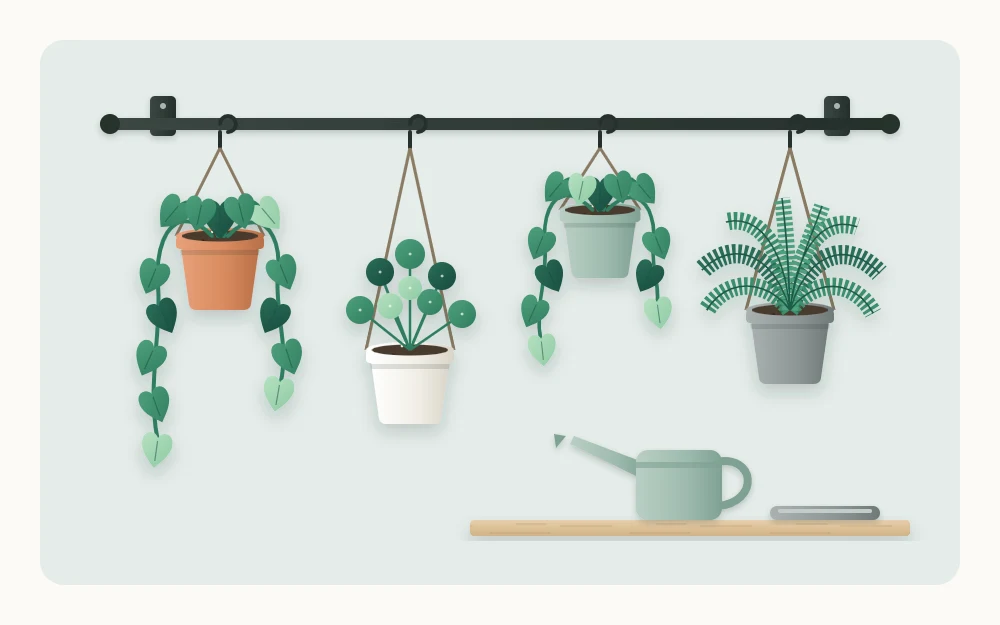
A horizontal rail with hooks holds a row of small pots at adjustable heights, and a row of them can turn a blank strip of wall into a growing area. It suits lightweight pots and small trailing plants. The catch is drips: every pot hangs over the wall, the floor or the pot below.
Ceiling-hung planters
A planter hung from the ceiling near a window uses space nothing else needs and puts a trailing plant where it can hang freely. The catches are reach and fixing. A pot hung above head height is hard to check, and the hook has to suit the ceiling it goes into.
A trellis or moss pole in a floor pot
Some climbing plants can be trained up a trellis or a moss pole pushed into their own pot, which gives height without attaching anything to the building. It suits one larger climber as a feature. The catch is that the plant has to be tied in and guided as it grows, and a tall plant in a light pot can become top-heavy.
Pocket and modular wall planters
Fabric pockets and clip-together wall modules hold many small plants in a grid. They give the densest planting and the most demanding upkeep: small pockets of potting mix dry at different rates, water has to be kept off the wall behind, and a plant in the middle is awkward to replace.
Beyond these are true living walls with built-in irrigation and drainage. Those are specialist systems that are designed and installed for a particular wall, and they are outside what a simple home setup covers.
Light: check the wall, not the window
The most common reason a vertical garden disappoints is that it was put on the available wall and not the bright one. The wall beside a window gets far less light than the windowsill, and the wall opposite gets less again, even when the room feels bright. High spots near the ceiling are often dimmer than they look.
Check the exact spot before fixing anything. Hold your hand where the pot would be on a clear day and look at the shadow it casts: a crisp shadow suggests strong light, a faint blur suggests much less. The article on assessing natural light indoors explains this and other simple checks in detail. Then match plants to what you find, or pick a different wall.
Water: plan where the drips go
Every pot up on a wall still needs watering, and the surplus has to go somewhere other than your floor. Decide how each pot will be watered before it goes up. There are three practical methods:
- Inner pots that lift out. Keep the plant in its nursery pot inside a cachepot, a decorative outer pot without a hole. Lift the inner pot out, water it at the sink, let it drain and put it back.
- Drip trays. A saucer or tray under each pot or each shelf catches the runoff. Empty it afterward so pots do not stand in water.
- Taking hanging pots down. For rails and ceiling planters, unhooking the pot and watering it over the sink is often the tidiest method.
The guide to drainage for indoor pots covers saucers, liners and cachepots more fully. Expect pots at different heights to dry at different rates: warm air collects near the ceiling, and small hanging pots hold little mix. Check each one individually, as described in the guide to watering an indoor garden.
Load: wet pots are heavy
A pot weighs far more after watering than before, and a shelf of them adds up quickly. Whatever you fix to a wall or ceiling has to carry the pots at their wettest, plus the planter, the mix and the plant as it grows.
Good to know
Use fixings that suit your wall or ceiling type, and follow the instructions supplied with them. Stay within the stated load rating of every part: the shelf, the bracket, the rail, the hook and the fixing itself. If you are unsure what a wall or ceiling is made of, or you rent, choose a freestanding option.
Arranging plants on a vertical setup
Trailing plants soften hard edges. Put them at the ends of shelves and in the higher positions, where the stems can hang without smothering a neighbor. Upright plants need headroom, so give them the top tier of a stand or a shelf with clear space above, not a slot under another shelf.
Leave gaps. A wall with a few well-spaced pots lets light reach each plant and lets you see the shapes.
Keep every plant within reach
A vertical garden only works if the plants get looked at. If checking a pot means fetching a ladder, the check gets skipped, and problems are noticed late. As a starting point, keep most pots between knee and eye level and limit the highest positions to one or two plants you are willing to take down.
Start with a single stand or one shelf beside your brightest window. Once you know how the light, the watering routine and the weight behave there, adding a second level is a much easier decision.
Frequently asked questions
What is the easiest vertical garden to start with?
A freestanding ladder shelf or tiered stand beside a bright window. It needs no fixings, can be moved if the light turns out to be wrong, and lets you learn how the pots dry at different heights. Put plants that cope with less light on the lower tiers, where the upper ones shade them.
How do I water plants on a wall without making a mess?
Plan it before the pots go up. Keep each plant in a nursery pot you can lift out and water at the sink, use a tray under each pot or shelf and empty it afterward, or unhook hanging pots and water them over the sink. Let every pot drain before it goes back.
Can any wall hold a plant shelf or rail?
That depends on what the wall is made of, the fixings used and the product itself, so there is no general answer. Watered pots are heavy. Follow the product's stated load rating and its fixing instructions for your wall type, and choose a freestanding stand if you are unsure or you rent.