Managing Limited Space: Making Room When Your Indoor Garden Is Full
What to do when the plant collection has outgrown its bright spots: an honest audit, then options from going up to giving plants away, each with its trade-off.
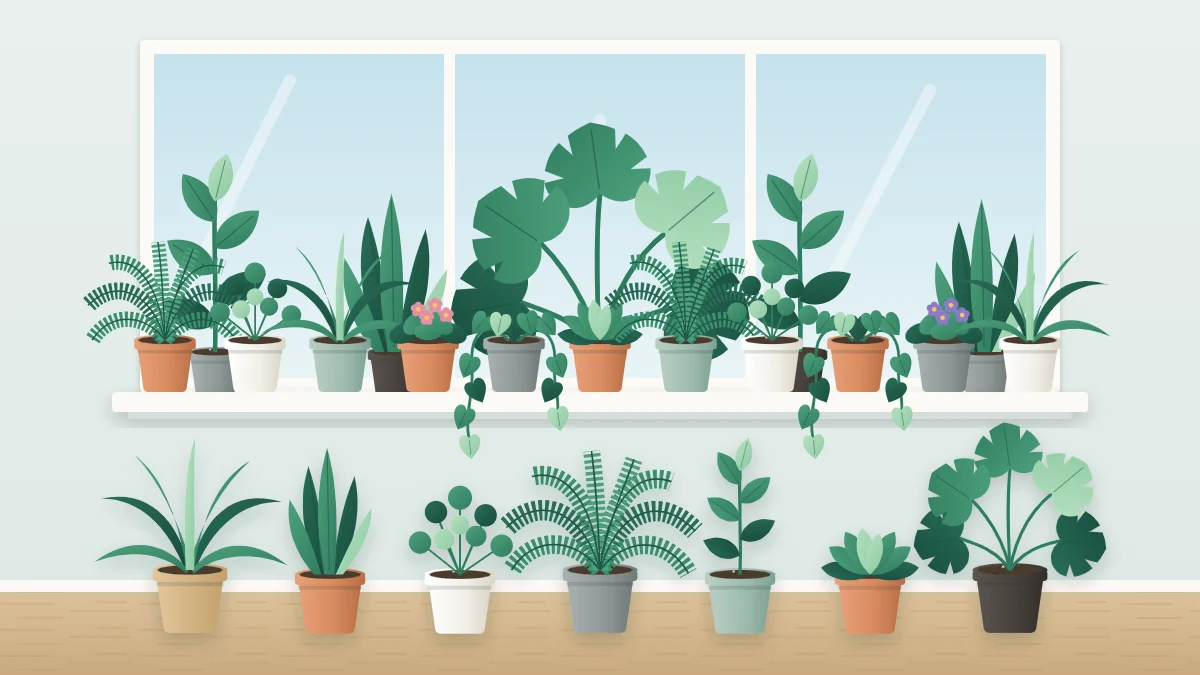
At some point the windowsill is full, the stand is full, and a new plant is sitting on the floor waiting for a home. For an indoor garden limited space eventually forces a decision that a half-empty garden never does: what stays, what moves and what goes.
The options below all work, and each has a trade-off. Before choosing among them, it helps to be clear about what has run out.
The real limit is bright space
Most homes have plenty of places to stand a pot. What they lack is places with enough light, and those are a small part of any room: the windowsills, the area just beside and below the windows, and perhaps a lit shelf. Each bright spot holds only so many plants before they start shading each other.
That is why squeezing in one more pot rarely works. The new plant takes light from its neighbors, the back row leans and stretches toward the glass, and the whole group ends up weaker.
Take an honest audit
Walk round with a notepad and list every plant. Beside each one, note three things:
- Is it thriving? Steady new growth, good color, a shape you like.
- Is it struggling for light or room? Long gaps between leaves, leaning hard to one side, lower leaves dropping, growth jammed against the glass or a neighbor.
- Do you still enjoy it? Some plants are kept out of habit or guilt.
The list usually sorts itself into three groups: plants that have earned their spot, plants that would do well with a better position, and plants you would not buy again. Decisions about the third group free space for the second.
Add growing space
Go up before you go out
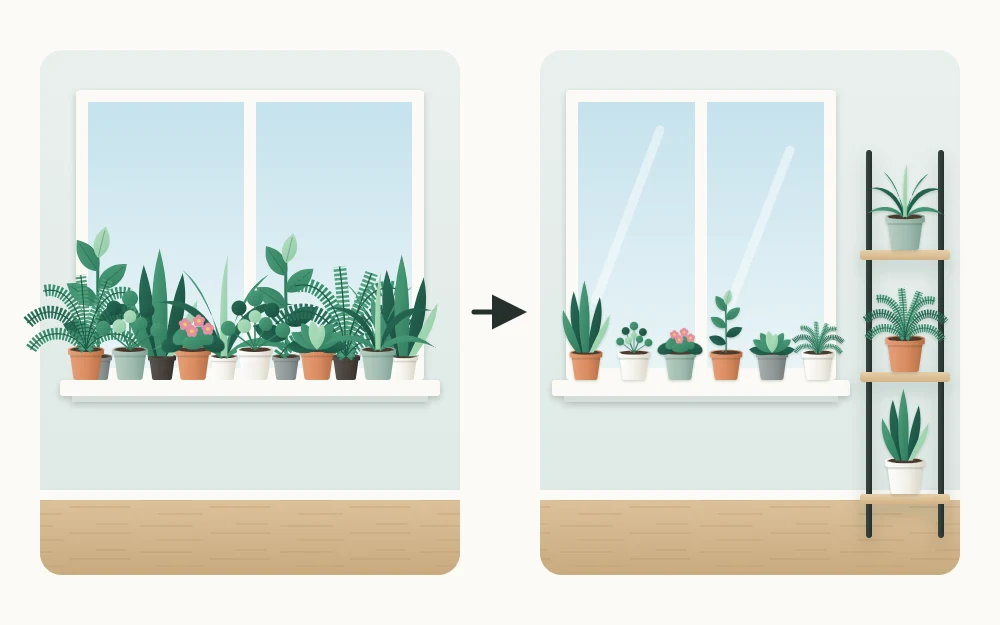
A tiered stand beside the window, a shelf across it or a hanging planter to one side puts more pots in the bright zone without widening it. The guide to growing an indoor vertical garden compares the methods and what each demands in watering and fixing.
The trade-off is shade. Anything placed above or in front of other plants takes some of their light, so height helps most beside a window, not across the middle of it.
Add lit shelf space
A shelf fitted with a grow light creates a bright growing area where the room had none, such as an alcove or the lower tiers of a shelving unit. This is the only option that adds bright space instead of redistributing it. The trade-offs are cost, a fixture to live with, and one more thing to manage: use the light as supplied and follow the manufacturer’s instructions for mounting, distance and running time. The guide to setting up indoor garden shelves covers how to lay one out.
Make the plants you have smaller
Large plants take most of the room. Many common indoor plants respond well to pruning during active growth, and a climber or trailer can often be trained up a support or along a shelf edge so it stops sprawling over its neighbors. How hard a plant can be cut back depends on the plant, so look up the species first and start cautiously.
A leggy plant with long bare stems can sometimes be restarted from cuttings, if it is a kind that roots readily. A young plant in a small pot takes a fraction of the space, and the big one can be passed on to someone with a brighter, roomier home.
Choose compact plants from now on
A full garden changes what is worth buying. Before bringing a plant home, find out how large it gets and how fast. Compact and slow-growing plants hold their place for years, while a fast grower needs a bigger pot and a wider spot each season.
Consolidate and rotate
Share a container
Several small pots take more sill than one wide bowl or trough holding the same plants. Combining them saves space and can look better than a row of mismatched pots. It only works where needs match: plants that share a container get the same light and the same water, so pair like with like. The trade-off is that a shared container is harder to adjust for one plant that falls out of step.
Rotate between display and recovery
Some plants tolerate a dimmer position for a while but decline if left there. You can keep one on a bookcase or side table, then swap it with a similar plant from the window so each gets a turn in better light. Watch the plant and move it at the first signs of stretching or fading; how long it copes depends on the plant, the season and how dim the spot is. The trade-off is effort, and it suits a few plants, not a whole collection.
Good to know
A plant moved from a dim spot straight into direct sun can scorch. Step it up through bright indirect light first, and expect it to dry at a different rate in its new position.
Let some plants go
Giving plants away is the fastest way to make room. Friends, neighbors, colleagues and local plant swaps will usually take healthy plants and rooted cuttings gladly, and a swap lets you trade a large plant for a small one.
A plant that has declined past the point of recovery can go in the compost. Keeping it on the windowsill costs light that a healthier plant could use, and composting it is an ordinary part of gardening.
A one-in, one-out rule
Once the garden is at a size its light supports, a simple rule keeps it there: a new plant comes in only when another goes out. The rule makes you decide where a plant will live before you buy it, and it turns each purchase into a choice about which plant you would rather have.
Why fewer plants make a better garden
A crowded garden is harder to look after. Pots at the back are awkward to reach, so they get checked less. Leaves that overlap hide the surface of the potting mix and the undersides of other leaves, and air moves poorly through a dense mass of foliage.
With space between the pots, each plant gets light on all sides, you can see and reach everything, and a regular round of checks takes minutes. The guide to indoor garden maintenance sets out that routine. A dozen plants in good condition make a fuller, greener display than thirty that are surviving.
Frequently asked questions
How do I know my indoor garden is overcrowded?
Look for plants leaning or stretching toward the window, leaves pressed against the glass or against each other, and pots you have to move to reach the ones behind. If checking the garden has become a chore of shuffling pots, there are more plants than the bright space supports.
Is it better to add a grow light or get rid of plants?
It depends on what you want to manage. A lit shelf is the one option that creates new bright space, but it adds cost and a fixture to run according to its manufacturer's instructions. Rehoming plants costs nothing and reduces upkeep. Many people do a little of both.
Can several plants share one pot to save space?
Yes, where their needs match. Plants in one container receive the same light and the same water, so combine only those that want similar conditions and grow at a similar pace. A shared bowl saves sill space, but it is harder to adjust if one plant starts to struggle.