Watering an Indoor Garden: A Routine for Many Pots
A check-first routine for a whole growing area: why pots dry at different rates, how to do a regular walk-round, and how to water many pots thoroughly while keeping floors and furniture dry.
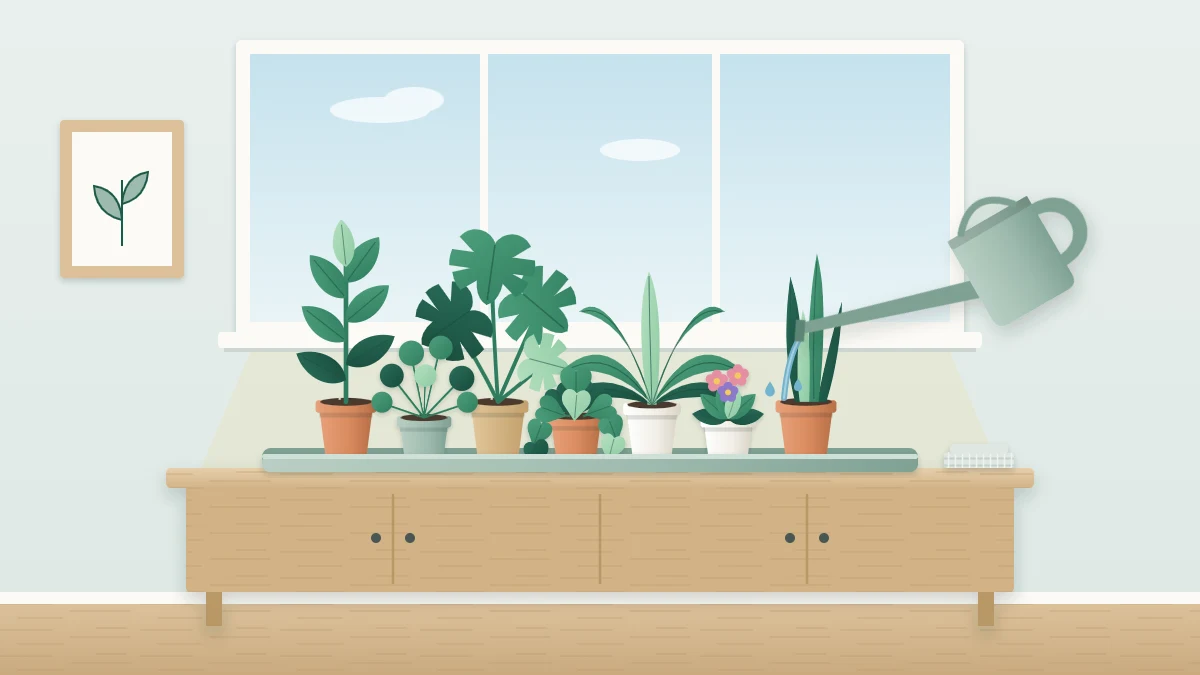
One plant is easy to keep an eye on. A dozen pots on a bench, a windowsill and two shelves are a different job: some dry in days, some stay damp for much longer, and water has to reach every one of them without ending up on the floor.
Watering an indoor garden well is less about technique for a single plant and more about a routine for the whole growing area. The routine below is built on checking each pot and giving water only where it is due, with a tidy way of getting it there.
Why one calendar cannot fit a group
It is tempting to pick a day and water everything. The trouble is that each pot dries at its own pace, and the pace depends on several things at once:
- The plant: its size, how much leaf it carries and whether it is in active growth.
- The pot: small pots dry faster than large ones, and unglazed terracotta dries faster than plastic or glazed ceramic.
- The potting medium: an open, chunky mix dries faster than a fine, dense one.
- The position: a pot in direct sun or near a heat source uses water faster than one in a dimmer, cooler corner.
- The season: in many homes pots dry more slowly in winter, when light is weaker, though heating can work the other way.
Give every pot the same amount on the same day and some will sit too wet while others go short. The calendar is useful for one thing only: reminding you to look.
The walk-round: check every pot
Set a regular time to go round the whole garden. About once a week suits many homes as a checking rhythm; in a warm, bright room or with many small pots, look more often.
- Feel the mix at depth. Push a finger into the potting mix. The surface often dries first and tells you little. For many common indoor plants, the top inch (2.5 cm) feeling dry is a reasonable starting point for watering, but the right depth depends on pot size and plant type: some plants prefer to dry much further, others to stay evenly moist.
- Lift small pots. A pot that needs water feels noticeably lighter than one that does not. After a few rounds, your hands learn the difference.
- Glance at the plant. Look at the leaves and under them while you are there.
- Sort as you go. Decide which pots are due and which can wait until the next check.
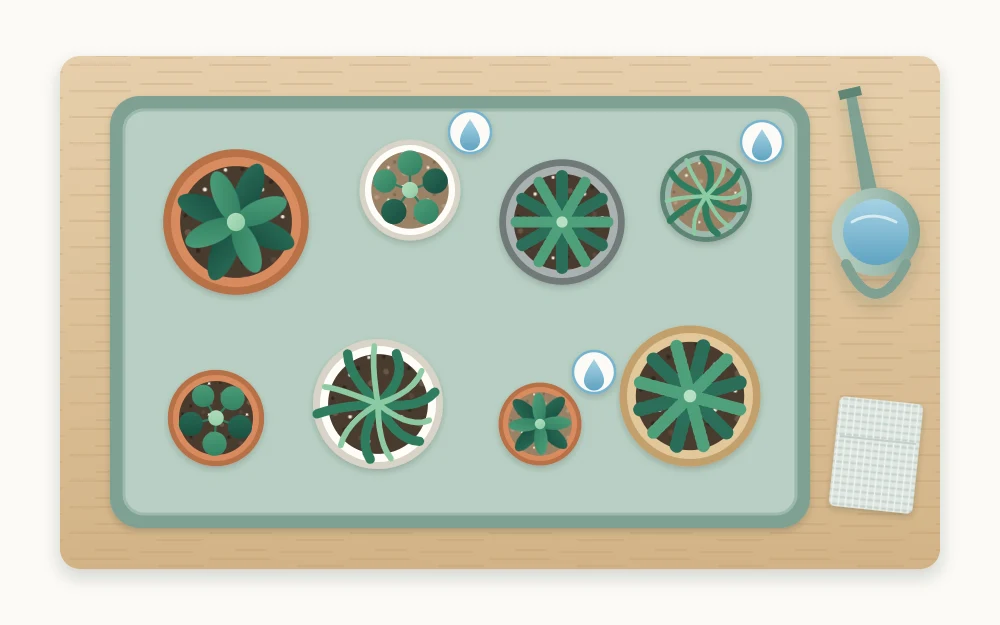
Water the pots that are due, and water them thoroughly
For the pots that need it, pour slowly over the whole surface of the mix until some water runs out of the drainage holes. A thorough watering wets the entire root ball. Frequent small splashes tend to wet only the top layer and leave the lower roots dry.
Use water at about room temperature. Filling the can after each round lets it warm up before next time.
Wait a short while, then empty every saucer and tray. Pots left standing in drained water stay saturated at the bottom, where roots also need air. How to set up holes, saucers and trays so this step is easy is covered in the guide to drainage for indoor pots.
For technique with individual plants, see the University of Maryland Extension’s page on watering indoor plants and the Clemson Cooperative Extension factsheet on watering indoor plants.
Good to know
How dry a plant should get between waterings varies by plant, pot and home. Look each plant up in a reliable source, then let your own checks confirm what you read.
Watering in place or at the sink
With a group of pots you have two ways to work, and most indoor gardens use both.
Watering in place is quick and suits large or heavy pots and pots on a deep tray. It depends on saucers or trays big enough to hold what drains out, and on you returning to empty them.
Carrying pots to a sink or tub takes longer but is the tidiest way to water thoroughly. You can let each pot drain fully before it goes back, and nothing reaches the furniture. It works well for small and medium pots, for plants in a nursery pot inside a cachepot (a decorative outer pot with no hole), and for any pot whose mix has dried so far that water runs straight off the surface.
Keeping floors and furniture dry
Indoors, where the water goes matters as much as how much you give. A few habits prevent most damage:
- Use a watering can with a long, narrow spout. It reaches back rows and puts water on the mix instead of over leaves and edges.
- Stand every pot on a saucer or in a shared tray, and check that none is close to overflowing before you pour.
- Pour slowly. Dry mix sheds water at first, and a fast pour runs down the inside of the pot and out of the bottom.
- Keep a cloth with the can and wipe spills, drips and the rims of trays as you go.
The can, the cloth and the other basics are listed in the guide to indoor gardening supplies.
Arrange pots so watering is easy
Layout decides how long the round takes. Put the pots that dry fastest, often the small ones and the ones in the brightest positions, where you can reach them without moving anything. Pots that stay moist longer can stand in the back row.
It also helps to keep plants with similar thirst together, so that one section of the bench tends to be due at the same check while another can usually wait. The guide on grouping indoor plants by light and water needs explains how to sort a collection this way.
Self-watering containers and wick reservoirs
A self-watering container holds a reservoir below the potting mix and draws water upward through a wick or a column of mix. A separate wick running from a jar of water into a pot works on the same principle. Both can stretch the time between top-ups, but they have limits: they keep the mix steadily moist, which does not suit plants that prefer to dry out between waterings, and the reservoir still needs checking, refilling and occasional cleaning as the maker instructs.
They are aids, not a replacement for the walk-round. If you are thinking about them mainly for time away, the guide to preparing an indoor garden before a vacation compares the options.
Frequently asked questions
How often should I water my indoor garden?
There is no interval that fits a whole group, because each pot dries at its own pace depending on the plant, pot, potting mix, light and season. Go round on a regular day to check every pot by feeling the mix and lifting small pots, and give water only to those that have dried enough.
Is it better to water plants in the sink or where they stand?
Both work. Carrying pots to a sink lets them drain fully and keeps furniture dry, which suits small and medium pots. Pouring in place is quicker and more practical for heavy pots, as long as each has a saucer or tray large enough to catch the runoff and you empty it afterwards.
Do self-watering pots mean I can stop checking my plants?
No. A reservoir extends the time between top-ups, but it still needs refilling and cleaning as the maker instructs, and it keeps the potting mix steadily moist, which does not suit every plant. Keep looking at each plant and its reservoir during your regular walk-round.