How to Assess Natural Light in Your Home for Plants
A no-instrument light survey: look at each spot three times on a clear day, use the hand-shadow test, note what blocks the window and record it all on a simple room sketch.
At a glance
What you need
- Paper or a notebook
- Pencil
- A simple sketch of each room
- Optional: phone light-meter app or handheld meter
A room that feels bright to you can still be dim for a plant. Human eyes adjust so well that a spot beside the window and a spot across the room look much the same, while the amount of light reaching a leaf in each place is very different.
Judging natural light for indoor plants does not require instruments. A clear day, a pencil, a sheet of paper and your own hand are enough to compare the spots in your home and decide which ones can support a growing area.
Direct, bright indirect, medium and low light
Plant labels and guides use four broad terms. They describe what happens at a spot, not a precise measurement.
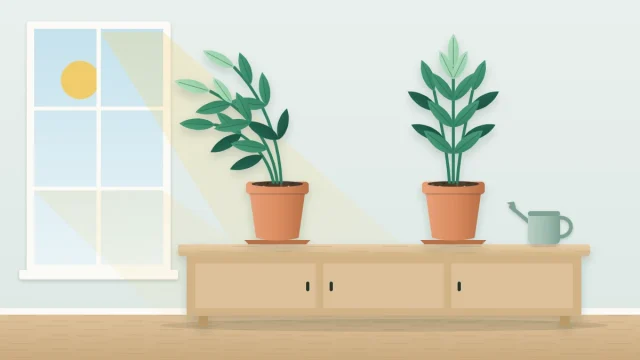
- Direct sun: sunbeams fall on the leaves themselves. You can see the patch of sunlight on the surface.
- Bright indirect light: a bright spot with a wide view of the sky where sunbeams do not land on the plant, or reach it only briefly or through a sheer curtain.
- Medium light: clearly lit by day but farther from the window or off to one side, with no sunbeams.
- Low light: you could read there by day, but the spot is well away from the window or the window is heavily shaded. Low light does not mean no light.
The hand-shadow test
This quick test turns those terms into something you can see. Around midday on a clear day, hold your hand about 12 in (30 cm) above the surface where the pots would stand, between the window and the surface, and look at the shadow.
- A sharp, dark shadow with crisp edges suggests direct sun or very bright light.
- A soft, blurred shadow that is still easy to see suggests moderate light.
- A faint shadow you can barely make out suggests low light.
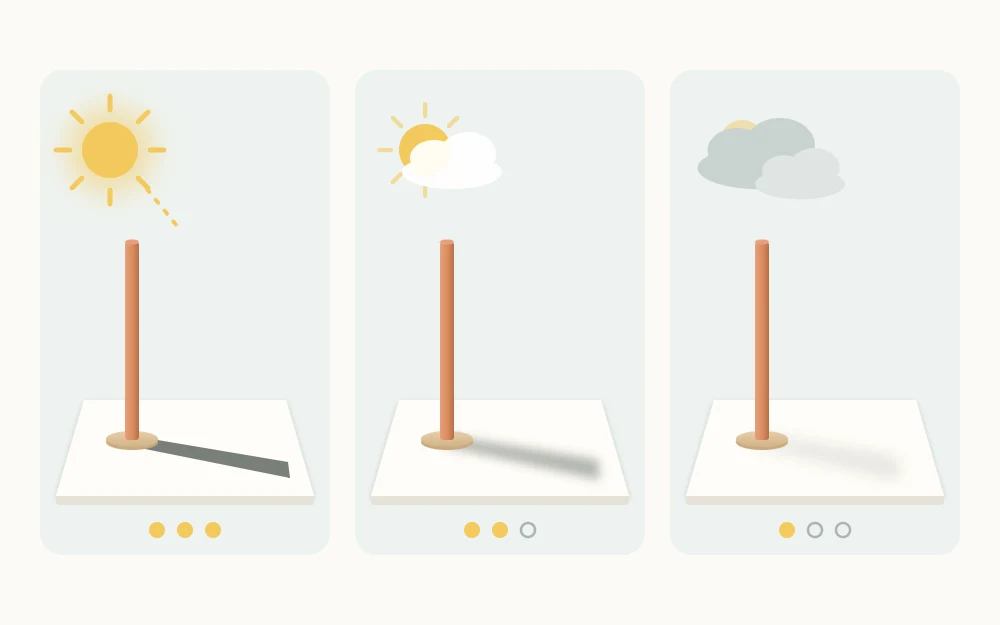
The test is rough, and it only describes the moment you do it. Its real value is in comparing spots on the same day under the same sky.
How to run a light survey, step by step
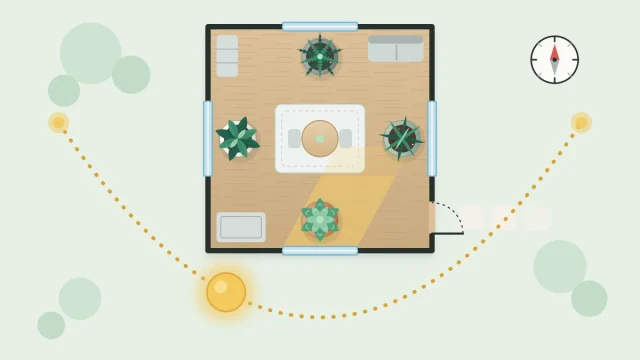
- Pick the candidate spots. List every windowsill, table, shelf and corner you might use, and draw a simple plan of each room with its windows marked.
- Look three times on a clear day. Visit each spot in the morning, around midday and in the afternoon. A spot that is dull at breakfast may be in full sun later.
- Note the sunbeams. Write down whether direct sun lands on the spot and roughly for how long: briefly, for part of the morning, or for most of the afternoon.
- Do the hand-shadow test. Record sharp, soft or faint for each spot at each visit.
- Note what blocks the light. Look outside and inside the window, as described below.
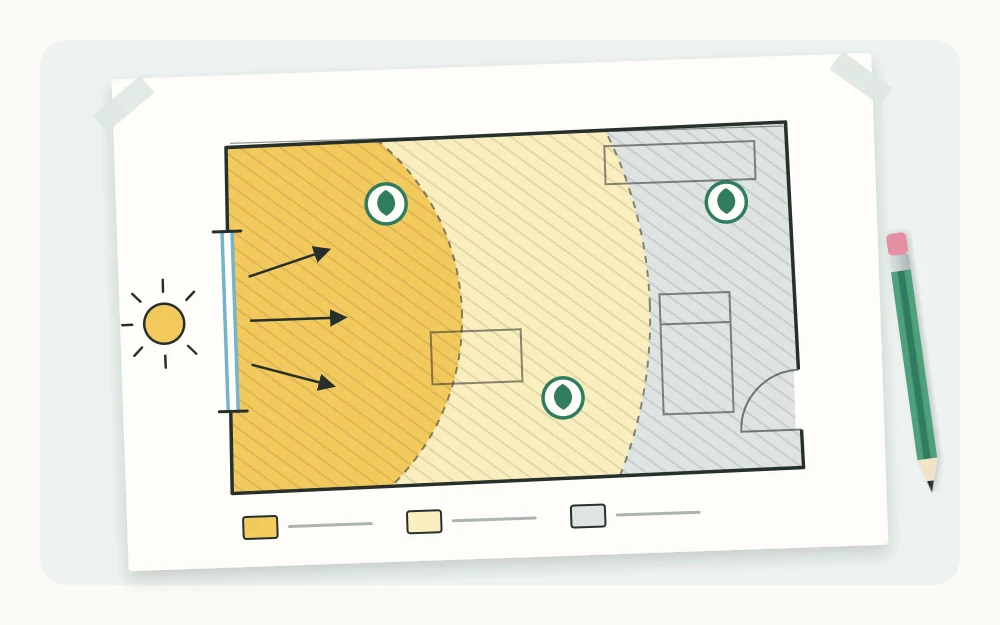
- Record the results on your sketch. Shade the room plan into zones: where sun lands, where it is bright without sun, and where it is dim.
- Repeat in another season. The sun’s path changes through the year, so a survey in midsummer and one in midwinter can look quite different.
How quickly light drops with distance
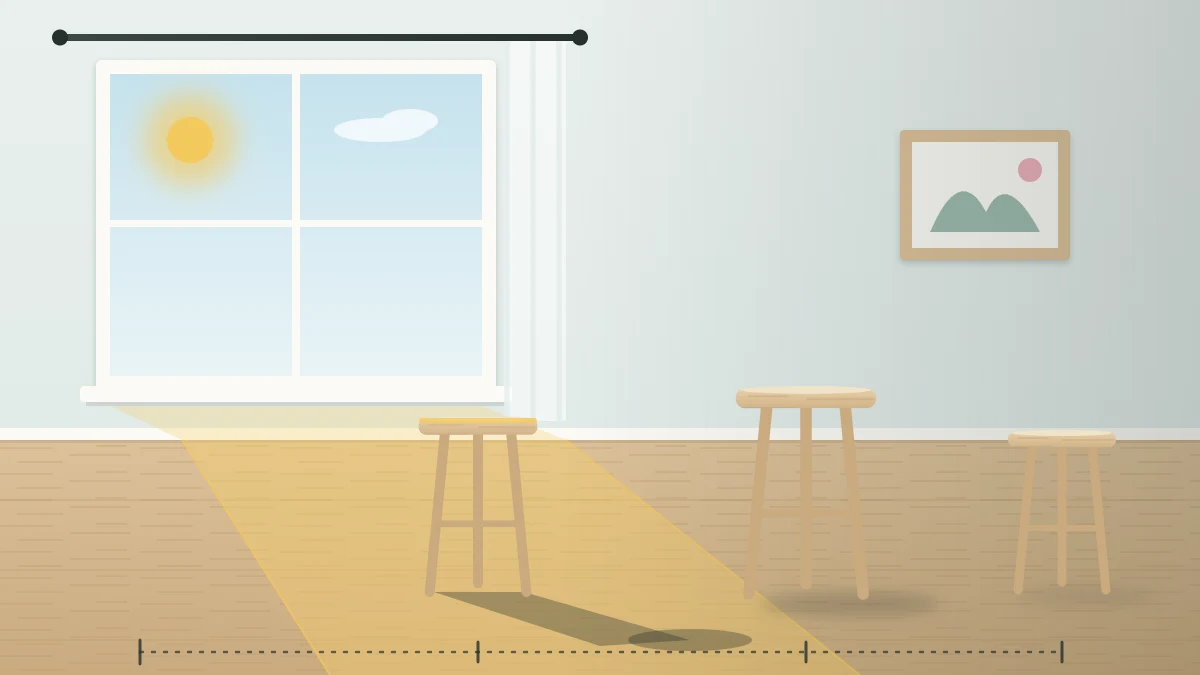
The biggest surprise for most people is how fast daylight fades as you move into a room. A step or two back from the glass can cut the light reaching a plant considerably, and by the far wall there may be only a small fraction of what the windowsill receives.
The reason is simple: a plant on the windowsill sees a broad stretch of sky, while a plant deep in the room sees only a small bright rectangle. Moving sideways matters as well. The wall beside a window, and the corner next to it, are often much dimmer than they appear.
What blocks the light
Two windows facing the same way can give very different results, because of what stands between the sky and the plant.
- Outside: trees, neighboring buildings, fences, balconies above, roof overhangs and awnings. Deciduous trees block far more light in leaf than when bare.
- At the window: insect screens, tinted or frosted glass, dirty panes, and deep recesses that set the glass well back in the wall.
- Inside: curtains, blinds that stay half lowered, furniture and taller plants standing in front of smaller ones.
Note each of these beside the spot it affects. Some can be changed, such as a blind you could raise during the day. Others are fixed and simply become part of what that window offers. The compass direction of the window sets the basic pattern, which the guide to window direction for indoor plants describes.
Using a light-meter app or handheld meter
A phone light-meter app or an inexpensive handheld meter is optional. Phone sensors are not built for this job, so readings differ from one device to another and should not be compared with published figures. What a meter does well is rank your own spots: take readings at each place within a few minutes of one another, with the sensor facing the window, and you will see which spot is brighter and by roughly how much.
Treat the numbers as a comparison between spots, not as a target to hit. For a general explanation of how light affects indoor plants, see the University of Illinois Extension’s page on lighting for houseplants.
Good to know
A light survey describes your home on the days you looked. Latitude, season, weather and even window cleaning all change the picture, so let the plants confirm it. Leaning stems and long gaps between leaves suggest too little light; faded or crisp patches on the window side can suggest too much direct sun.
Putting the results to use
Your shaded sketch now shows which spots get direct sun, which are bright without it and which are dim. Match the garden to the map, not the other way round: plan the main growing area in the brightest zone that is also practical, and keep the dim zones for plants that tolerate low light or leave them empty.
Light is only the first check on a location. Temperature, moving air and convenience come next, and the guide on where to put an indoor garden works through them.
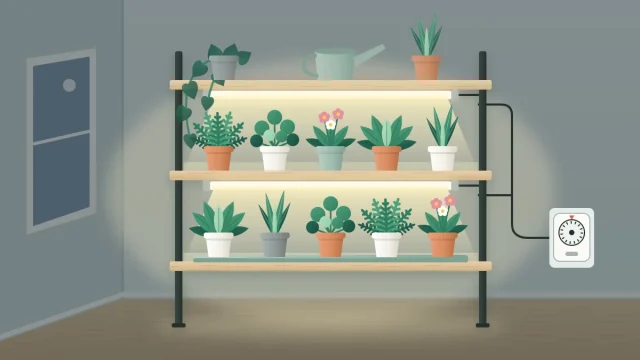
If the survey shows that no spot is bright enough for the plants you would like, you have two honest options: choose plants suited to the light you have, or add light. The guide to grow light basics covers the second.
Frequently asked questions
What does bright indirect light actually mean?
It describes a bright spot with a wide view of the sky where sunbeams do not fall on the plant, or do so only briefly or through a sheer curtain. Typically that means close to a window but just outside the patch of direct sun. The hand-shadow test there usually gives a soft but clear shadow.
Is a phone light-meter app accurate enough for plants?
It is useful for comparing spots in your own home, not for precise measurement. Phone sensors vary, so readings from different devices do not match each other or published figures. Take readings at each spot within a few minutes, with the phone facing the window, and use them only to rank brighter and dimmer places.
How often should I reassess the light in my home?
Repeat the survey at least once in a different season, because the sun's height and path change through the year and trees outside gain and lose leaves. It is also worth another look after anything changes the view from the window, such as new curtains, a new building or a pruned tree.