Common Indoor Gardening Mistakes and How to Avoid Them
Ten frequent setup mistakes in a home garden, from choosing plants before checking the light to crowding pots, each with the reason it causes trouble and a simple fix.
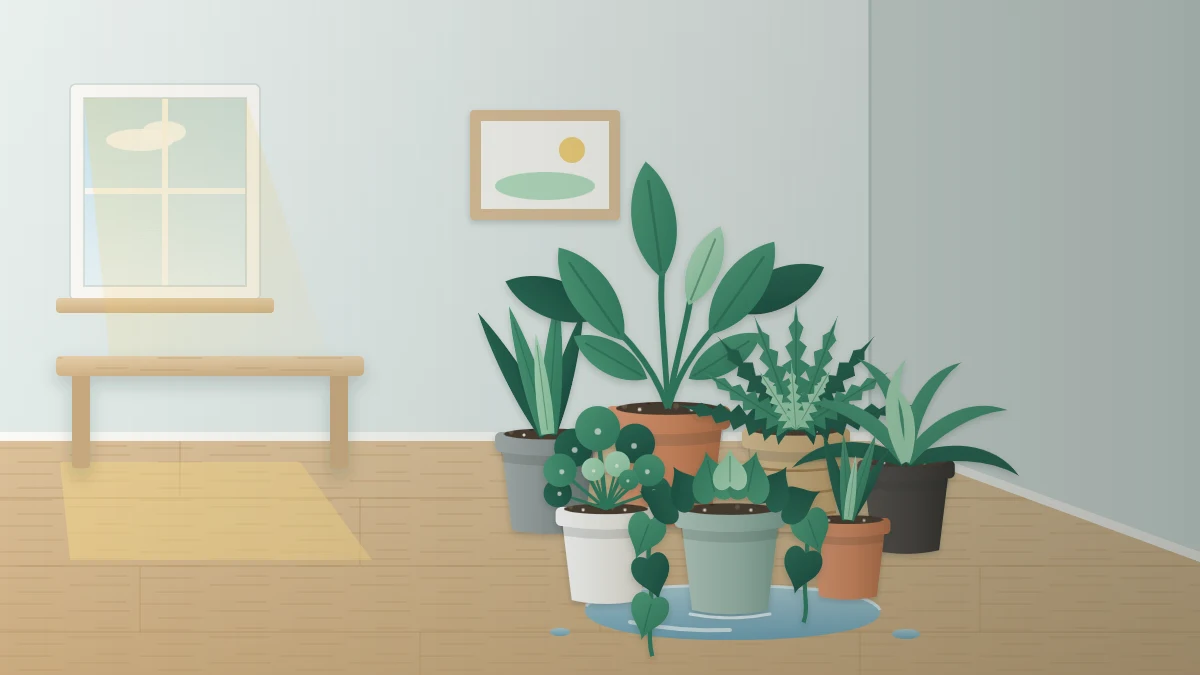
Almost everyone who starts a garden inside the home makes the same handful of errors, and most of them have nothing to do with a lack of skill. They come from treating plants as decoration first and living things second, which is a perfectly natural way to begin.
The ten indoor gardening mistakes below are all about the setup: where the garden sits, what the plants stand in and how the routine runs. Each one has a plain reason and a fix that does not require starting again.
Light mistakes
1. Buying plants before checking the light
It is tempting to choose plants in the shop and find places for them later. The light in your home is the one thing you cannot easily change, so it should decide the plants, not the other way round.
Fix: spend a few days learning how to assess the natural light in each possible growing area, then shop for plants that suit what you found.
2. Putting the garden where it looks best
A dim corner, a hallway table or the top of a bookcase may be where the room needs greenery, but a spot that looks bright to your eyes can be far too dark for steady growth. Light drops quickly with distance from a window.
Fix: build the main garden where the light is, and treat darker spots as places for a plant sold as tolerant of low light, or for none.
3. Ignoring how the light changes with the seasons
The sun’s height and path shift through the year, and trees outside gain and lose their leaves. A sill that is gentle in winter can be harsh in summer, and a bright shelf can turn gloomy in the darker months. How much it changes depends on your latitude and your windows.
Fix: look at the growing area again when the seasons turn, and be ready to move pots closer to the glass or farther from it.
Container mistakes
4. Decorative pots with no drainage and no inner pot
Planting straight into a pot without a hole means every extra drop of water stays at the bottom, where roots sit in it without air. You cannot see it, so the problem builds unnoticed.
Fix: keep the plant in a nursery pot with drainage holes and use the decorative pot as an outer cover. The guide to drainage for indoor pots explains the options.
5. No protection for floors and furniture
Water marks, rings on wood and damp patches under pots are the reason many people give up on indoor gardens. Even careful watering spills now and then, and porous saucers can pass moisture to the surface beneath.
Fix: put a saucer or tray under every pot before the first watering, and check under pots now and then for trapped moisture.
Watering mistakes
6. Watering every pot on the same day
A fixed watering day feels organized, but pots do not dry on a calendar. A small terracotta pot in the sun and a large plastic one in the shade can be days or weeks apart, so a blanket round leaves some too wet and others too dry.
Fix: keep the regular day, but use it for checking. Feel the mix or lift the pot, and water only the ones that are ready. See the guide to watering an indoor garden for the method.
Good to know
How fast a pot dries varies with the plant, the pot, the potting mix, the season and your home. There is no interval that suits every pot, which is why checking beats a schedule.
Arrangement mistakes
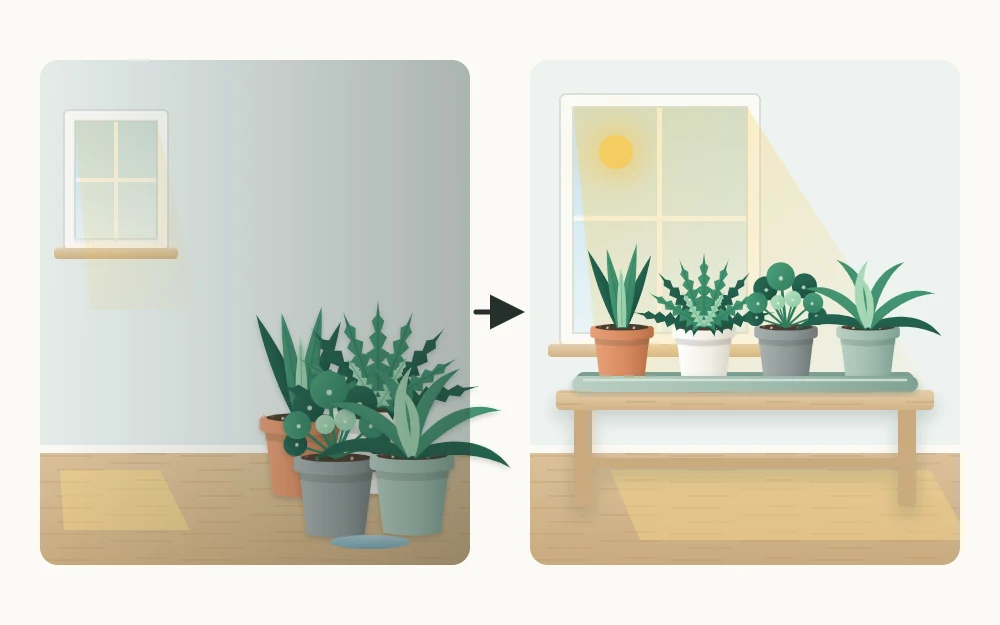
7. Crowding too many pots into one spot
When the one good window fills up, pots get pushed together until leaves overlap. Plants shade each other, air cannot move between them, and you can no longer reach the back row to check the mix or look under the leaves.
Fix: leave room to slide a hand between pots. If the spot is full, it is full: use height with a shelf or stand, or open a second growing area.
8. Mixing plants with opposite needs in one group
A plant that wants direct sun and dry mix next to one that wants shade and steady moisture forces a compromise that suits neither, and makes it easy to water the wrong pot.
Fix: sort the collection into two or three groups by light and drying pace, and give each group its own spot.
9. Never turning or moving pots
Indoors, light comes mostly from one side. A pot left in the same position for months grows toward the window and becomes lopsided, and the leaves at the back get little light.
Fix: give each pot a quarter turn when you check it, and swap positions within a group from time to time so no plant is always at the back.
Planning mistakes
10. Starting too big
A dozen plants bought in one weekend arrive with a dozen sets of needs you have not learned yet. When several struggle at once, it is hard to tell which part of the setup is at fault.
Fix: begin with a few plants in one growing area and add more once the routine feels easy. The beginner’s guide to indoor gardening lays out a sensible first setup.
How to put things right
If you recognize several of these, change one thing at a time so you can see what helps. A sensible order is:
- Move the garden to better light.
- Sort out drainage and surface protection.
- Thin and regroup the pots.
- Switch from a watering day to a checking day.
Then give the plants time. They respond slowly, and new growth is a better sign of progress than any change in the old leaves.
Tip
Keep a short note of what you changed and when. A few weeks later it will be much easier to connect a plant’s response to the adjustment that caused it.
These mistakes are normal
None of this means you are bad with plants. Every item on the list is a matter of placement or habit, not talent, and all of them can be corrected in an afternoon. An indoor garden is adjusted into shape over months, and noticing what is not working is the skill that matters most.
Frequently asked questions
What is the most common mistake in indoor gardening?
Placing plants by appearance instead of by light is probably the most frequent. A spot can look bright to a person and still be too dim for steady growth, because light falls off quickly away from a window. Assessing the light first, then choosing plants to suit it, prevents many later problems.
Why are my indoor plants struggling even though I look after them regularly?
Regular care on a fixed day can still miss what each pot needs. Pots dry at different speeds depending on the plant, pot, potting mix and position. Look at the setup: is there enough light, can water drain, are the pots crowded? Change one thing at a time and watch the new growth.
How many plants should a beginner start with?
There is no set number, but a few plants in one growing area is easier to learn from than many spread around the home. With a small group you can see how each responds to your light and routine, then add more once checking them feels easy.