Potting Media for Indoor Gardens: Mixes and Soilless Options
What goes into a potting mix and what each ingredient does, the main types of bagged mix, a basic look at clay pebbles and water growing, and how to handle and store mix indoors.
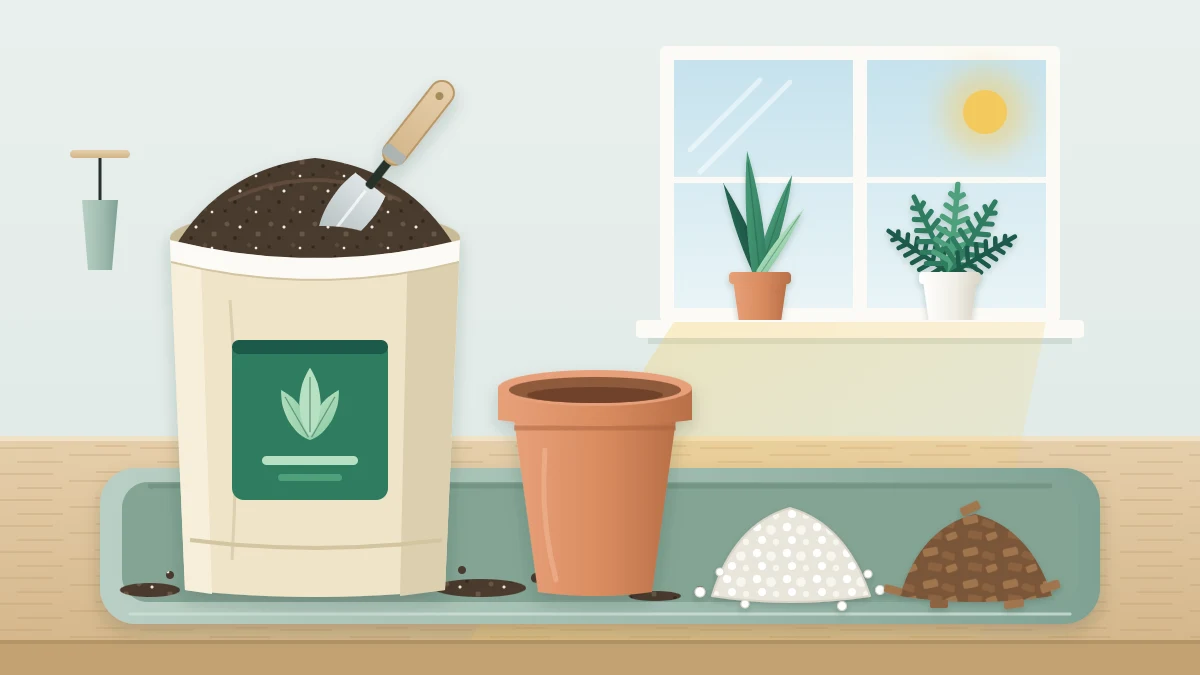
The shelf of bags at a garden center can be bewildering: indoor mix, cactus mix, orchid bark, seed compost, coir bricks, clay pebbles. All of them are potting media, and each is built to hold water and air in a different balance.
Choosing potting media for indoor plants gets much simpler once you know what the main ingredients do. You can then read the back of a bag and judge whether its contents suit your containers, your plants and the way you water.
Why not garden soil
Soil dug from outside behaves badly in a container. Indoor pots need a potting medium for four reasons:
- Drainage. In the confined space of a pot, garden soil packs down and drains slowly. A potting mix is made of coarser particles that let excess water run through.
- Air space. Roots need air. The gaps between particles in a mix hold it; compacted soil has few.
- Weight. Wet soil is very heavy. Most mixes are far lighter, which matters on shelves and sills.
- Cleanliness. Garden soil can bring weed seeds and outdoor organisms into the house. Bagged mixes are made for containers and are tidier to handle.
What goes into a mix
Most bagged mixes combine a few ingredients, each with a job. The proportions set the character of the mix.
| Ingredient | Main job | Worth knowing |
|---|---|---|
| Peat moss or coir | Holds water | The bulk of many mixes; can be hard to re-wet once fully dry |
| Bark | Structure and air | Chunky pieces keep the mix open; breaks down slowly over time |
| Perlite or pumice | Drainage and air | Light mineral granules; perlite is the white specks in many mixes |
| Compost or starter fertilizer | Some nutrients | Included in some mixes; the supply runs out, so check the bag |
Other materials turn up too, such as sand or grit in fast-draining blends and vermiculite in fine ones. For more background, see Clemson Cooperative Extension’s factsheet on soil mixes for indoor plants.
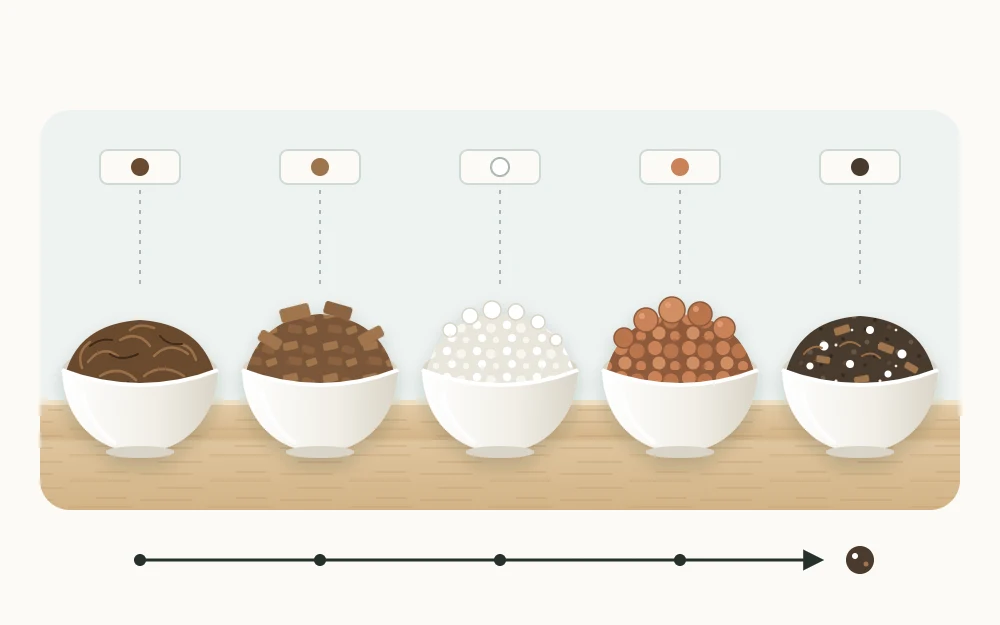
Types of bagged mix
Four broad types cover most indoor gardens.
- General-purpose indoor potting mix. A balanced blend that holds moisture yet drains. It suits most common indoor foliage plants and is the sensible default.
- Faster-draining mix for cacti and succulents. Contains more grit, sand or pumice, so it holds less water and dries sooner.
- Chunky mix for epiphytes. Mostly bark or other coarse pieces, for plants such as many orchids whose roots grow exposed to air in the wild.
- Fine seed-starting mix. Fine-textured and usually low in nutrients, made for germinating seeds and rooting small cuttings.
Labels vary from maker to maker, so read the ingredient list as well as the name on the front. If a plant has particular needs, look it up by botanical name in a reliable source before choosing.
The fine mix has its own uses, which are covered in the guide to starting indoor plants.
Match the mix to the pot and the spot
A mix does not work alone. How fast it dries also depends on the container and the growing area.
- A porous pot, such as unglazed terracotta, dries a mix faster than plastic or glazed ceramic does.
- A small pot dries faster than a large one filled with the same mix.
- A warm, bright position uses water faster than a cool, dim one.
So the same mix can be too wet in one setup and about right in another. The guide to choosing indoor plant containers explains how pot material and size affect drying.
Some growers adjust a bagged mix by stirring in extra perlite or bark to open it up. There is no ratio that suits every plant and home, so treat any recipe as a starting point and watch how the pot dries afterward.
Good to know
No mix is right for every plant. What works depends on the plant, the pot, the light and how you water, so let the way the pot dries guide your next choice.
Soilless and semi-hydroponic options
Some indoor gardeners leave potting mix behind altogether. Two basic approaches are common.
Clay pebbles with a reservoir
In a semi-hydroponic setup, the plant grows in clay pebbles, which are lightweight fired clay balls, inside a pot that stands in or holds a shallow reservoir of water. The pebbles wick moisture upward while the gaps between them stay full of air.
Water alone
Cuttings of some plants will root, and sometimes keep growing for a long time, in a jar of plain water.
Both are different systems with their own rules, not a drop-in swap for potting mix. Roots formed in water or pebbles differ from those formed in mix, and moving a plant between systems can set it back. Because pebbles and water supply no nutrients, these must come from a fertilizer suited to the system, used according to its label.
Handling and storing mix indoors
A little preparation keeps potting from becoming a cleaning job.
- Work over a potting tray, a large shallow tub or a sheet of plastic so spills stay in one place.
- Dampen dry, dusty mix lightly before handling it. This keeps dust down and helps the mix take up water once it is in the pot.
- Fill pots so the surface sits a little below the rim, leaving room for water to pool before soaking in.
- Fold the top of the bag over, clip it shut and store it somewhere dry and cool.
Tip
Buy a bag sized to what you will use in a season or so. A half-used bag left open picks up moisture and can go stale.
When a mix has had its day
Potting media do not last forever. The organic parts slowly break down into finer particles, the mix settles and the air spaces shrink. Signs include water sitting on the surface before soaking in, a level that has dropped well below the rim, or mix that has shrunk away from the sides of the pot.
Fresh mix is one of the main reasons for repotting indoor plants, even when the pot size stays the same.
Frequently asked questions
Can I use garden soil for indoor plants?
It is not a good choice for containers. Garden soil tends to pack down in a pot, drain slowly and hold little air around the roots. It is also heavy when wet and can carry weed seeds and outdoor organisms indoors. A bagged potting mix is made for containers.
What is the difference between potting mix and potting soil?
The names are often used loosely and the contents differ between makers. Many products sold under either name are soilless blends of peat or coir, bark and perlite. Ignore the name on the front and read the ingredient list to see how much water-holding and how much coarse material it contains.
Do I need a different mix for every plant?
Usually not. A general-purpose indoor potting mix suits most common foliage plants. Plants adapted to dry conditions often do better in a faster-draining mix, and epiphytes such as many orchids in a chunky bark-based one. Check each plant by name if you are unsure.