Drainage for Indoor Pots: Holes, Saucers and Dry Floors
Why indoor pots need drainage holes, and how to catch the water with saucers, shared trays and outer pots so sills, shelves and floors stay dry and unmarked.
Outdoors, the water that runs out of a pot simply disappears into the ground. Indoors it lands on a windowsill, a shelf or a wooden floor, and that is why so many pots end up with no way for water to escape at all.
Good drainage for indoor pots has two halves. Water must be able to leave the potting mix, and then something has to catch it before it reaches your furniture. This guide covers both, with most of the attention on the second half.
Why drainage matters
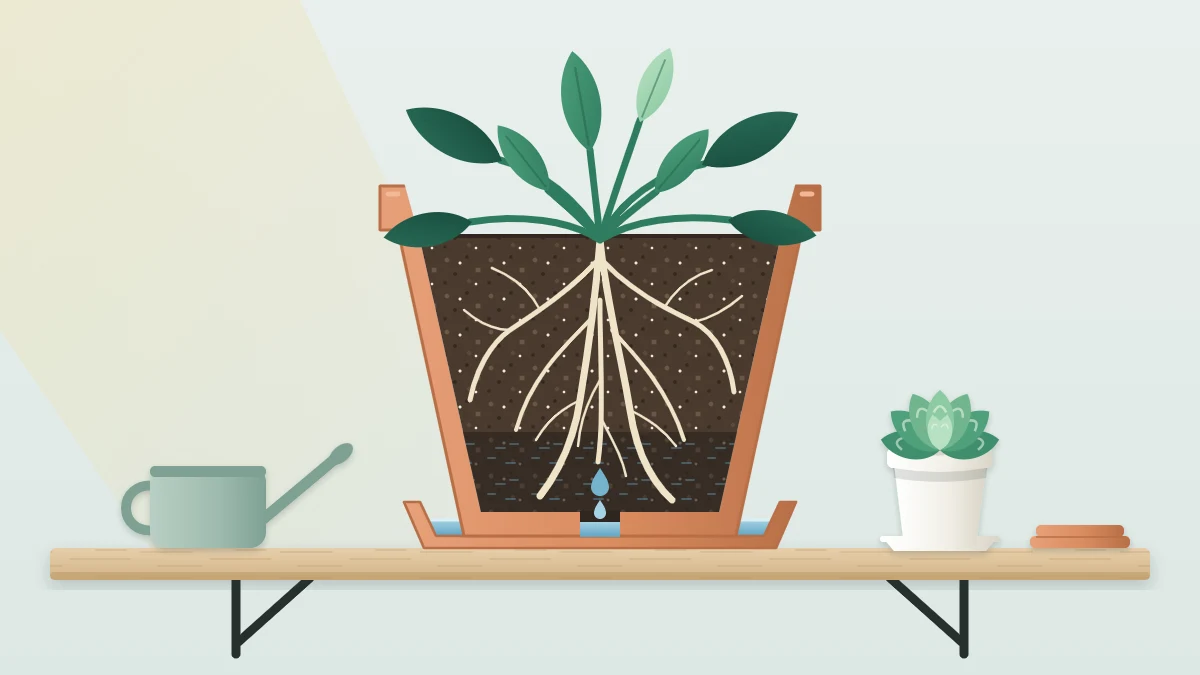
Roots need air as well as water. In a healthy pot, water runs through the mix, the excess leaves at the bottom, and air is drawn back into the spaces between the particles.
When the excess cannot leave, it collects at the base and fills those spaces. The lower roots then sit in saturated mix with little air, and many common indoor plants decline in those conditions. Draining freely also lets you water thoroughly, wetting the whole root ball without guessing at the amount.
Drainage holes come first
The simplest test of a container is to turn it over. One or more drainage holes in the base means water has an exit. Most nursery pots have several; many terracotta pots have one in the center.
A layer of gravel, pebbles or broken pot shards in the bottom of a holeless pot does not replace a hole. The water has nowhere to go, so it still collects, and the layer only raises the wet zone closer to the roots while taking space the mix could use.
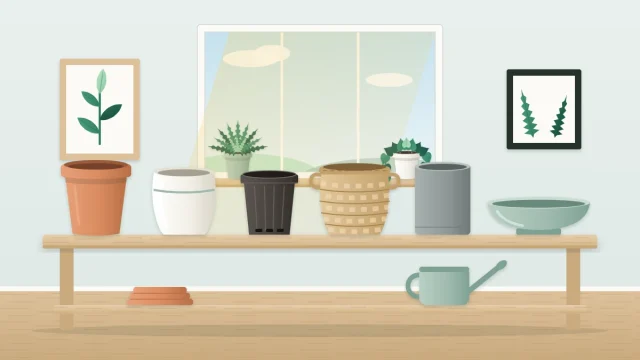
If you are still deciding on pots, the guide to choosing indoor plant containers covers size, material and shape.
Catching the water
Once water can leave, the indoor question begins: where does it go? There are three main answers, and one garden can use all of them.
Saucers
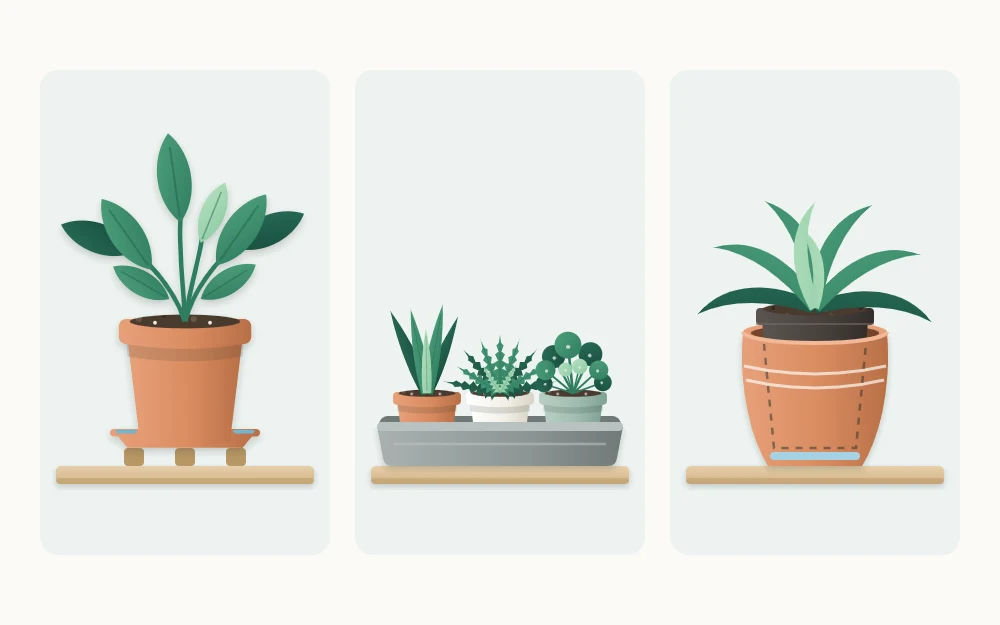
A saucer under a single pot is the classic solution. Choose one a little wider than the base of the pot, as a starting point about 1 to 2 in (2.5 to 5 cm) wider, so runoff has room to collect and you can see it. Larger pots release more water and need a deeper saucer.
The material matters. Glazed ceramic and plastic saucers are waterproof. Unglazed terracotta saucers are porous: they can sweat moisture through their base onto the surface below, which is how a pale ring appears on wood even though nothing overflowed. Use a glazed saucer on sensitive surfaces or put a waterproof layer beneath a porous one.
Deep trays for a group
For several pots together, one long tray is tidier than a row of saucers and catches splashes between pots too. Pick a tray with a rim deep enough to hold the runoff from every pot on it. On floors, a boot-tray style tray with a raised lip works well under a cluster of large pots.
Cachepots
A cachepot is a decorative outer pot without a hole. The plant stays in its nursery pot, which drains into the cachepot. It is neat and waterproof, but the water is hidden, so it is easy to leave the inner pot standing in it. Lift the inner pot or tip the cachepot out after each watering.
Protecting the surface underneath
A saucer stops the flood, but slow damage comes from moisture trapped beneath it. Condensation, small spills and porous materials all leave a surface damp for days if air cannot reach it.
- Pot feet or risers lift a pot or saucer slightly so air can move beneath it.
- Cork or felt pads under saucers prevent scratches. They can hold moisture themselves, so check them and let them dry.
- Waterproof liners are essential inside baskets and other woven or metal covers, which either leak or are damaged by standing water.
- Waterproof mats under a tray add a second layer on wooden floors and sills.
Tip
Before trusting a new saucer, liner or cachepot on good furniture, fill it with water and leave it on a sheet of paper for a day. A damp mark on the paper tells you it is not waterproof.
Emptying saucers and trays
Water in a saucer is not a reserve for later. A pot left standing in it keeps the bottom of the mix saturated, which defeats the purpose of the hole.
A short while after watering, once the dripping has stopped, empty what has collected. Many growers wait roughly 15 to 30 minutes, though the timing depends on the pot and the mix. For pots too heavy to lift, draw the water out of the saucer with a sponge or a kitchen baster kept for the purpose.
Carrying pots to a sink or bathtub to water and drain avoids the problem for smaller plants. For the technique itself, see the guide to watering an indoor garden.
A favorite pot with no hole
You do not need to give up a pot you love because its base is solid. Use it as an outer pot:
- Find a nursery pot with drainage holes that fits inside with a little room to spare.
- Check that the rim of the inner pot sits at or just below the rim of the outer one. Raise it on an upturned saucer if it sits too low.
- Plant in the nursery pot, not in the decorative pot.
- After watering, lift the inner pot and pour away whatever has collected.
Good to know
Drilling a hole in ceramic or glass is possible but can crack the pot. If you try it, follow the drill bit manufacturer’s instructions; using the pot as an outer cover carries no such risk.
Check under pots now and then
Trouble under a pot stays invisible until the pot moves. Every few weeks, as part of your normal round, lift each pot and saucer and look at the surface beneath.
- Wipe away any moisture and let the surface dry before putting the pot back.
- Look for dull patches, rings or raised grain on wood, which mean water is getting through.
- Make sure the drainage holes are not blocked by roots or compacted mix.
- Rinse out saucers and trays that have built up residue.
The guide to cleaning an indoor growing area covers trays, saucers and the surfaces around them in more detail.
Frequently asked questions
Do indoor pots really need drainage holes?
For most common indoor plants, yes. A hole lets excess water leave so air can return to the potting mix around the roots. Without one, water collects unseen at the base. A pot with no hole is best used as a decorative outer pot around a nursery pot that does drain.
Does gravel in the bottom of a pot help drainage?
Not in a pot without a hole. The water still has nowhere to go, so it gathers in the gravel and the mix above it stays saturated. The layer also takes up room the roots could use. A drainage hole and a suitable potting mix do the job instead.
How do I stop plant pots from marking wooden furniture?
Use a waterproof saucer or tray under every pot, since unglazed terracotta saucers can pass moisture through. Raise the saucer slightly on feet or pads so air can circulate, empty collected water soon after watering, and lift pots now and then to dry the surface beneath.