Preparing an Indoor Garden Before You Go on Vacation
Ordered steps for getting a whole indoor garden ready for one to three weeks away: what to do a week ahead, the day before, on longer trips and when you return.
At a glance
What you need
- Trays and saucers
- Sheer curtain
- Absorbent cotton cord
- Jar or other water container
- Capillary mat
- Paper and pen for sitter notes
Most indoor gardens cope with a short absence better than their owners expect. What they cope with badly is last-minute panic: every pot soaked the night before, a tray full of standing water and the blinds left open on a south window in July.
Good indoor garden vacation preparation slows the whole garden down so it uses less water while you are away, and adds a watering aid only where the trip is long enough to need one. The steps below are arranged by timing.
What decides how long the garden can wait
There is no fixed number of days a plant lasts unwatered. It depends on the plant, the size of the pot, the potting mix, the season, the light and the temperature of the room. Small pots in bright, warm positions dry fastest. Plants with thick leaves, thick stems or fleshy roots usually cope longest, because they store water.
You already have the best evidence: how long each pot normally takes to go from watered to due again. Use that, not a general rule, to judge which plants need help.
A week or so before you leave
- Check every plant. Look at the leaves, including the undersides, and feel the mix in each pot. Remove dead leaves and spent flowers so they do not decay while you are gone.
- Deal with anything due. If a plant has been wilting between waterings because it is badly root-bound, or a pot is draining poorly, sort it out now while there is time to see the result.
- Test any watering aid. Set up the wick, mat or reservoir you plan to rely on and watch it for several days. A wick that does not draw, or one that keeps the mix sodden, is much better discovered while you are home.
Good to know
Do not fertilize or repot just before leaving. Fertilizer encourages growth that needs more water, and a newly repotted plant needs watching while it settles. Leave both until you are back.
The day before
- Water the pots that are due. Check each one and water those that need it, thoroughly. Do not water everything by reflex: a pot that is still moist gains nothing from more and may sit wet for the whole trip.
- Let them drain. Empty saucers and cachepots, the decorative outer pots without a hole, once the dripping stops.
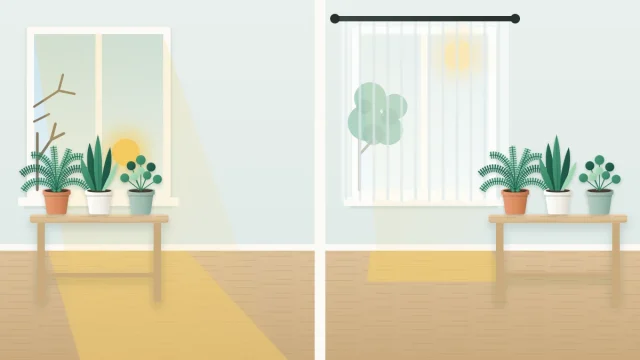
- Move the garden back from hot glass. Shift plants away from sunny windows into bright indirect light. Less direct sun means slower drying. The guide to seasonal light changes indoors explains why a summer sill is the hardest place to leave a plant.
- Group pots closely on trays. Plants standing together lose moisture a little more slowly than plants standing alone; the guide to grouping indoor plants covers how to arrange them.
- Close sheer curtains. A sheer softens the sun while still letting light through. Do not shut the room into darkness.
- Leave the temperature moderate. A room that is neither hot nor cold, roughly 60 to 75°F (16 to 24°C) for most common indoor plants, keeps water use down.
- Leave grow lights on their timer. If part of the garden runs under lights, keep the usual timer setting and the fixtures as the manufacturer’s instructions describe, with all connections well away from any water container you have set up.
For a trip of about a week in mild conditions, these steps alone are enough for many gardens.
Longer trips: watering aids and their limits
For two or three weeks, or for small pots and thirsty plants on a shorter trip, add one of these.
Self-watering containers and reservoirs
A container with a built-in reservoir releases water to the mix gradually. Fill it as the maker instructs, not beyond. The limit is that a plant has to be established in such a pot beforehand, and plants that like to dry out between waterings may stay too wet.
A wick from a water jar
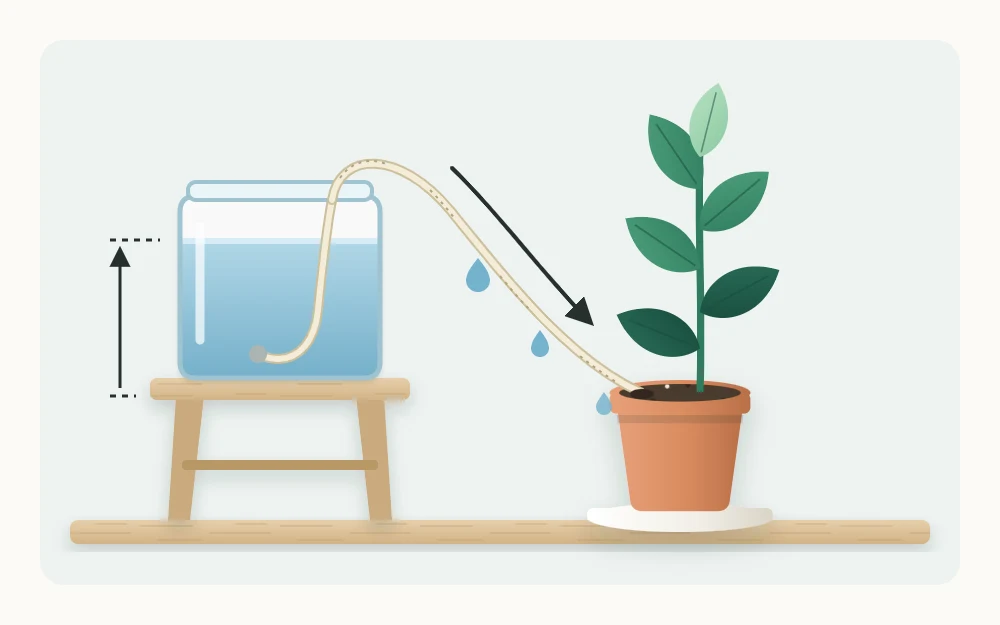
Push one end of a cotton or other absorbent cord a few inches into the mix and put the other end at the bottom of a jar of water beside the pot. Water travels along the cord as the mix dries. How fast it moves depends on the cord, the mix and the height of the jar, so results vary pot to pot, and a small jar can run dry.
A capillary mat on a tray
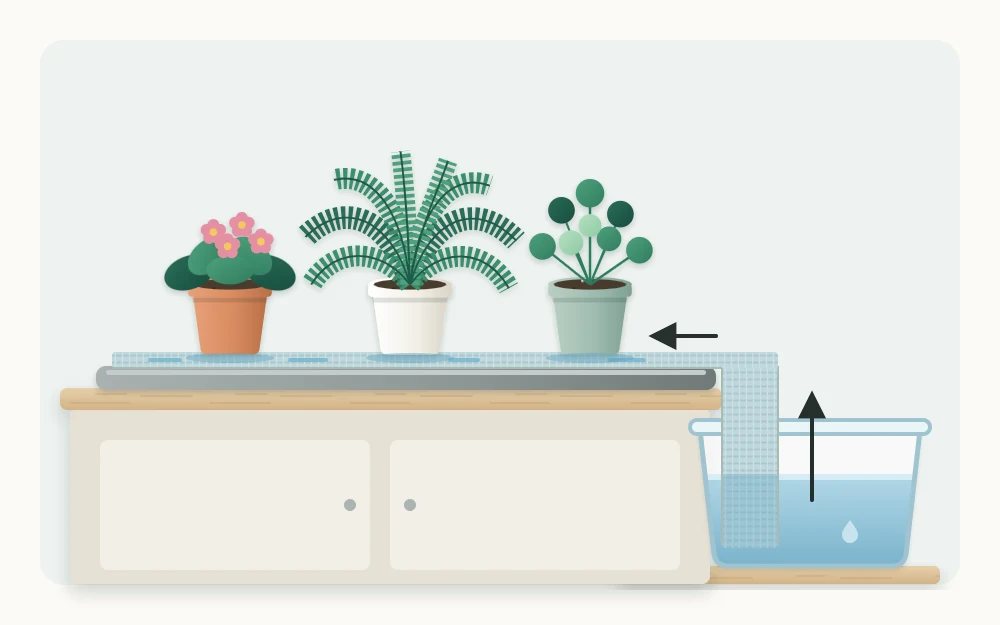
A capillary mat is an absorbent fabric that stays damp when one end hangs in a container of water. Pots with drainage holes stand on it and draw moisture up from below. It suits a group of small plastic pots with flat bases that make good contact. It works poorly with pots on feet, with a layer of coarse material in the base, or with plants that need to dry out.
Whatever you use, do not leave pots standing in deep water. A full sink or a flooded tray keeps roots saturated for days and often does more harm than a dry spell would. The Royal Horticultural Society’s advice on holiday care for houseplants describes further methods.
A plant sitter
For long absences a person is the most reliable option, provided the instructions are simple. Gather plants into a few groups by need and leave one short written note per group, for example: “Tray by the window: feel the mix, water only if dry a finger deep, empty the saucers.” Ask the sitter to check before watering instead of watering on every visit, and say plainly that a slightly dry plant is fine.
When you get back
- Check before watering. Feel each pot. Some will be dry and some still moist; the guide to watering an indoor garden explains how to judge. A mix that has dried hard may need watering in two or three passes before it absorbs properly.
- Trim damage. Remove yellowed or crisp leaves and any dead stems. A wilted plant often recovers within a day or two of watering, so wait before deciding anything is lost.
- Remove the aids. Take out wicks and lift pots off mats so the mix returns to its normal cycle.
- Move the garden back. Return plants to their usual positions, stepping any sun-lovers back into direct sun over several days.
Note which plants struggled and which were untroubled. That record is the most useful guide for the next trip.
Frequently asked questions
Should I water all my plants heavily before a vacation?
No. Water thoroughly only the pots that are due, then let them drain. A pot that is still moist gains nothing from extra water and may stay saturated for the whole trip, which can damage roots. Checking each pot individually the day before you leave is better than soaking everything.
Can I leave my plants in a sink or bath of water?
Standing pots in deep water is not a good idea. Roots kept saturated for days are deprived of air, and many plants suffer more from that than from a dry spell. A capillary mat, a wick or a reservoir container supplies moisture gradually. Test whichever you choose before you leave.
How long can an indoor garden go without watering?
It varies with the plant, pot size, potting mix, light, temperature and season, so no single figure applies. Your own records are the best guide: note how long each pot usually takes to dry at this time of year. Small pots in warm, bright spots need help soonest.