
Stop Peeing Around and Start Doing the Fire Hydrant Exercise
The Beginner Fire Hydrant Exercise: What It Is and Why You Should Care
The beginner fire hydrant exercise is one of the most effective — and most overlooked — moves you can add to your routine right now.
Here’s the quick version:
- Get on all fours — hands under shoulders, knees under hips
- Lift one bent knee out to the side — up to about 45 degrees, like a dog at a fire hydrant
- Keep your core tight and hips level — don’t let your back arch or your pelvis tilt
- Lower slowly and repeat — aim for 10-15 reps per side, 2-3 sets
- No equipment needed — just a mat and a few minutes
That’s it. Simple, effective, and you can do it anywhere.
If you sit at a desk most of the day, your glutes and hips are probably weaker than you think. Prolonged sitting shuts down the muscles on the sides of your hips — particularly the gluteus medius — which can lead to hip pain, lower back aches, and poor balance over time. Fitness professionals sometimes call this “dead butt syndrome,” and it’s more common in 2026 than ever.
The fire hydrant exercise directly targets those neglected muscles. It works your outer glutes, stabilizes your pelvis, and strengthens your core — all at once, with zero equipment.
It’s not glamorous. But it works.
What is the Beginner Fire Hydrant Exercise?
At its core, the beginner fire hydrant exercise is a bodyweight movement performed in a quadruped position (on all fours). Technically known as “quadruped hip abduction,” it involves moving your leg away from the midline of your body while keeping your knee bent.
While many of our favorite gym moves like squats or lunges happen in the sagittal plane (moving forward and backward), the fire hydrant forces us to move in the transverse plane. This is vital for functional fitness because life doesn’t just happen in a straight line. We twist, we step sideways, and we turn. By training in this plane, we improve joint health and ensure our hips can handle rotation and side-to-side movements without injury.
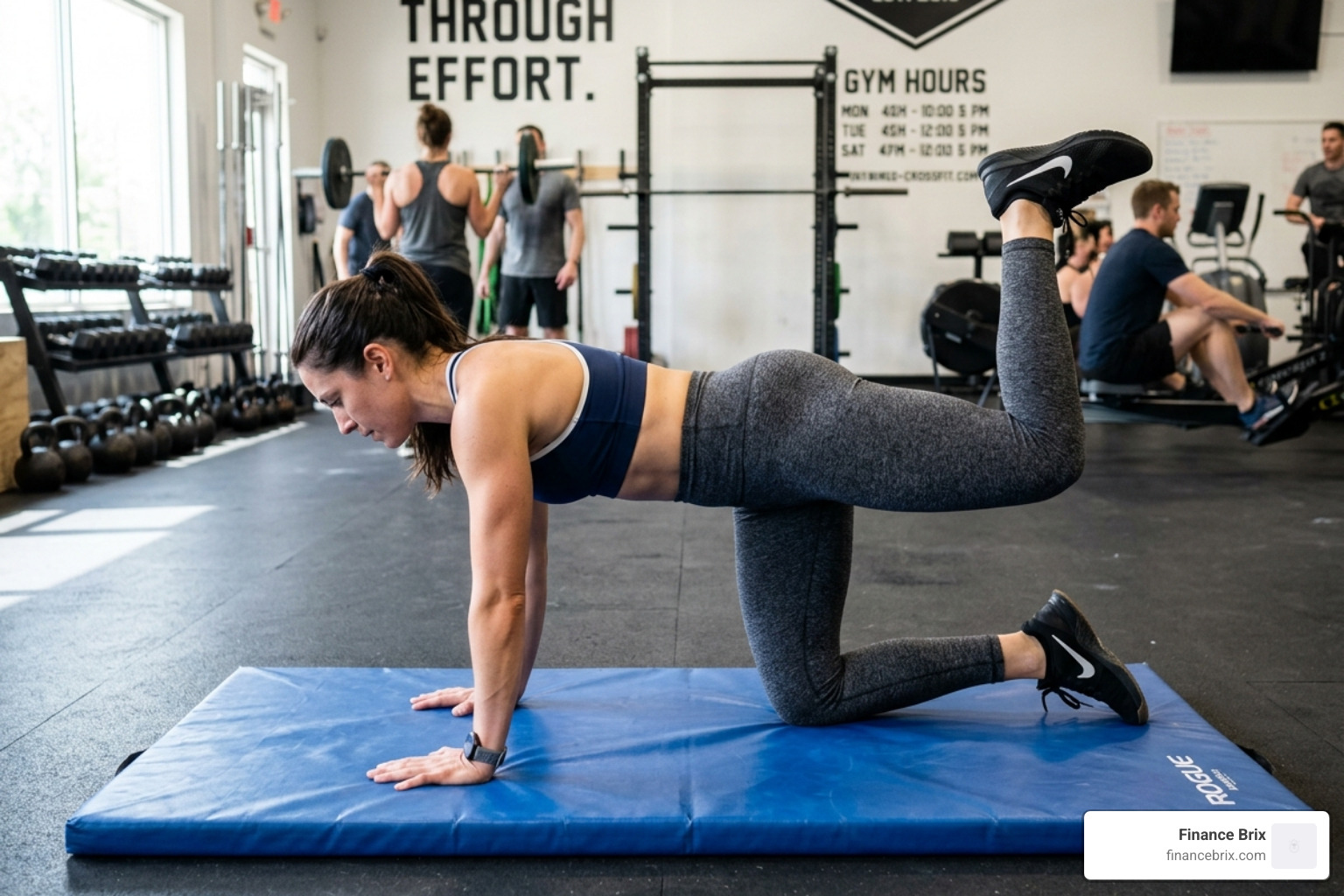
When we perform this move, we aren’t just flailing a leg in the air. We are practicing pelvic alignment. The goal is to isolate the hip joint so that the rest of the body stays perfectly still. This builds a foundation of strength that protects the lower back and improves overall range of motion.
The Origin of the Name
Let’s address the elephant—or rather, the dog—in the room. The exercise gets its name because the movement looks exactly like a dog lifting its leg to relieve itself on a fire hydrant. It’s a bit of fitness humor that serves a practical purpose: it provides a perfect visual cue. If you can picture a pup at a hydrant, you already know the basic mechanics of the move. It’s memorable, slightly silly, and incredibly effective.
Why it Matters for Beginners in 2026
As we navigate the fitness landscape of April 2026, the “sedentary lifestyle” has become an even bigger hurdle. With more of us working from home or spending hours in front of screens, “dead butt syndrome” (scientifically known as gluteus medius tendinosis) is a real concern. When we sit, our glutes are stretched and inactive for hours.
The beginner fire hydrant exercise acts as a “wake-up call” for these muscles. It provides immediate desk job relief by restoring hip mobility and building the foundational strength needed to stand, walk, and run with proper form.
Muscles Targeted and Key Benefits
Don’t let the simple setup fool you; this move is a powerhouse for your posterior chain.
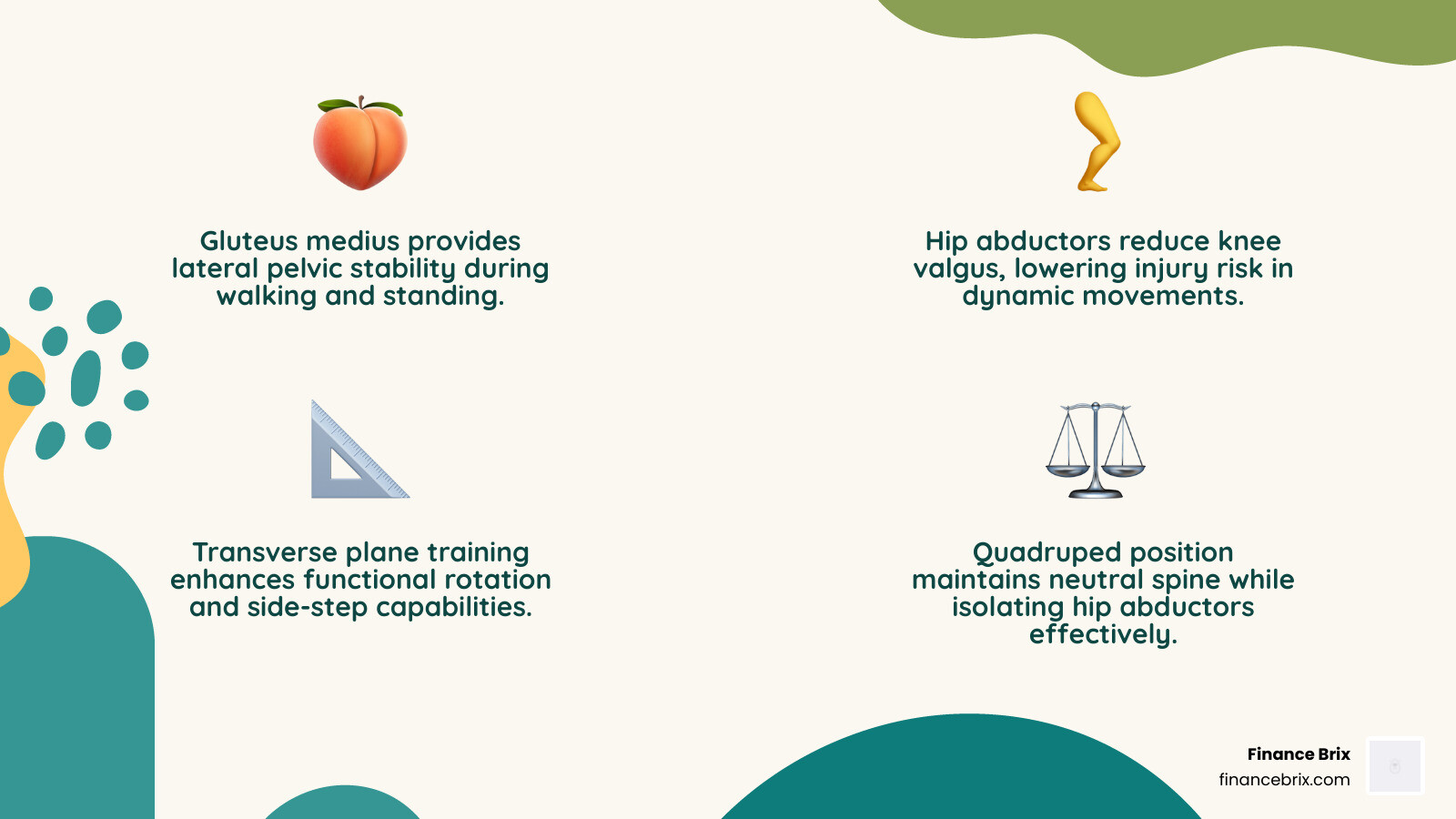
- Gluteus Medius: This is the primary target. Located on the outer side of your pelvis, it’s responsible for hip abduction and stabilizing your pelvis when you walk or stand on one leg.
- Gluteus Maximus: The largest muscle in your body gets a workout here too, especially during the “hold” phase of the lift.
- Core Stability: To keep your torso from tipping over, your transverse abdominis and obliques have to fire.
- Tensor Fasciae Latae (TFL): This muscle helps with hip abduction and medial rotation.
- Hip Adductors: These act as stabilizers on the “planted” leg to keep you from sliding.
Strengthening the Gluteus Medius
Why do we care so much about the gluteus medius? Because it provides lateral stability. If this muscle is weak, your pelvis tilts when you walk, which can lead to a “waddling” gait and eventually cause knee and ankle issues. Strengthening this area provides better hip bone support and makes every step you take more efficient.
Relieving Lower Back and Hip Pain
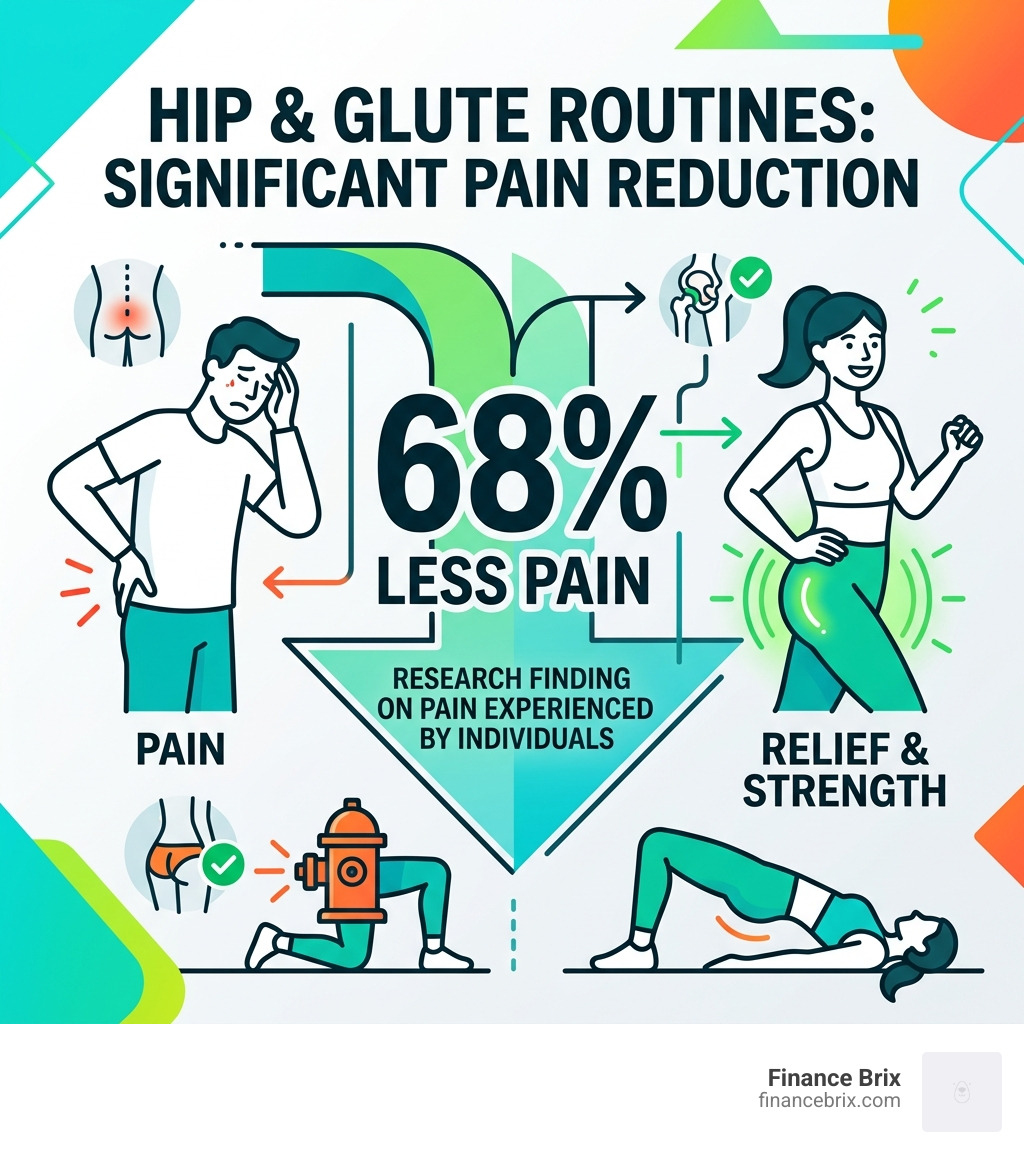
Scientific research has shown that exercises targeting hip abductors, like fire hydrants, can significantly reduce knee and lower back pain. By engaging the core and supporting the lumbar spine, we create a “natural corset” that protects our back during daily mobility tasks.
Furthermore, for older adults or those at a higher risk of injury, improving hip stability is a key factor in fall prevention. According to the National Strength and Conditioning Association, hip-targeting exercises are essential for maintaining muscle mass and bone density as we age.
How to Perform the Beginner Fire Hydrant Exercise Step-by-Step
Success with the beginner fire hydrant exercise isn’t about how high you can lift your leg; it’s about how well you can control the movement.
Step-by-Step Guide to the Beginner Fire Hydrant Exercise
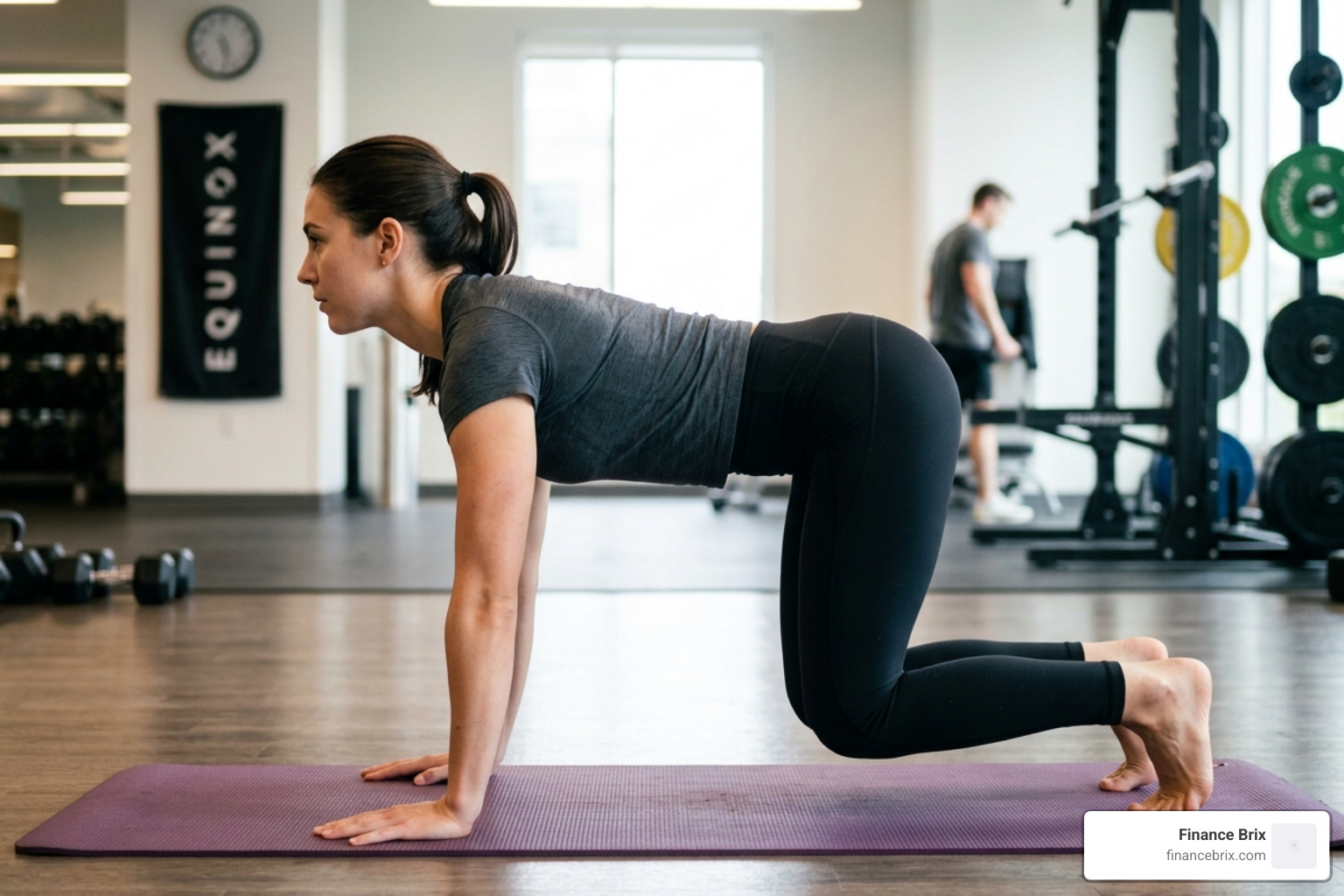
- The Setup: Get on all fours on a yoga mat. Place your hands directly under your shoulders and your knees directly under your hips. Your back should be flat, like a tabletop.
- The Brace: Engage your core by pulling your navel toward your spine. This protects your lower back.
- The Lift: Keeping your knee bent at a 90-degree angle, slowly lift your right leg out to the side. Imagine there is a glass of water on your lower back that you don’t want to spill.
- The Peak: Lift until your thigh is roughly parallel to the floor (or as high as you can go without tilting your hips). Hold for one second and squeeze your glute.
- The Return: Slowly lower your leg back to the starting position. Do not just let it drop; resist the gravity on the way down.
- Switch: Complete your reps on the right side, then repeat on the left.
Proper Breathing and Core Engagement
Breathing is your secret weapon for stability. Exhale sharply as you lift the leg—this helps contract the deep core muscles (the transverse abdominis). Inhale as you lower the leg. Think about keeping your ribcage “knitted” together rather than letting it flare out. This intra-abdominal pressure creates a stable base that prevents your spine from twisting.
Common Mistakes and Beginner Modifications
We see the same few mistakes over and over again. Avoiding these will ensure you’re actually working your glutes instead of just straining your back.
- Arching the Back: If you let your belly sag, you lose core engagement. Keep that “tabletop” spine.
- Pelvic Tilting: Many beginners try to lift their leg so high that their whole body tilts to the side. If your belly button is no longer pointing at the floor, you’ve gone too far.
- Rushing: Momentum is the enemy of muscle growth. Slow down!
- Dropping the Head: Keep your neck neutral by looking at the floor just a few inches in front of your hands.
Beginner Fire Hydrant Exercise Modifications for All Levels
If the standard version feels too tough or causes discomfort, try these:
| Feature | Quadruped (Standard) | Standing (Modified) |
|---|---|---|
| Difficulty | Moderate | Easy |
| Wrist Pressure | High | None |
| Core Demand | High | Moderate |
| Equipment | Mat | Wall (Optional) |
- Standing Fire Hydrant: If you have wrist pain or trouble getting on the floor, stand up! Hold onto a wall or chair for balance, keep a slight bend in your standing leg, and lift the other leg out to the side.
- Half-Range Motion: You don’t have to reach 45 degrees on day one. Lift your leg just a few inches until you feel the glute “bite,” then lower.
- Pillow for Knee Comfort: If the floor hurts your knees, place a folded towel or small pillow under your supporting knee.
- Spread Your Fingers: To reduce wrist strain, spread your fingers wide and press through your fingertips to take the weight off the base of your palm.
Simple Progressions for Future Growth
Once you can easily smash out 15 reps with perfect form, it’s time to level up:
- Resistance Bands: Place a mini-loop band just above your knees.
- Ankle Weights: Add 1–2 lbs to each leg to increase the challenge.
- Fire Hydrant Pulses: At the top of the move, perform tiny 1-inch “pulses” for 5 seconds before lowering.
- Fire Hydrant Kicks: Lift the leg out to the side, then straighten it into a kick before bringing it back in and lowering.
- Hip CARs: Instead of just lifting up and down, draw a slow, controlled circle with your knee to improve joint mobility.
Programming Your Routine: Sets, Reps, and Frequency
Consistency beats intensity every single time. For a beginner fire hydrant exercise routine, we recommend starting with a manageable volume that allows for recovery.
- Volume: 2–3 sets per side.
- Reps: 10–15 repetitions.
- Rest: 30–60 seconds between sets.
How Often Should You Practice?
For the best results, aim to do fire hydrants 2–3 times per week. Because this is a low-impact, bodyweight move, some people find success doing it as a daily mobility drill, especially if they have very tight hips. However, if you are adding resistance (bands or weights), you must give your muscles at least 48 hours to recover between sessions.
Integrating Fire Hydrants into Your Workout
You can use fire hydrants in three different ways:
- As a Warm-up: Use them to “turn on” your glutes before a heavy leg day or a run.
- As an Accessory Movement: Pair them with squats or deadlifts to ensure your smaller stabilizing muscles aren’t being neglected.
- As a Finisher: At the end of a workout, do as many as you can with good form until you feel a deep “burn” in the outer hip.
Frequently Asked Questions about Hip Abduction
What equipment do I need for fire hydrants?
For the beginner fire hydrant exercise, you truly need nothing but your own body. However, a yoga mat or a soft carpeted floor will make the experience much more comfortable for your knees and wrists. As you progress, you might want to invest in mini-bands or ankle weights.
Can fire hydrants help grow my glutes?
Yes, but with a caveat. While fire hydrants are excellent for “shaping” the glutes and building the gluteus medius (the “side glute”), they won’t build massive muscle on their own without progressive overload. To see significant growth (hypertrophy), you’ll eventually need to add resistance and ensure you’re eating enough protein to support muscle repair.
Are fire hydrants safe for people with bad knees?
Generally, yes! Because this is a non-weight-bearing exercise for the moving leg, there is very little pressure on the knee joint itself. If the “planted” knee feels uncomfortable, use a cushion. If you have had recent knee surgery, always consult with a physical therapist before starting a new movement.
Conclusion
At Finance Brix, we believe that fitness doesn’t have to be complicated to be effective. The beginner fire hydrant exercise is the perfect example of a straightforward move that delivers real-life results. Whether you’re looking to banish lower back pain, improve your posture, or just get those hips moving again after a long day at the office, this move is your new best friend.
Stop overthinking your workout and start moving. Your hips (and your future self) will thank you.
